Blog

  • Listener’s Choice

    PPPiTunesAlbumArt-385On this episode of the PowerPress Podcast Todd Cochrane discusses multiple topics ranging from advertising to Blubrry’s new phone support. MacKenzie has been busy at the Blubrry headquarters working on the upcoming Blubrry WordPress Website launch, coming out May 9th!, and wasn’t able to get a new episode in this week. Don’t worry, she’ll be back in two weeks with a fresh episode about using PowerPress.
    Thinking about heading to Podcast Movement? We’ve got a discount for you. Use the code Blubrry and save $40 off of your ticket. Get registered now!
    Ready for another conference a month later? The Elite Man Conference is happening August 5-7 in the Boston area. Use our code to save 10% off your ticket. Learn more here and use Blubrry10 to save!

    Leave us a review for PowerPress!

    Show notes:

    Blubrry WordPress Website

    Free phone support at Blubrry!

    Email MacKenzie

    Email Todd

    Episode Music – Phonophage

  • Blubrry Offers 30 Days Free Phone Support For New Customers!

    Blubrry Offers 30 Days Free Phone Support For New Customers!

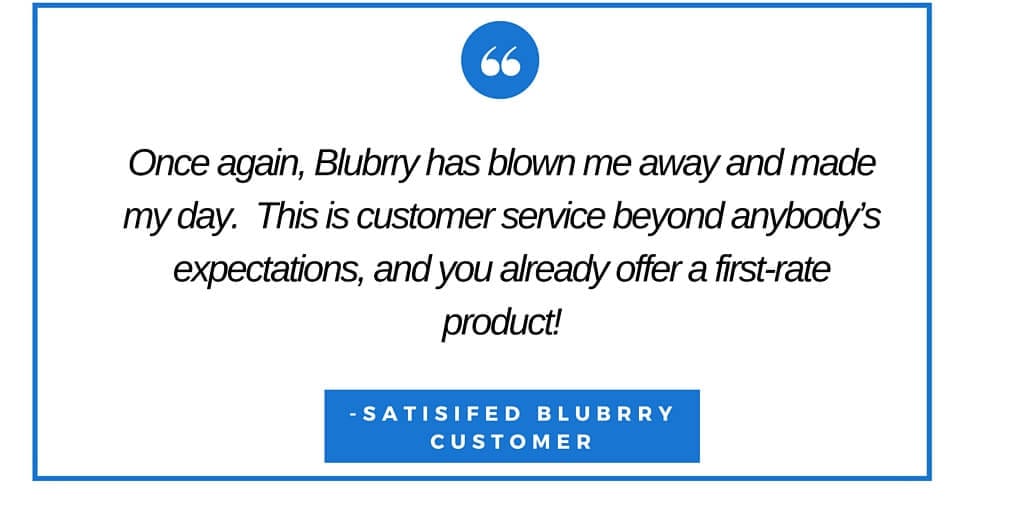
    At Blubrry, we take good customer service seriously, as evidenced by a fast-growing collection of emails and Tweets praising our quick response and helpful, friendly advice.

    blubrry testimonial 2

    Now we want the whole podcasting world to know how great our service is, so we’re announcing a valuable new offer: 30 days of free phone support for new podcast hosting, statistics, and Blubrry WordPress Website customers.

    Customer Support Coordinator Mike Dell, a longtime Blubrry customer favorite, will coordinate the support calls and field technical questions that often arise when starting a podcast.

    “Mike is a superstar at customer support, and we’re thrilled to now have him working with us full time. He and Shawn Thorpe are often the first line of communication between Blubrry and our customers, and they’re a great asset to our team because of their professionalism and friendly, on-point advice,” says Todd Cochrane, CEO of Blubrry.

    blubrry testimonial 1

    While the free phone support is meant to answer technical questions and not to replace more in-depth consultations, Mike Dell will be able to answer basic questions and also explain to customers what level of service or support they may need going forward.

    Phone support appointments can be scheduled any time in the first 30 days a new customer holds an account with us, and will be available between 9 a.m. to 5 p.m. EST, Monday through Friday. For questions on this new support, contact Blubrry at 877-729-8642 or use our online contact form. 

    If you’re a new customer – or thinking about becoming one – we hope you’ll take advantage of this valuable offer. We are passionate about helping podcasters, and our team is here to help you!

  • Blubrry Stats Is Now Tracking Over A Dozen New Apps (Including Google Play Music Podcasts)

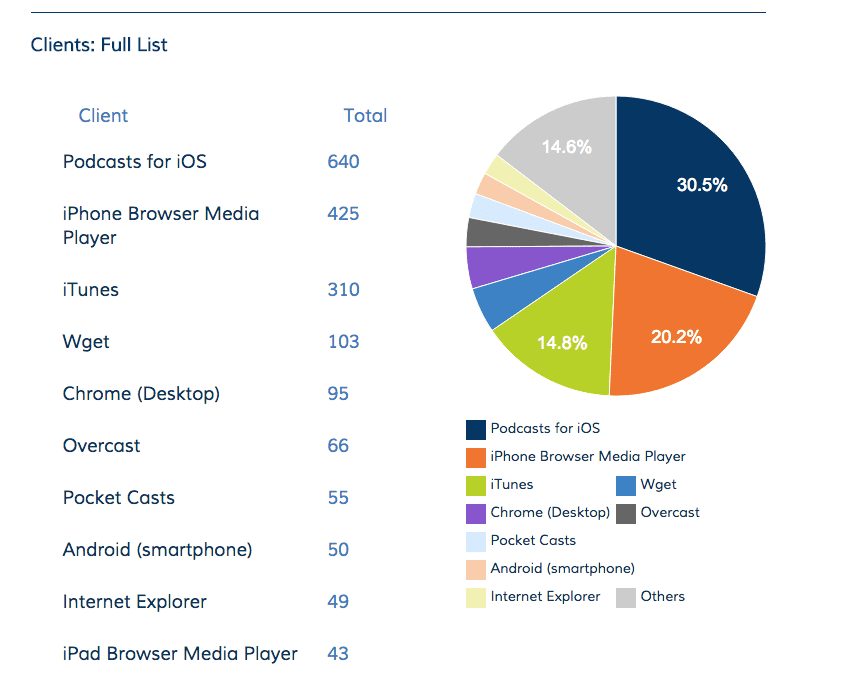
    If you have Blubrry stats, you may have noticed we now list several new clients in your statistics dashboard. We’re pleased to report as of April 19 over a dozen new apps have been added to our ever-growing list of podcast clients. We now track nearly 200 unique podcast applications, devices, and platforms.

    client stats

    Here’s a list of some of the apps we’re now tracking individually in your stats menu:

    • Google Play Music Podcasts – This much-awaited app is tracked by Blubrry, but it’s important to note that as of now, Google Play Music Podcasts is not making individual download numbers available to outside services. Instead, each episode that Google Play Music Podcasts makes available to its users will only show as one download, no matter how many people listen in the app. For now, you’ll need to log in to Google Play Music Podcasts to see your total download number.
    • Player FM for Android
    • AntennaPod for Android
    • Kodi – open source home theater software
    • Clementine – music player and library organizer for MAC and Windows

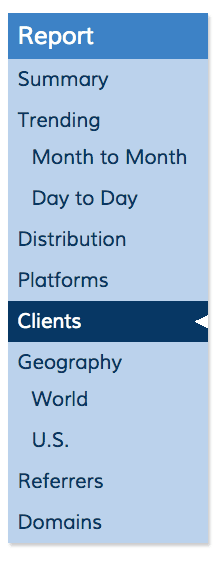
    To see how many downloads each app is delivering your podcast, click “clients” in the statistics section of the Blubrry dashboard.
    client screen shot

    Curious how to list your podcast with Google Play Music Podcasts? Check out our latest episode of the PowerPress Podcast!  


  • Google Play Music Podcasts is finally here!

    PPPiTunesAlbumArt-385In all the podcast hype this week, MacKenzie did not have a guest on the show, instead she talked about some podcasting news. Google Play Music Podcasts, MTV, NAB and more were brought up on the 17th episode of the PowerPress Podcast this week. And in case you were wondering, she brought up her podcast chronicle this episode as well, so if you’ve been wondering how MacKenzie is doing, take a listen. Please, leave us a review on iTunes and subscribe on your device of choice!
    Headed to Podcast Movement in July? Save $40 when you use the code Blubrry during checkout for your ticket. Ready for another event a month later? The Elite Man Conference is happening August 5-7 and we’re got a code for you to save 10%. Learn more here and use code Blubrry10 to save!

    Show notes:

    MTV Podcast Network

    Google Play Music Podcasts info

    Email MacKenzie

    Review PowerPress Podcast

    Learn about Podcast Awards!

    Save the Podcast Awards – Donate now!

  • What Does “Fair Use” Mean When It Comes To Podcast Copyright?

    What Does “Fair Use” Mean When It Comes To Podcast Copyright?


    John pulls his microphone to the center of the desk and prepares to begin his weekly podcast, “Ooze News.” After opening the list of news articles he assembled from his main source, the New York Times, John begins reading and recording the articles verbatim into his podcast. John finishes his podcast by telling his listeners that he hopes they enjoyed this week’s top news stories from the Times.

    Anna has a podcast called the “Groove News,” a weekly podcast that, like John’s, uses various articles from the New York Times as sources. Anna assembles her list of articles and begins discussing each article and inserting her analysis, comments and opinions, using enough of each article to give context for her analysis, comments and opinions. Anna then compares each Time’s article with similar news stories written by other news sources and highlights how each news source treats the “facts” in each article differently. Anna uses these differences to support or highlight her analysis.

     copyright issues podcasters

    Which podcast is using the concept of “Fair Use” within the realm of copyright law? If your answer is that Anna’s podcast comes closest to the definition of “Fair Use,” then you are correct. But the real question here is: why is Anna’s podcast “Fair Use” and John’s is not? The answer is not easy and not simply defined.

    It’s obvious that we cannot take something someone else has created and treat it as our own in our podcasts. But there are legitimate situations when we can include another person’s work in a podcast. Those situations fall under the broad category in copyright law called “Fair Use.” This is an area of the law where two equally important concepts clash head on: free speech and property rights.

    If I create something, it is my property and I control its use – therefore, you cannot take it, free of charge and without permission, for your own use. However, as a citizen of the United States I have a very broad right of free speech so I can say just about anything I want in my podcast. So, if I have the right of free speech, how can a someone use the power of the government to stop me, as in John’s podcast, from reading news articles in my podcast? Within the answer to that question lies the concept of “Fair Use.”

    “Fair Use” is not easily defined because it lives within the enormous grey area between free speech and property rights. It usually takes the final word from a court to tell us what “Fair Use” is in specific situations. But there are five general rules we can apply that will give us a reasonable assessment as to whether or not we can use the creative work of another person, without getting permission or paying for it, in our podcast. Here are three factors that are particularly relevant in the case of John and Anna’s podcasts:

    1. Transformative Use. A primary test is whether or not you transform another person’s creative work and make it into something of your own creative work. In the example of John and Anna, John simply read the news stories from the New York Times and did nothing else; there was nothing creative added in John’s podcast. However, in Anna’s podcast, Anna took pieces of news stories and added her comments, opinions and comparisons. Anna was transforming the various news articles into her own work by what she was adding.
    2. Amount and Substantiality: Another factor determining “Fair Use” relates to the amount of the news story used in Anna’s podcast. Anna used just enough of the news story to support her opinions, comments and analysis. However, Anna could have used the entire news story, if that was required to make her point. In contrast, John would have been no better off in claiming “Fair Use” by simply declaring before reading each news story, “this article sucks,” or “this article is right on.” In this example, John’s comments relate to the whole news article, but the comments do little to transform the work, as required in factor 1.
    3. Purpose and Character of the Work: Copyright law tilts in the direction of “Fair Use” if you are using another person’s work for educational purposes, news reporting, commentary, research and scholarship. The words, “tilts in the direction of ‘Fair Use’ used in the previous sentence are not used lightly. The courts, when analyzing a “Fair Use” claim, consider and balance all five factors when making their decision.

    Above I’ve discussed three of the five factors used to determine “Fair Use.” The two remaining factors not discussed are: “The Effect of the Use on the Potential Market For or Value of the Source Work,” and “The Nature of the Original Work.” Those two factors didn’t carry as much weight in my balancing test when looking at John and Anna’s podcasts. Please take a look at the University of Minnesota’s website at https://www.lib.umn.edu/copyright/fairuse if you want to dip deeper into “Fair Use.” In addition to containing good information about the basics of “Fair Use,” the website has a nifty interactive tool to analyze your content to determine if you are a fair user. But, as always, the best resource to use to review your content for potential copyright problems is an attorney familiar with copyright law.

    One more important thing: You own the copyright for the podcasts you produce. Never treat your ownership rights lightly and give away the rights to your show. It was a common practice in the early days of podcasting for podcast service providers to claim ownership to your show’s rights when you signed up for their services. This practice is no longer prevalent but seems to crop up occasionally. Always read the user agreements before you sign up with a podcasting service. This simple act will protect your rights and save you from major problems.

    Now go podcast and have fun!

    barry kantz-Attorney Barry Kantz is General Counsel and CFO of RawVoice and Blubrry. He can be found on Twitter @kantzb. 

    This post is part of a series on copyright law as it pertains to podcasters. Check out Barry’s post on using music for your podcast without breaking copyright law. 


  • Blubrry and PowerPress Player

    PPPiTunesAlbumArt-385On this episode of the PowerPress Podcast MacKenzie and Angelo Mandato talk about the new Blubrry and PowerPress player. They also discuss, 6 reasons why podcasts are the future of storytelling. The new player is available exclusively to Blubrry hosting customers, and will be available in PowerPress next week. Listen to find out where to get the embed in Blubrry and PowerPress. Thanks for listening, and please leave a review on iTunes! And if you haven’t yet, subscribe using iTunes, Android, Email – however you want in the player below.

    Thinking about attending Podcast Movement? Use promo code ‘Blubrry‘ for $40 off your ticket!

    From the Blubrry Podcaster Dashboard.
    Manage Episodes
    Find the embed option in ‘Manage Episodes’ in the podcast dashboard.
    Use the link to post the embed anywhere.
    Use the link to post the embed anywhere.


    Show notes:

    6 Reasons Why Podcasting is the Future of Storytelling

    New York Times Podcast Network Starting

    Blubrry Player information

  • 5 Things Podcasters Need To Know About Taxes

    April 15 is almost upon us, and if you’re like many podcasters and other content creators, you might be procrastinating on getting those taxes filed. Even if you aren’t making a lot of money yet, confusing tax laws and, let’s face it, less-than-stellar bookkeeping often makes something that should be pretty simple seem complicated. But don’t procrastinate too long! If you earn income – any income – from your podcast, it needs to be reported correctly.

    Here are some tips for getting your tax return done right:

    IRS

    1. Decide whether you’re filing as a business or a hobby. If you aren’t making much or any money yet, this can be tricky to figure out. “The difference is in the podcaster’s motive – does he or she wish to make a profit or not,” explains Carol Topp, CPA and host of the Dollars and Sense Show. The IRS does offer nine factors they use to differentiate between businesses and hobbies, but they can be a bit vague – for example, “whether you carry on the activity in a businesslike manner.” One thing to keep in mind, warn tax professionals, is that filing as a hobby isn’t necessarily going to be the cheaper route. There’s a risk that you could trigger an audit if you file a valid business as a hobby, and if you declare your podcast a hobby, you are also limited to deducting expenses up to the amount of income it’s produced – you can’t take a loss on a hobby.
    2. Start as soon as you have expenses. “That’s sooner than most podcasters think about taxes!” says Topp. You should start tracking and reporting your podcast as soon as you have expenses instead of waiting until you have income.
    3. Know what counts as income and deductible expense. Equipment (your mic and software, for example,) fees associated with services like podcast hosting and statistics, travel and entry fees to industry conferences and events, business-related meals, classes or podcast consulting services, studio/recording space or a home office, and graphic design and website setup fees are just some of the things you may be able to write off as an expense related to your podcast. Income can include free products, exchanges from bartering, and of course, any monetary payment you receive whether it’s via check, direct deposit, Paypal, cash, or some other format. If you aren’t sure if something counts as a taxable income or deductible expense, consult a tax professional.
    4. Keep household and podcasting finances separate. If you haven’t been keeping track of your finances – or keeping your podcasting expenses and income separate from your household finances – you’re probably realizing right about now how big a mess that can create. “Separating business income from your personal income makes tax preparation easier, but it also allows the podcaster to have a better idea if the business is profitable,” advises Topp. “If business and personal are all mixed into one checking account, it requires more bookkeeping to see how the business is doing.”
    5. Record everything. As for assuming you’ll remember how much you spent on that trip to Podcast Movement? Nuh-uh. “Using a spreadsheet or accounting software is best – track of all your income and all your expenses. Also, track your meals and mileage. Do not rely on memory!”

    Great advice, but nobody’s perfect. If you are getting organized a little late this year, you aren’t alone! Just commit to making life easier for yourself when it comes to filing  taxes by getting informed, separating out the podcast and household finances out, and keeping good records…starting now. Topp offers a free downloadable business income/expense spreadsheet you can use to keep track of your podcast finances. While Topp’s site is aimed at writers, there are many parallels between podcasters and writers when it comes to taxes, so visit TaxesForWriters.com for more great tips and resources while you prepare your taxes.

    A note: we at Blubrry are experts in podcasting, but not necessarily tax preparation! To make sure you’re protecting yourself and your podcast, be sure to consult IRS resources and/or speak to a tax professional if you have any questions.

  • 4 Ways To Turn Your Blog Readers Into Podcast Listeners

    So you’ve worked hard to build a blog audience, and it’s paid off. Your audience is loyal, engaged, and growing. But now you’re itching to start a podcast – or invest more time in the podcast you’re currently producing – and you aren’t sure how to get those readers to become listeners.

    blog readers podcast listeners

    Maybe your readers love your writing style and don’t love the idea that you might be writing less. Or maybe they just don’t really understand podcasts or the technology behind them. Should you give up on your podcasting dreams, and just stick with the sure thing?

    No way! Yes, it can take some work to convert your readers into listeners, and some of your blog fans may never listen to your podcast. But if you follow these steps, you can get a lot of your blog readers to give your podcast a chance – and maybe become subscribers and regular listeners.

    Produce A Quality Show. 

    It should go without saying, but if you want to convince podcast skeptics to convert, you’re going to have to deliver quality the first time or two they listen. While a die-hard podcast listener might be checking her app every day and continually looking for new episodes, someone who’s new to podcasts might listen to yours just once in her browser…and give up if it’s boring or sounds terrible. Keep in mind that a newbie podcast listener is accustomed to radio-quality audio, so you want to make sure your sound quality is good and that you have gotten comfortable recording before you tell your readers about your show.

    That doesn’t mean you have to be perfect right off the bat! Just make sure you are producing consistently good shows before you tell the whole world. You can always introduce your readers to your podcast after it’s been publishing for a while, and if those first few shows were a little rough, be honest and focus on how much you’ve progressed! Your superfans will love to watch you tackle something new and get better along the way.

    Looking for help choosing podcasting technology that can produce great sound on any budget? Blubrry has several tested and approved podcasting tech packages to choose from.

    Involve Your Readers. 

    Your readers will be much more likely to turn into listeners if you engage them in the process. Ask them to submit questions to spur future topics, and make sure you mention your podcast on your blog regularly! Detailed show notes are a great way to increase investment in a podcast – write some tantalizing text or share a few of the most intriguing quotes to encourage your readers to go ahead and click that “play” button while they’re reading.

    Use your most popular blog posts and topics as a jumping-off point for future podcast episodes – if people loved reading about something on your blog, chances are good they’ll be hungry to learn more in another format. Giveaways, on-air shout-outs to listeners who review your show, and reading emails from listeners during the show are other great ways to involve your readers and hopefully, turn them into listeners.

    Educate Your Readers. 

    Some readers may just not understand how podcasts work or how to listen to them. Embedding the podcast on your blog allows readers to more easily find and listen. You can also include direct links to your show in iTunes or other podcast platforms in your sidebar or at the bottom of each post to make it easy for your readers. You may want to write a tutorial post like this that explains in detail how to find, subscribe to, and listen to podcasts on a smart phone.

    Lastly, don’t forget to remind your readers often that you have a podcast and how they can listen to it! Go where they are: if your community is active on Facebook or Instagram, use those platforms to continually remind your fans that you’re podcasting, and make it easy for them to find your show. The Blubrry PowerPress plugin for WordPress is a great free tool that allows you to publish, syndicate, and embed new episodes in your blog in one easy step.

    Use Accessible Language. 

    While almost everyone has heard of a podcast by now, many still perceive them to be “for techy people” and may not understand that podcasts are for everyone and cover a wide range of topics! While you’re introducing the idea of podcasting to your audience, occasionally use accessible language that everyone can understand: words like “show” and “conversation” feel a little less geeky than “podcast” and may help your readers understand that a podcast is basically on-demand radio that lives in your phone or computer.

    With a little planning and effort you can turn even your most loyal readers into listeners! Remember that ultimately, what your readers love is you – so make the most of this new medium, and your audience will follow along.

    -This post was written by Meagan Francis, blogger-turned-podcaster and creator of the Life, Listened podcast network. 

  • Starting a podcast network with Meagan Francis

    PPPiTunesAlbumArt300Have you ever wanted to start your own mini podcast network? On this episode of the PowerPress Podcast MacKenzie speaks with Meagan Francis, podcaster, blogger, and creator of the Life Listened podcast network. MacKenzie and Meagan discuss reasons why your business should have a podcast, diving a little deeper than the original list, and all about the Academy of Podcasters Hall of Fame inductees for 2016. After you listen check out the links below for more details.
    Thinking about heading to Chicago for Podcast Movement in July? Use the code ‘Blubrry’ to save $40 when you get your ticket!

    Show notes:

    • 4 Reasons Your Business Should Have a Podcast
    • Life Listened
    • Podcaster’s Hall of Fame
    • Email MacKenzie
    • Podcast Awards Fund
  • 2 Fierce Female Podcasters You Should Be Following

    2 Fierce Female Podcasters You Should Be Following

    Forget the image of podcasting as an old boy’s club: the visibility of women in the community seems to be on the rise – and many of us have been here from the beginning. Here are two female podcasters – who just happen to be Blubrry customers! – you’ll want to keep an eye on:
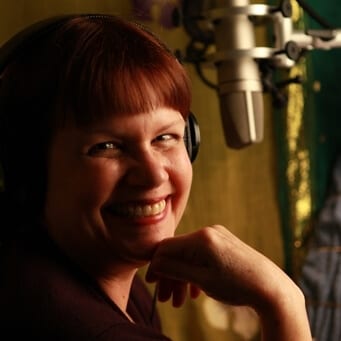
    Kitzie_studio_blog

    Podcaster: Kitzie Stern, Host, New World Kirtan

    About The Podcast: A show that explores Kirtan, a spiritual practice focused on singing meditation. The show is both personal and practical, featuring music to accompany Kirtan practices as well as relatable glimpses into Stern’s life.
    Why You Should Listen: “Kirtan is just a really easy, accessible way to get your mind to quiet down during a time when we desperately need ways to quiet our minds.

    kirtan banner

    A New Way To Reach An Audience

    Like many podcasters, Kitzie Stern initially turned to podcasting as a way to serve an existing audience. An experienced voiceover artist, Stern also had a deep personal interest in Kirtan chanting, a form of singing meditation that originated in India thousands of years ago. “I got this idea that I could do a podcast of songs and it would be like a setlist for my local Kirtan group to use for their chanting practice,” Stern explains. Because of its auditory nature, a podcast was a natural extension of a guided in-person Kirtan experience, but Stern also saw an opportunity to use podcasting to demonstrate her voiceover abilities.

    Though it was originally targeted at a specific audience, as often happens Stern’s podcast took on on a life of its own – though Stern didn’t realize until about a year after the show launched. “On New Year’s Eve, just for kicks my husband and I thought we’d check download numbers, and found that it had been downloaded thousands of times. all over the world. I didn’t think I was talking to anyone besides people in Corvalis!”

    Unexpected Opportunities

    Stern considers her podcast a service to the Kirtan community, and while monetizing New World Kirtan directly isn’t a goal of hers, she can’t deny the benefits she’s received via the podcast, on both the personal and business sides of the table. In addition to the connection she’s been able to make with listeners across the globe, Stern has been invited to attend Kirtan and other spiritual festivals and events as a direct result of her podcast, and it’s also helped her create a thriving specialty in her voiceover career. “Voiceover is really a specialized kind of field, so I branded my voiceover site to take this side of myself into consideration…and now, I’m getting more of the kind of work that I really want to do,” she explains.

    Advice To Newbies

    After publishing hundreds of episodes, Stern enthusiastically encourages would-be podcasters to jump in with both feet. “I’m 63, and worked in radio for a long time. To be able to do your own show without having the constraints of being on a radio station – I can’t tell you how wonderful it is,” she says. “It’s an unprecedented time for podcasters, and people are really catching on to what a great medium this is.”


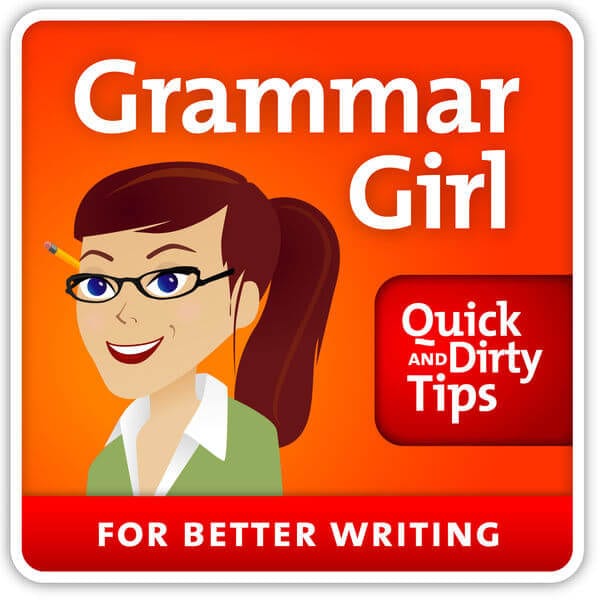
    fogarty mignonPodcaster: Mignon Fogarty, Grammar Girl Quick and Dirty Tips for Better Writing
    About the Podcast: The show started as a five-minute quick writing tip, but has evolved into a longer show – about 12 minutes long – for both language lovers and language learners.
    Why You Should Listen: “If you find language as fascinating as I do, you’ll love it.”
    grammar girl

    Podcasting As A Platform

    Mignon Fogarty, the author and online personality also known as “Grammar Girl,” has become a household name – but not everyone realizes she’s also been podcasting for a decade and is also the founder of the high-profile podcasting network Quick and Dirty Tips. “I started podcasting in 2006 because I love technology and it was the neat new thing, and I was hooked by the immediate listener feedback,” she explains. “I started a science podcast first, because I was a science and technology writer, and started Grammar Girl about eight months later.”

    Though she was already a successful writer and had extensive startup experience before starting Grammar Girl, “the success of the podcast gave me a platform to take both those interests to a much higher level, and now I’m a New York Times bestselling author and a professor of journalism and entrepreneurship. Also because of the podcast, I’ve been able to build an online social media platform that gives me the ability to try all kinds of new and interesting things like making digital games (Grammar Pop) and card games (Peeve Wars),” she explains. “I owe so much to podcasting.”

    Women in the Podcasting Community

    When asked whether she thinks there are more women entering the podcasting space, Fogarty says she hasn’t really noticed – however, “my perception may be skewed because I founded Quick and Dirty Tips, where all our full-time employees are women, the executive in charge of the enterprise is a woman, and 11 of our 17 podcasts are hosted by women. When I look at podcasting, I see women everywhere! To me, there have always been women in podcasting, but there does seem to be a weird perception in the media that we don’t exist.”

    What Are You Waiting For?

    Though Fogarty always considered herself a writer first and never imagined herself becoming a radio personality, she does remember playing alone in her backyard as an only child, instructing imaginary friends and audiences on how to swing on a swing or build a sand castle. The takeaway? Even if you never thought of yourself as a “radio type,” that doesn’t mean you won’t find a great fit in podcasting – it can be used for entertaining, instructing, or simply connecting more deeply with an audience.  “There’s no reason to be nervous,” Fogarty  “Just jump.” She recommends the She Podcasts community as a supportive community to answer your questions and help get you on the right path.