Blog

  • What You Need To Know About The IAB Podcast Ad Metrics Guidelines

    Last week the IAB, in partnership with a consortium of 23 companies within the podcasting industry referred to as the Podcast Technical Working Group, released a set of guidelines meant to shape the use of ad metrics by podcasters, podcast service providers, and others in the space. In this Q&A, Blubrry/RawVoice CEO Todd Cochrane tells us more about the document and what it means for podcasters. 

    Q: How many companies participated in the creation of this document? 

    A: “In total, 23 companies in the podcasting space participated in the creation of this document, including Blubrry and other major players like Google, Libsyn, Nielsen, Westwood One, and NPR. It was quite the process: as we are all passionate about what we do, there were a lot of opinions to sort through. But after 20 months of hard work by all parties, we were able to reach a set of standards we could all agree to.”

    Q: There are a number of podcast companies that did not participate, why is that?
    A: “I really cannot speak for other companies on why they may not have joined and participated, but we choose to become involved as we have 11 years of experience in podcast metrics, and wanted to make sure the podcasters we represent had a voice and seat at the table. That said, we hope non-participating podcast companies will still widely adopt the guidelines as that would help measurement data come into alignment pretty closely across the industry.”

    Q: What guidelines are included? 

    A: “The document mainly focuses on how downloads are measured, the criteria around that, and how to count partials and total downloads. For example, a download of an episode from the same IP address can’t be counted more than twice – that kind of thing. They aren’t necessarily rules, but guidelines. If everyone sticks to those basic tenets as outlined in the addendum of the document, it’s going to go a long way toward leveling the playing field among companies in the industry.”

    Q: How in-depth are the guidelines?

    “We’ve heard a little bit of feedback from some podcasters that say the guidelines doesn’t go super deep and there’s no certification process. But the IAB isn’t an enforcement or auditing organization. They are more interested in making sure a set of guidelines can be put forth with information that will help solidify the terminology and provide guidelines that make the digital advertising space more navigable. You could never get 23 companies to agree to a rigid set of standards, but it’s a good first document that we worked hard to unite on.”

    Q: What isn’t covered in the document?

    A: “Neither filtering or fraud are covered in detail in the guidelines it’s mentioned, and we think those are both crucial things for podcasters and podcast service companies to be paying attention to. Hopefully, we can dig deeper on the next revision of this document. For example, we at Blubrry were recently able to identify podcasts that were using multiple Twitter accounts to directly link to new episode media files. Bots were picking up those media links and downloading the file many times. Because we have such a huge and wide data set, and because most podcasts are consumed in a predictable way, when we come across something weird it sticks out like a sore thumb and we can see it very easily in the data. It was a gaming of the system that was unfairly inflating traffic for the podcasters using that tactic. Because we are looking for that kind of thing and have strong algorithms set up for fraud, we were able to find it and put in filters to prevent it. If some podcast service providers offer that kind of filtering and others don’t, there will still be discrepancies between their numbers.”

    Q: So how can podcasters and media buyers get a complete picture of what’s going on?

    A: “By studying both the new IAB Podcast Measurement guidelines and the IAB Audio Buyers Guide, which is being updated by the IAB right now, podcasters and media buyers will both be using the same terminology so there’s no confusion. Everyone will be singing from the same page, as long as everyone adopts the guidelines. It’ll still be up to the media buyer to ask questions about how the service provider the podcaster is using measures its traffic, though. Blubrry has been completely in compliance with the guidelines, and then some, since we developed almost the same set of standards in 2008 with the Association of Downloadable Media. At some point, we’ll probably come out with more information, and share deeper data with the podcasting community as needed.”

    Q: What about downloads – how can they be accurately measured?

    A: “As we recently stated, 60% of podcasts are still downloaded on-demand. But it’s a a myth that those downloads can’t be measured. Many podcasters and media buyers are under the impression that there’s a black hole, and once podcasts are downloaded, there’s no way to know if they are ever listened to or not. But there is still a story to be told based on trending data. We can tell a lot more about how those podcasts are consumed than many people believe. After 3-5 episodes in a row aren’t listened to, iTunes and the iOS Podcast App will stop downloading that show. And since iTunes / iOS is still so dominant, we know that if a show is still downloading, it’s being widely listened to across a period of time. Podcast listening is different – it’s not like a banner ad, but more like the radio equivalent of the home DVR. Advertisers won’t get all the answers, but when these guidelines are adopted, they will get numbers that are consistent across all service providers.  Everyone listening to podcast has grown up with a DVR and podcast consumption is like most media we consume today – “on demand.”

    Download the IAB Ad Metrics Guidelines



  • Chatting with Nancy Gaines and Gaining Insights on IAB Ad Metrics

    Chatting with Nancy Gaines and Gaining Insights on IAB Ad Metrics

    powerpress podcastHello again! This episode of the PowerPress Podcast MacKenzie spoke with Nancy Gaines and they talked about her podcast, The Nancy Gaines Show, as well as the IAB Podcast Ad Metrics Guidelines document that was released earlier this week. For those of you that don’t know, the Hitachi Foundation helps businesses that are helping the economy thrive and improve. They also happen to have a podcast coming up soon, the Cambridge Optimists. You can submit your story to be on the podcast – that is if you’re an entrepreneur. Next up in the episode, MacKenzie learns all about Nancy’s consulting team and business and what she loves about podcasting. She’s also a big fan of Blubrry tools and services. Lastly, Blubrry was heavily involved in the creation of the IAB Podcast Ad Metrics Guidelines that were recently released to the public. These guidelines ensures everyone is on the same page for podcast advertising, and sheds light on information that not all podcasters, media buyers, etc previously were not aware of. Please, listen and subscribe! Thank you!

    Nancy Gaines

    Fan of PowerPress? Leave us a review, here!

    Show notes:

    Nancy Gaines

    Free Report of 100 Systems You Need in Your Business

    Nancy Gaines Show

    Finding A Podcast Guest for Free: HARO

    Nancy’s LinkedIn

    Nancy’s Twitter

    IAB Podcast Ad Metrics

    Blubrry Priority Advertising List

    Email MacKenzie

    MacKenzie’s Twitter

  • 6 Reasons Blubrry’s Podcasting Customer Support Can’t Be Beat

    Here at Blubrry, we’re pretty proud of our customer service. After all, we’re all podcasters here too, and our customers’ success is always our number-one priority. We don’t mean to brag…but here are six reasons we believe our podcasting customer and technical support is second-to-none:

    1. Free phone support. Blubrry’s tech support is second-to-none. Tickets are answered within 24 hours – often much sooner – and calls are either answered live or else returned within the day. “I like to say we’re the only podcasting hosting company with a phone number,” says Lead Support Technician Mike Dell.

    Screen Shot 2016-09-02 at 5.48.07 PM

    2. West coast coverage. We don’t assume that all of our customers only have problems or concerns between the hours of 9 AM and 5 PM EST. We have a dedicated support team to serve customers on the West coast – or those who may simply like to burn the midnight oil.

    3. Airtight ticket-based support. Our internal tracking system ensures that your ticket won’t go missing and will get a timely reply. And if you prefer not to submit a support ticket, we offer many other ways to reach us! 

    Screen Shot 2016-09-02 at 6.02.31 PM

    4. Basic and advanced plugin support. Need to find a quick answer to a simple question about PowerPress? Chances are good that our plugin resources page has the answer you need. But if your question is more complicated, don’t worry! We also offer one-on-one podcast consulting for a more personalized deep dive into your particular issue.

    5. Value-laden support forums. Blubrry customers are smart, generous, and many have been around the block enough times to figure out answers to the most common support questions. Before you make a call or send an email, it might be worth checking out the Blubrry forums to see if a fellow podcaster has already found out the answer – and is willing to share!

    Screen Shot 2016-09-02 at 5.48.49 PM6. Support beyond tech. We know that podcasters have questions that go beyond feeds and plugins. Maybe you need someone to walk you step-by-step to help you better understand our products and services. Or maybe you want to learn more about advertising opportunities. Either way we have a dedicated staff member to help get you the answers you need.

    Want to learn more? Check out our Support page for a list of contacts and links.


  • Three Unexpected Opportunities Your Podcast Might Give You

    For many podcasters, the holy grail is monetization: getting sponsorships to support their craft. But anyone considering starting a podcast – or deciding whether to continue podcasting after a slow launch period – should keep this in mind: often, the benefits of podcasting aren’t as direct as advertising dollars. In this post we’ve detailed three real-life stories of podcasters, from fledgling to “old pro” level, who’ve had surprising and exciting opportunities come their way…all because of their podcasts:

    Meeting a Childhood Idol

    FB_IMG_1472571348631

    The Higherside Chats is an in-depth interview show featuring leading conspiracy/occult/alternative researchers. Creator and host Greg Carlwood shares this story:

    “One day I wake up to a random invite from professional wrestler Chris Jericho to be a guest on his show. I was a huge fan as a kid, so it was pretty surreal. We did the interview in-person from his hotel room when he was in town for a wrestling gig.

    A guy I idolized as a kid found value in my podcast and wanted to interview ME?! What more validation does a guy need?

    Never quit!” 

    Entering The Speaker Circuit

    You don’t have to be a long-time podcaster to see big rewards from your show. Rachel Cassinat, co-host of The Table Chat Show, says she’s only been podcasting since April…but already has seen big rewards.

    “Both my co-host Erinn Gregory and I are registered dietitians. We were invited to speak at an upcoming conference for dietitians and nutrition professionals and will be talking about using nontraditional media to educate the public and create a unique brand.”

    Rachel’s example is a great example of using your podcast to expand your personal brand!

    Hitting the Local Airwaves

    Jonny-and-Meagan-edited-672x534

    As a kid, Meagan Francis always thought she might like to be on the radio one day – but life had other plans. And as many of us who grew up loving radio have found, podcasting is a great option with a low barrier to entry and much more creative flexibility, which led her to starting a variety of podcasts including The Mom Hour and LifeWork. But what she didn’t expect is that her side-step from her original dream might bring her full circle.

    “Recently I was asked to guest host a local morning radio show that was in need of a new co-host. The station reached out to me in large part because my podcast allowed them to get a sense of my personality and skills before they committed to having me on the show. What I didn’t realize at the time is that the guest spot was essentially an audition, and that podcasting for the past few years gave me skills and knowledge that set me apart. The upshot: I was asked to join the show permanently, so I’ll soon be both a radio morning show co-host AND a podcaster. Best of both worlds!”

    So there you go! If you haven’t yet dived into the podcasting waters, or are wondering if you’re on the right track with your podcast, keep this in mind: sometimes the coolest opportunities aren’t just about money. We’d love to hear what unusual or unexpected opportunities your podcast has brought!


  • Podcast Mid-Atlantic and Transcribe Services

    PPPiTunesAlbumArt300MacKenzie is happy to have Joe Pardo back on the PowerPress Podcast, this time to talk about his event, Podcast Mid-Atlantic. Before they discuss the event, MacKenzie and Joe have some pretty strong opinions on transcribing your podcast – did you know that Auphonic has put out a beta for this? Those of you that are interested in making transcribing or speech recognition services better, get involved with this private beta. September 9-10 in South Philly, podcasters will gather for a podcasting event meant for fostering creativity and community. Listen to get all the details about the event and why you should attend. Blubrry is happy to be sponsoring this event and hope that everyone involved has a great time. At Blubrry we’re always happy to encourage growth in the community. Lastly, Tascam recently released two new soundboards, made specifically with podcasters in mind! It’s not everyday that a podcast specific product is debuted, and from a largely known company such as Tascam. Thanks for listening and please subscribe to the show.

    Fan of PowerPress? Please leave us a review, here!

    Show notes:

    Auphonic Speech Recognition Service – Private Beta

    Podcast Mid-Atlantic

    Use the promo code ‘Mapcon25’ for 10% off

    Tascam Podcasting Soundboards

    Email MacKenzie

  • Are Podcasts Downloaded or Streamed? We’ve Got The Answer.

    As podcasters, it’s important to know how audiences are listening. So here at Blubrry, we’ve crunched the data for you. Over 35,000 podcasts are represented in this breakdown, and whether those apps stream to a player for instant playback or download based on subscriptions to play on-demand.

    60% of podcasts are downloaded for playback on-demand

    Correction, we previously reported 80% which did not factor in that the iOS podcast app provides both stream play as well as save (download) play on-demand functionality.

    No surprise here. This includes mobile and desktop podcast applications as well as desktop browser downloads. This reflects trending data about subscription consumption, demonstrating that loyal listeners use podcast applications to subscribe and listen to podcasts.

    Here are the 4 main distribution categories of podcast consumption.

    1. Mobile apps (play on demand) account for 71.6% of podcast “downloads”

    Mobile podcast applications represent the bulk of podcast consumption today. Podcast apps are designed to run in the background both for playback and for subscription management where episodes are automatically downloaded for playback at the listener’s convenience.

    Blubrry’s Podcast Statistics measure over 30 mobile applications including the official “Podcast” iOS app from Apple, Stitcher for Android and iOS, Pocket Casts for iOS and Android, Overcast, Downcast, Other iOS Apps, AntennaPod, Player FM, BeyondPod, Android Podcast Apps, as well as apps for Windows mobile, Blackberry and other niche mobile hardware.

    Note, the Stitcher app sends a “ping” for measurement when content is played. Blubrry Podcast Statistics count each ping as a download. Stitcher, like all mobile podcast applications, will download or “update” subscribed podcasts with the latest episodes when the device is connected via WiFi.

    Note, the iOS podcast app by Apple accounts for 39% of the mobile app downloads as well as streamed plays. The iOS podcast app by default subscribes listeners for stream plays and allows users to save on demand (download) as well as download new episodes automatically. We estimate that 1/2 of the consumption is downloaded and the remaining half stream played on demand.

    2. Desktop apps (play on demand) account for 13.1% of podcast “downloads”

    Desktop podcast applications account for an ever-shrinking slice of the podcast consumption pie. Similar to mobile podcast apps, desktop applications are designed to run in the background to download podcast subscriptions for synchronization to mobile devices such as iPhones and iPods.

    Blubrry’s Podcast Statistics measure over 30 desktop applications including Apple’s iTunes, Juice (iPodder), Zune desktop, gPodder, and Sony MediaGo. Today, iTunes desktop application alone makes up 80% of the desktop app consumption.

    3. Desktop browsers (in-page stream plays and play on demand) account for 10.7% of podcast “streamed plays” and  “downloads”

    Desktop web browsers account for a solid 10% of podcast consumption. This percentage has remained within 5-15% since we started measuring podcast consumption in 2005. Desktop web browsers provide a way to play the audio directly from within the webpage. For podcasts where we measure plays within the browsers separate from downloads, approximately 2/3 of the consumption is played instantly. The remaining 1/3 accounts for listeners who download the podcast.

    Blubrry’s Podcast Statistics measure over 15 desktop web browsers including Chrome, Firefox, and Internet Explorer.

    4. Mobile browsers and TV apps (in-page stream plays) account for 4.6% of podcast “streamed plays”

    Mobile web browsers account for nearly 5% of podcast consumption. This percentage saw modest grown from 2008-2012, though in recent years it has plateaued. Mobile web browsers provide a way to play the audio to be played from within the webpage. On older phones that do not provide native browser play functionality, the media URL is automatically opened with the built-in default media player app. Playback from within either the browser or with the default media player results in a streamed play.

    Blubrry’s Podcast Statistics measure over 25 mobile browsers and TV applications. Mobile browsers include Chrome on Android, Windows Mobile, and Safari on iOS devices. TV applications include AppleTV, Roku, Samsung SmartTV and AndroidTV.

    Android based web browsers do allow listeners to download podcasts rather than play them instantly, but the option is rarely used on such mobile devices. thus is not included in this report.

    Podcast applications account for 85% of podcast consumption

    No secret here, podcasts that are consumed from desktop and mobile podcast applications make up the majority of the podcast consumption. Podcast applications by nature provide an easy way for listeners to subscribe to a podcast to listen to their favorite podcasts at their leisure. This is what podcasting is all about!

    Interesting Facts about Podcast Consumption

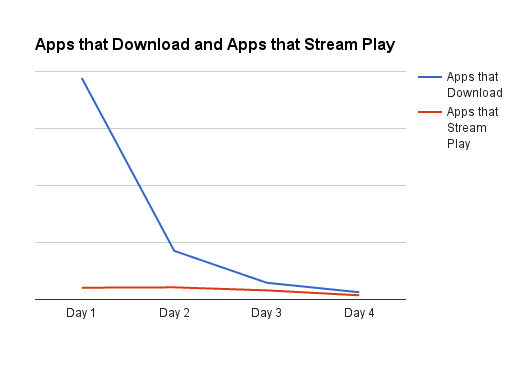
    • Most consumption occurs within the first 72 hours of release.
    • Podcast applications account for the majority (84.7%) of consumption. Such downloads occur within the minutes of an episode release and account for the bulk of all consumption within the first 24 hours. Podcast downloads occur in the background similar to how a DVR records TV for on-demand playback at the convenience of the viewer.
    • Podcast applications can provide “streamed plays” identical to in-page steam plays found in web browsers. Such cases typically occur for podcasts that are not subscribed to but are either bookmarked/starred or were recently discovered by the listener.
    • Based on trending information and factoring in episode release spikes within the first hours of release, we estimate 75% of podcast episodes consumed by desktop and mobile podcast applications are downloaded for on-demand playback (approximately 57%).
    • Podcast downloads from desktop web browsers account for 1/3 of desktop browser consumption (approximately 3.5%).
    • Stream play based applications such as web browsers and smart TV applications have a longer (24-72 hour) window of consumption. This implies that stream played consumption tends to take longer to be consumed, where-as subscribed to “downloaded” podcasts for on-demand playback spikes within the first hours an episode release.

    Podcast download apps vs in-page stream play browsers

    Measuring Streamed Plays vs Downloads

    Measurement of a streamed play (sometimes referred to as a progressive download)  and a download for playback on demand is handled in the same way. When a player plays a media file from a URL (such as in a web based media player), the file is “progressively downloaded” from where it is hosted. A progressive download is a fancy term for downloading the file in the form of chunks using HTTP byte range requests. The chunks provide a way for the player to promptly allow for playback of the recording once the first chunks have been downloaded. In technical terms, these chunk downloads use byte range requests to download portions of the file at a time. It is common to see many requests for one file when this technique is used. Podcast downloads can also use byte range requests for reliability downloading on mobile networks, resuming a download, or for speeding up the downloading process. It is as common to see byte range requests for downloads from mobile podcasting applications. Since both a streamed play and a download appear the same way server side (either in 1 request or with multiple byte range requests), both consumption methods can be measured the same way.

    We hope this information is useful for you as you decide how and where to reach your audience!

  • 5 Podcasting Pet Peeves You Should Avoid

    I’ve been consistently producing and editing a podcast for a tad more than eleven years, and like most podcast producers, I listen to more than a few podcasts. In fact, I’m always seeking out podcasts that fit my fickle and changing interests. Maybe my podcast-producing experience has reduced my podcast-listening pleasure because I tend to focus on the quality of the product rather than the content. I’m not perfect, but I know what I’m hearing with my critical ear when I listen to podcasts.

    What follows is my rant about big mistakes I hear podcasters making over and over and my tips for fixing some common podcasting mistakes. When you finish reading this, you may label me a podcast snob. That’s okay. But hopefully I’m not as annoying as a friend who is a coffee snob watching me brew a cup of coffee – “you didn’t let the coffee bloom,” you’re pouring too fast,” “you’re water is too cold,” and on and on. It’s tough being a critic. 

    Okay, into the hot water we go:

    • Change Sample Type to Mono! The left and right stereo channels are not separate rooms where you, the interviewer, are in one room and your show’s guest is in the room next door. I get dizzy when I listen to an interview where the host is heard in my left ear and the interviewee is coming through in my right ear. There are call recorders that record your conversation this way; the caller is recorded in one channel and the person you called is recorded in the opposite channel. This is a great feature for the podcast producer. You can adjust the audio in each channel separately so you can match levels and quality using your audio editing software. However, after your edits, if you don’t change the sample type to mono, the listeners of your show are going to feel like the net on a ping pong table with the audio in your show bouncing back and forth between the left and right channel.
    • Adjust Audio Levels! One of the podcasts I listen to regularly has a serious audio level problem. The host’s volume level is so low I have to crank the volume up to hear her. Her guest’s audio level is so high I have to crank the volume back down to save my hearing. I’m constantly rocking the volume level back and forth on my iPad. The is a simple problem to fix. Remember when we were talking about your recording software recording you in one channel and your guest in the other channel? You can use this feature when you are editing your audio file to adjust the levels in each channel so the volume levels match, and then you can change the sample type to mono. Your listeners will love you.  
    • Choose Music Wisely! Please do not use your six year old daughter’s violin practice sessions for your bumper music. Seriously, one podcast I listen to has someone, likely a child, playing the scales on a violin and using this as “music” to end his show. Please save this kind of thing for the grandparents. They will love it. I don’t. It hurts my ears. Consider that your listeners will have to hear your bumper music every time they listen to an episode, and choose carefully. 
    • Clean Up Language Litter! I spent many years in Toastmasters. If you don’t know what Toastmasters is, Google it. Spending time in Toastmasters’ meetings can do wonders for your podcast and your life. In Toastmasters we try to clean up your language by making you aware of how often you say, “um,” or things like, “yaknow.” I like to call these utterances, “language litter.” Language litter is very common in our culture and difficult to stop using. A podcast is fertile ground for language litter, so make yourself aware of it and try to eliminate it. I still find myself using language litter in my podcasts. I use audio editing software to zap this crap whenever possible.
    • Brush Up Your Interviewing Skills! A show I recently subscribed to combined language litter with poor interviewing skills. The host of the show constantly interrupted his guest by saying, “yeah, yeah, yeah,” or “right, right, right.” These three words were blasted out, rapid fire, and sounded like one word with three syllables like, “yehyehyeh,” and “rierieright.” Over the past couple of years I’ve heard this “yehyehyeh,” or “rierieright,” litter creep into our informal conversations, and I assume people think it’s a cool way to let the other person know you’re listening. But if you are really listening, your mouth is shut, plain and simple. Let your guest talk instead of interrupting! Also, please refrain from revealing to the world how smart you are by doing most of the talking when you have a guest on your show. I was so frustrated with this podcaster because his guest was telling an interesting story I really wanted to hear, but the podcaster kept interrupting the story with his own comments, and then talked over the guest with “yehyehyeh,” and “rierieright.”  The interruptions were so bad I had a hard time piecing the guest’s story together because the podcaster couldn’t keep his mouth shut. Click-unsubscribe.

    I hope you walk away from this rant with a good cup of coffee and one piece of advice: please listen to your podcast with a critical ear and strive for continuous improvement.

    barry kantz-Attorney Barry Kantz is General Counsel and CFO of RawVoice and Blubrry. He can be found on Twitter @kantzb. 

  • A Podcast Garage and Preventing A Podcast Failure

    PowerPress PodcastMacKenzie is solo on the PowerPress Podcast, you’ve got to listen to the episode to find out why. Regardless, she tells you all about this new thing, the podcast garage in Boston, discusses her podcast chronicle, gives a quick update on Blubrry and last but not least, a list of some podcasts to listen to if you’re feeling like you can’t escape the Olympics. The podcast garage is a new community space for ‘audio enthusiasts’ and a great outlet if you’re looking to record somewhere other than your closet. Podcasting issues come up, if you’d like to know how to prevent a potential podcast failure, learn from MacKenzie. Thanks for listening and please rate and review the PowerPress Podcast in iTunes! Don’t forget to subscribe as well. Options are on the right hand side of the webpage.

    Fan of PowerPress? Leave us a review, here!

    Show notes:

    Facebook Instant Articles is coming soon!

    Next Blubrry webinar is August 18th

    Podcasts to Listen to Alongside the Olympics

  • Takedown or Shakedown Notices: What You Need To Know About DMCA and Podcasts

    Takedown or Shakedown Notices: What You Need To Know About DMCA and Podcasts

    You work hard producing your podcast, and the last thing you want is to have your hard work copied by another podcaster. So what do you do if you find out someone is using a part, or worse all, of your podcast without your permission? To protect your rights and intellectual property, the first thing you must do is recognize when your copyright is being violated (more on this later), and the second thing you must do is notify the company that is hosting the offending podcast.

    Your notice to the podcast hosting company must comply with the requirements of the Digital Millennium Copyright Act (DMCA) and is usually referred to as a DMCA Takedown Notice. The requirements for A DMCA Takedown Notice are found in the United States Code, Title 17, Section 512(c)(3). DMCA Takedown Notice forms can be easily found using a Google search, and the requirements are simple and straightforward.

    The requirements are: (1) identification of the alleged offending podcast, (2) identification of the offending party so the offender’s hosting company can notify the offending party, (3) a statement attesting you have a good faith belief that the use of the offending material is a violation of your copyright, not authorized by you or your agent, or is a violation of the law, (4) that what you are stating in your DMCA Takedown Notice, under penalty of perjury, is accurate and true and (5) your actual signature or an electronic signature.

    What happens after you send the offender’s hosting company the Notice is that the hosting company must notify the offender and then remove the offending podcast. However, the offender’s hosting company must restore the offending podcast if the offender files a counter notice with the hosting company. The restored podcast then remains available to the public until you file a claim in a U.S. District Court and you notify the offender’s hosting company that the Court has issued an order to the offender to cease using the offending content.

    Now, what exactly violates copyright law when it comes to podcasting? In a previous post, we covered what is (and is not) considered “Fair Use” when it comes to using part of another podcast in your own show. In general, the amount of the podcast used, the purpose and intent, whether or not the market value of your podcast is affected by the use, and whether the work is “transformed” via the other podcaster’s use of your material are determining factors. If another podcaster is lifting large chunks of your show and using it wholesale without adding anything of value themselves, there’s a good chance they are violating your copyright.

    However, this is a gray area in the law, and the DMCA Takedown Notice procedure is so easy and straightforward that occasionally the process is used unfairly against podcasters who are clearly acting within Fair Use laws.

    I was recently involved in one such DMCA case. One podcaster, I’ll call him Podcaster A, severely criticized another podcaster, Podcaster B, for what he said on his show. A war of words ensued on both shows where each podcaster said nasty things about the other. Podcaster B, who uses Blubrry hosting, inserted audio clips of Podcaster A’s criticisms into his podcast and then followed those clips with a response defending himself. As Blubrry’s General Counsel, I received a DMCA Takedown Notice from Podcaster A instructing me to remove Podcaster B’s podcasts that contained the audio clips of Podcaster A’s comments criticizing Podcaster B.

    When I received the DMCA Takedown Notice from Podcaster A, I notified Podcaster B and had our team at Blubrry remove Podcaster B’s alleged offending podcasts. We had no choice but to remove the podcasts, even though I knew that this was clearly a misuse of the copyright law. What Podcaster B was doing in his podcasts was clearly Fair Use of Podcaster A’s content. Podcaster A was using the copyright law as a sword, as a way to punish podcaster B. The concept of Fair Use, as identified in federal statutes and by court cases, clearly allows a person to copy a critical remark and then use that critical remark in his own content to defend himself. How unfair would it be if someone were making critical comments about you and you couldn’t use those comments to defend yourself?

    Unfortunately, I did not receive a counter notice from Podcaster B. That would have allowed Blubrry to restore his podcasts, and is the simplest, no-cost way to defend yourself against malicious Takedown Notices. The counter notice forces your accuser to file a claim in court if he really wants your content removed.

    I’m hoping at some point more podcasters defend themselves against the malicious use of DMCA Takedown Notices, or as I call them, Shakedown Notices. In the case above, Podcaster A signed an affidavit that Podcaster B’s use of his content was a violation of copyright law. However, when you sign the affidavit contained in the DMCA Takedown Notice you have an obligation to review the offending content to insure it does not fall within Fair Use (Lenz v. Universal Music Corp., 801 F.3d 1126 (9th Cir. 2015). If you fail to make this review you may be liable to your alleged offender for misrepresentation including attorney fees, costs and damages. So, had Podcaster B filed a counter notice, he would not only have been able to get his shows automatically restored, but he may have been entitled to money from Podcaster A!

    At Blubrry we want you to protect what you own. You have a right to control your content, and you also have a right to defend that content against malicious attacks. You work hard at what you do, so take a little time to understand your rights under the copyright law – and don’t be afraid to defend your rights if the need arises!

    barry kantz-Attorney Barry Kantz is General Counsel and CFO of RawVoice and Blubrry. He can be found on Twitter @kantzb. 

    This post is part of a series on copyright law as it pertains to podcasters. Check out Barry’s post on using music for your podcast without breaking copyright law as well as his post on determining what “fair use” means when it comes to podcasting. 


  • Set Up A FREE Optimized WordPress Site For Your Podcast in Just Five Minutes With WordPress Sites

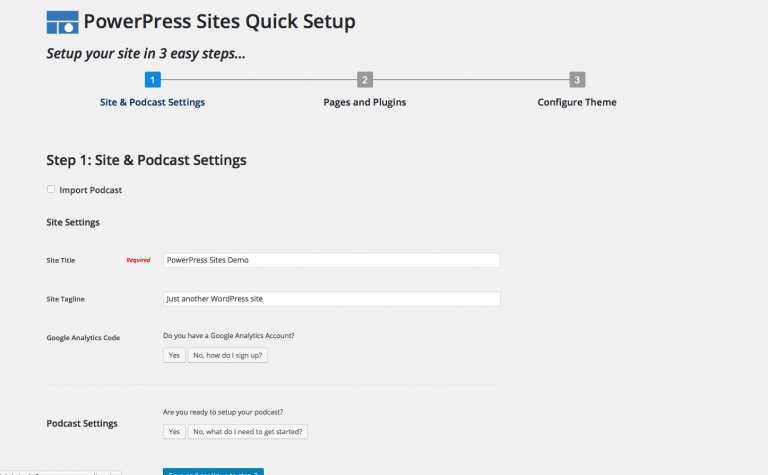
    Is technology the only thing standing between you and launching – or improving – your podcast ? Maybe you aren’t sure of the best way to set up a podcast theme, are stymied by how to best optimize your site for social, or just aren’t great with design. No more hurdles: the new WordPress Sites is attractive, easy-to-use, and comprehensive.

    A FREE Basic WordPress Sites account includes a managed WordPress site, podcast media hosting, and professional podcast statistics in one place. It’s a complete package, offering everything you need to build and grow your show and accurately measure your results. And best yet, you can have your new podcast site up and running in five minutes – tops. 

    Easy as 1…

    powerpress sites 1

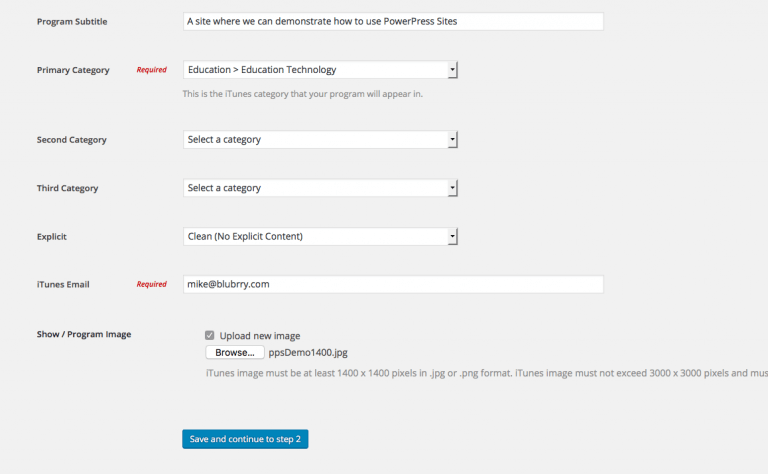
    2…

    powerpress sites 4

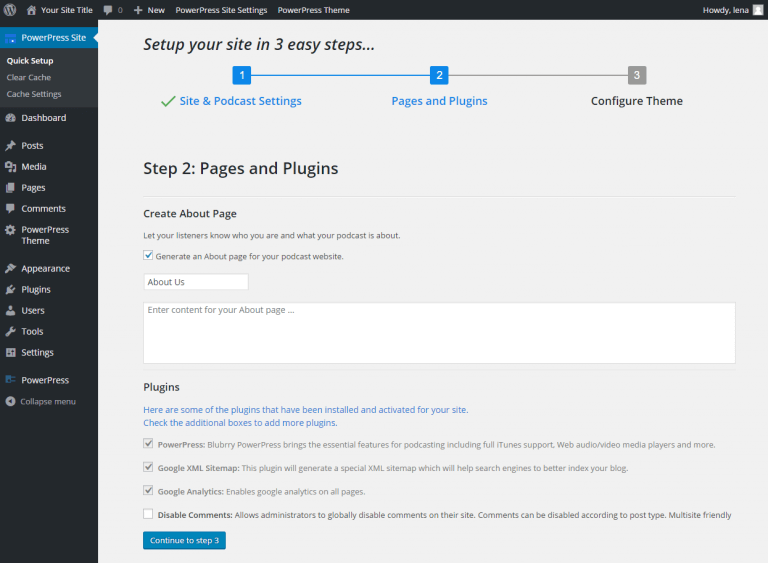
    3!

    powerpress sites 5

    No more stalling! Follow our Quick Start guide to launch your site in no time. We’ll take care of the behind-the-scenes so you can focus on creating great content and connecting with your audience.