

Category: blubrryblog

  • Are Women Dominating Podcasting?

    Are Women Dominating Podcasting?

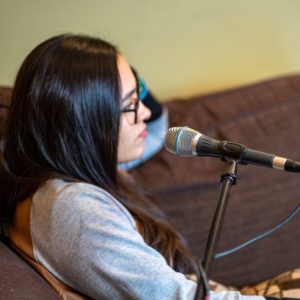
    Podcasting is a creative medium unlike any other because the barriers to access, for anybody, are very low. Nobody has to wait for permission to create and release a podcast; gatekeepers need not apply! If you’ve got a mic, a recorder, a topic you are dying to talk about, and a hosting account (check out the full line of Blubrry’s hosting options for the first time podcaster all the way up to the full-time professional), you can drop your pod anytime, and from anywhere. With the ease of production, the popularity of podcasts continually on the rise, and the demand for content at an all time high, it should be no surprise that many people are trying to make their mark in the podcasting landscape. And the fastest growing demographic in the space — is women. Heck yeah, ladies! Grab those mics!

    If the current pace of female listeners, hosts and production professionals keeps up, there’s no doubt that women will soon be the majority of listeners and creators in podcasting. This isn’t just a cool stat to make the podcasting community pat themselves on the back for not being like every other male-dominated industry in the world. There are many obvious, and not so obvious, reasons that women are well positioned to succeed in podcasting.

    To put it bluntly, women are better at listening. In various studies, and as evidenced at happy hours and Sunday brunches all around the world, women are conditioned to listen, engage and empathize. Empathy requires emotional connection and active listening. As Corine Jansen asserts, “Women tend to understand the emotional parts of messages more effectively than men.” Podcasting is nothing if not about conveying emotional and informational messages, connection and engagement.

    Women also have more close friendships than men do. There is so much to gain from close, non-romantic relationships and women tend to maintain these friendships in deeper, more emotionally invested ways than men do. Many people who regularly listen to podcasts often say they listen because they feel like they know the podcast host personally — not  unlike a close friendship. There’s an intimacy in podcasting because most people listen to podcasts on their own instead of sharing it with a group, like at a concert. Podcasts can be very personal for listeners and women understand the emotional significance of how their content impacts their listeners.

    The portability of producing podcasts also lends itself to women who might be juggling many roles in life, like spouse, mom and/or career commitments. If you take the popularity of “Mom-Casting” alone, women are totally dominating the space! Podcasting can accommodate any schedule, location and lifestyle. From a podcast creator to a podcast listener, having the power and freedom to enjoy the medium on your own time, and make your own rules, is everything.

    Another element that some might scoff at, but let’s face it, is true—women are better at commitment. Women are down for, “ride or die” friendships; just ask any woman who has dated a guy in a band. The good news is that when women transfer that passionate, committed, energy into podcasting, they will be rewarded with enjoyable content, instead of being left with the bar tabs of drunk punk rockers.

    The real question from everyone who loves and makes podcasts, is what can we do to support this trend that not only supports women, but all people in podcasting? The more women and people of color who participate in podcasting, the better all podcasts are. Diversity of thought, opinion and experiences is crucial to setting podcasting apart from other forms of media. If we only listen to only the voices that support our own opinions, and don’t challenge ourselves to grow our own perspectives, what’s the point of podcasting at all?

    One great way to support women in podcasting is by subscribing to any of these amazing 111 Podcasts. Leave them feedback! Share them with your friends! Tweet them compliments! (Maybe that last one is just for me.)

    If you’re a female podcaster looking to expand your network, join the amazing group She Podcasts. Members of the group include podcasters from every walk of life, every stage of production, and are passionate about supporting one another.

    At the end of the day, women don’t need to dominate podcasting. But let’s hope they want to.

    ______________

    Written by: Tara Jean O’Brien

    Tara Jean O'BrienTara Jean O’Brien has been a writer, actor, improviser, podcaster, and stand-up for nearly 800 years. When not producing, editing, and hosting her podcast, Single Vs. Married, or co-hosting, Cinema Craptaculus Presents: B-sides, she also writes on Medium and recently found a floor safe hidden in her coat closet.

  • Easily Sign Up For Blubrry’s Pro Hosting

    Great news! Any podcaster can now easily sign up for Blubrry’s Professional Hosting plan, right here on our website. Additionally, Pro-Hosting customers can manage their pro account, add shows, and add services directly from the Podcaster Dashboard.


    For new customers get your $100 setup fee waived by signing up directly online.

    The professional hosting plan includes numerous exclusive features:
    – Unlimited monthly bandwidth use (fees apply)
    – Unlimited storage
    – Standard and advanced statistics
    – Dynamic advertising insertion
    – Network tool for PowerPress
    – WordPress websites for any hosted show

    This plan is advantageous for podcasters managing their own network and those who need more sophisticated features, such as advertising insertion or network capability within PowerPress (where podcasters can easily showcase any show on their website associated with the network).

    Managing multiple shows is simple, by adding or deleting them within the dashboard. Similar to our standard hosting plans, payments are made automatically. However, they are now charged at the beginning of the month for the previous month’s usage. With a base cost of $100, additional monthly costs factor in additional shows, features, and bandwidth use.

    Pro Hosting is available to any podcaster; upgrade or purchase on we-moved-the-blog-to-this-site-when-we-made-a-new-website.blubrry.com/.

  • Do You Really Need a Podcast Co-Host?

    A Few Tips and Real-Life Examples for Determining if More Really Is Merrier, or if You Should Go It Alone

    Two coffee mugsMany times, we have an exact vision of what we want our podcast to sound like and accomplish. We can pinpoint every aspect from the production on down to the marketing; and how it will go from a recorded conversation to a product ready for the masses. The rest of the time, there can be a world of possibilities that are exciting and daunting. One of those very important decisions is whether your show will have a co-host, or if you think going solo is better for your flow and overall mission. Here are two examples of why each decision could work, and some key information that may help you decide. 

    Three quick questions to ask yourself: 

    1. Will a co-host bring an alternative or supportive point of view that makes my show better or more interesting?
    2. Will a co-host help split up the duties of production and make the process easier, less expensive and save me time? Or, will the back and forth weigh me down and feel restrictive?
    3. What are my expectations for a co-host? How will I help them win as well?

    Having a co-host requires both parties to be transparent, communicative and on the same page. On my podcast Campfire Sht Show, I most likely would have podfaded long ago if it weren’t  for my partner, Beau. For us, two minds are better than one, and our show makes sense as a duo. Beau does the technical set up (setting up the “mics and cord thingies” as I professionally call it), editing and graphics. I handle the show notes, sponsorships and booking. We both are responsible for marketing and content production and it really is a 50/50 partnership. We energize and push each other and this keeps us both motivated and engaged. 

    This works for us, but there are other examples of quite successful solo podcasters. 

    Comedian and actress Chelsea London Lloyd explains the choice to host her show Dying of Laughter on her own. “I felt that guests would be most comfortable about opening up about their personal grief journeys in a one-on-one setting. I also felt empowered setting my own schedule without the need to check in with a buddy, and I knew that this specific combination of grief and comedy was something I’d eventually collaborate with others on, regardless in various comedic and production settings down the line.” 

    Chelsea also has “recurring guests” on Dying of Laughter, so that keeps her from feeling too lonely. She adds that one of the biggest benefits of being a one-woman show is saving time . “If you’re a little bit intense — I mean, intensely clear, on a specific show vision, have a busier schedule, and/or are already collaborating with others at work or in other settings — the solo route may be for you.” 

    Let us know if you are a solo podcaster or if you prefer the buddy system, and feel free to give your awesome co-host a shout out!

    ____________

    Meryl Klemow

    Meryl Klemow is a podcast writer, guest booker, and co-host of the Campfire Sht Show podcast. Meryl is a part of the Blubrry content team, and a Senior Copywriter at Podfly Productions. She also has a T-shirt line, Pre-Canceled. Say hi to Meryl on Instagram at @MerylKlemow.
  • 2021 Mid-Year Podcast Report

    Will we still be talking about these events in six months?

    The first six months of 2021 has been eventful. So eventful in fact that we need to discuss three industry-wide events that have already had a significant impact in the world of podcasting. We just can’t wait another six months for a massive end-of-year review. These three events are:

    1. Podcasting continues to grow.
    2. Money continues to flow into podcasting.
    3. Podcast giants can stumble.

    Each of these need a closer look.

    Podcasting continues to grow.

    This time last year there were concerns about how the pandemic was affecting podcasting. We now have enough information to assess podcasting’s growth. In March 2021, Edison Research released the Infinite Dial Report. The report shared that the number of podcasts as well as the number of podcast listeners increased throughout 2020, and that trend looks to be continuing through the first half of 2021.

    Podcasting continues to grow!

    Three significant events in the world of podcasting took place in early 2021. Did we miss any major events that you think have impacted the podcast industry this year so far? Please visit the Blubrry Podcasting Group on Facebook and share what you think we’ll be talking about when we turn our calendars to 2022.

    Money continues to flow into podcasting.

    Major acquisitions of podcasts and podcast networks have happened in 2021. Major deals as in tens of millions of dollars. These large companies are willing to pay big money for podcasts and podcast networks that have huge followings. While these deals do make the news and are exciting, they usually do not impact the podcasters that have shows with download numbers in the lower 99.98 percentile of podcasts.

    However, more money flows into podcaster’s pockets through listener-supported platforms such as Patreon, Glow, Podia and even PayPal. With so many podcasters having so many supporters, you can make it easy for your listeners to financially support you. If you have ever thought about incorporating listener support into your podcasting efforts, think about doing it in the next six months!
    Podcast giants can stumble.

    Apple has been a major player in podcasting ever since they embraced podcasts back in June 2005. Its directories, apps and standards have helped shape the podcast industry. In late Spring 2021, Apple changed a few things about how their environment handled podcasts. First, they changed the name of what we traditionally knew as a podcast subscription to ‘Following a podcast.’ Then they introduced that ‘Subscribing’ to a podcast now means that you support the podcast financially. What is unfortunate is that coincidentally around the same time Apple had issues with their directory and podcasts app and for a few days it seemed like a total meltdown.

    After a few days Apple’s technical headaches were resolved and the new and old features were working as expected. Unfortunately, the hiccups and their duration may have shaken the public’s confidence in the podcasting giant. By the end of 2021, all of these issues might be a distant memory, but here in July, it does show that podcast giants can stumble.

    ____________

    Troy Price

    Troy Price is the co-founder of Front Porch Studio in Berea, Kentucky. He has been involved with podcasting for over a decade. Listen to his show Podcasting Tips from the Front Porch here.

    Contact Troy by email at troy@frontporchstudios.com.

  • Let Your Podcast Audience Do the Content Creation for You

    Creating an interesting podcast that people want to listen to is a lot of hard work. Sure, designing compelling stories, conducting research and coming up with anecdotes is a lot of fun, but wouldn’t it be nice to have some backup?

    One of the best parts of podcasting for me has been the engagement I have with our audience. They are passionate, fun and hilarious people. I’d be nuts not to include them in some of the shows! As it turns out, they didn’t disappoint me, and they took the burden of content production off of my shoulders.

    Ways Your Audience Can be Part of the Show

    There are tons of ways to feature the audience in your show, but not all of them will work for every show format. If you have a story-focused format, you might want to produce bonus episodes where the audience can interact or introduce bits at the start or end of the pod that can showcase them in some way. 

    Some ways to include your audience in the show are:

    • Read reviews of your pod, both positive and negative, on the show.
    • Ask questions or post surveys on social media and share the results.
    • Start a voicemail line and mention the number at the top of the show.
    • Include interviews or guest spots with superfans.

    Read Good and Bad Reviews

    An essential part of your show’s growth is reviews. One way that you can encourage reviews is to read them on a segment within your show. Reading the good reviews is a no-brainer, but you should read the bad ones too. Why? It gives you a chance to save face, and it’s entertaining!

    People love to hear their words read aloud on their favorite podcasts, but the bad ones can give you a chance to riff a bit.

    Sometimes the bad reviews have a point. If you can take a step back, on-air, and agree with a bad review, it will show your audience that you are reasonable and open to producing a better show for them.

    The bad reviews are often silly, and who doesn’t love to laugh at a poorly written and irrational review?

    Share the Results of Social Media Interactions

    Asking questions on social media is a sure-fire way to get interactions. Everyone has opinions and answers, and they all are happy to let you know what they are. If you ask a question on social media and 25 people respond, that’s at least a 15-minute segment if you take your time to add your 2 cents to each response.

    Polls are great because they lend an air of officiality to the program: “We asked the audience what the scariest movie ever made was and according to our poll it’s…” You can discuss whether you agree with the poll results or whether your favorite pick got robbed.

    Start a Voicemail Line

    One of the most successful and entertaining moves we’ve made was the introduction of a voicemail line. As soon as we announced that our audience could call in and get on the show, the gloves were off! Listeners would disagree with our opinions, tell us they appreciated us, and even talk to each other from one episode to another.

    Some people would call in as characters that they made up and have little story arcs that they would play out. 

    There is nothing as gratifying as hearing the voices of your listeners and getting to interact with them on a weekly basis. 

    If you receive five calls that are 2 minutes long each week, that’s at least 20 minutes of content after you respond to each call. It’s engaging, fun, and allows your audience to participate in the show.

    As of the publication of this article, Google Voice allows the creation of one free voicemail line per account. Make sure you get it all setup before sharing to your audience, or else you might miss out on a whole week’s worth of calls.

    Showcase Superfans on Your Podcast

    Finding a way to thank big fans of your show is essential for a number of reasons. It shows regular listeners that their continued interaction and support of your show is rewarded, and it’s entertaining. 

    Depending on your format, this can be accomplished in a few different ways. You can have them participate in a bit on the show. Maybe they get to be one of the characters in your story. Perhaps you interview them about their experience with the show and allow them to plug a personal venture. 

    However you include them, it will be a good time. The one caveat with this is that it doesn’t always go perfectly. If you struggle with the quality of a performance that one of your fans gave, it’s crucial to have a plan B. One way to diffuse this scenario is if you have an additional publication avenue (like Patreon), just mention that it will be featured as an exclusive on your paywall site.

    No matter how you choose to include your audience, it can be a massive boon to any podcast. Both the audience and the show will benefit from the inclusion of the audience in the content creation of your show.

    Do you enlist fans (or critics) in your content creation? Let us know how you go about it in the comments.

    ____________

    David DayDavid Day is the co-founder and co-host of Horror Movie Talk Podcast. When he isn’t watching horror movies he is focused on growing the podcast. Listen to his show Horror Movie Talk here.

  • Podcaster of the Month: Toastmasters – Kim Krajci

    Toastmasters 101

    Kim has been a longstanding Blubrry podcaster as well as now a recent blog writer of ours as well. Her podcast, Toastmasters 101 has helped countless people become better speakers and her work has made her a better podcaster overall.

    Tell us about yourself!

    I’m a podcaster from northeast Ohio. Toastmasters 101 is my second or third podcast. I retired the first in 2017, recording the first 12 episodes of Toastmasters 101 in 2016, let it sit for a while, then started it up again. However you want to count that is fine by me.

    What inspired you to do your own podcast?

    I always wanted to be on the radio. I’ve been fascinated by the medium since I was a child. When I heard about podcasting in the middle 2000’s (on the radio), I knew I wanted to try it. However, I had four children still at home, so that dream was postponed until 2014.

    If you need passion to have a podcast, then I’m the poster child. I’m passionate about Toastmasters. There are few things in my life that have had a greater impact (OK, religious beliefs, marriage, kids, so it’s in the top 10) and changing my future. I’m not alone in this. Almost every Toastmaster I know has a similar story. That’s why I podcast about Toastmasters and train people to talk about their passions.

    How do you prepare for a podcast?

    I prepare my podcast by doing some research about the topics that Toastmasters are thinking about. We have an annual cycle of events, so I mention those. Primarily I talk about our education program Pathways, and suggest ways that the projects in the education programs can be done to maximize the power of the speech or leadership project. In 2020, when we switched on all online meetings, I focused for a few weeks on that transition.

    What advice do you have for anyone just starting out?

    My advice to anyone who wants to start out in podcasting: take time to think about your topic.

    Most of the time, people have something they’re desperate to say to the world and podcasting provides a megaphone for that message. They want to change something — their world, their skills, their opportunities — and podcasting is that ladder that moves them up. After you refine your message, then think about the logistical problems of how to do it and where to put it (the right answer to that is always Blubrry). By harnessing the power of your passions, you’ll get through the dry spells.

    Connect with Kim…

    Kim Krajci

    Website
    LinkedIn
    Facebook

  • Avoid Podcaster Burnout

    BurnoutIt’s OK to take a break from content creation, if you handle it correctly.

    Remember in elementary school when there were a few magical days scheduled as ‘Spring Break?’ Remember how you looked forward to those days all throughout your schooling? Those special days off continued when you entered the work-world, they simply changed names. Now you look forward to long weekends or vacations much like you did when you were young and worried about what went on your ‘permanent record.’

    As a podcaster or content creator, you might value week-in, week-out consistency over your personal well-being. You forget what the rest of your life has trained you – You Need a Break! The question is how do you prepare for the time off from your podcast efforts?

    Below are three suggestions for how you can manage your podcasting breaks that make you and your listeners happy.

    Prepare Your Listeners

    Your listeners look forward to your next episode. Their [insert your release day here] is not complete unless your new episode shows up in their podcast player. You must prepare them for when you take some time off.

    It does not need to be fancy. A simple announcement at the end of an episode that lets people know you will not be there next week is all you need. If you feel that is not enough, you may also schedule a social media post that reminds people that there will not be an episode on the day of your release. You might even go over the top and schedule a brief one-minute episode that says something like, “Hello loyal listener. There is not going to be a new episode today. Next week we are going to be talking about [Insert next topic here]. See you then.”

    Invite a Guest Host

    Just because you are not going to release an episode does not mean your feed has to be empty that week. Ask a podcaster friend if they would like to release an episode of your show. They could follow your format and your audience will receive a familiar episode that features the voice of a guest host. Another option is for you to ‘share with permission’ a similar episode of a friend’s podcast with a one-minute introduction from you that says, “Hello loyal listener. As you know, I am taking a week off. I wanted to introduce you to a friend of mine named [Insert name here]. Here is an episode of their podcast titled, [insert name here] to keep you company until I return next week.”

    While you might be concerned about sharing another podcast on your feed, your audience will be happy for the bonus content until you return. This should not affect your podcast’s statistics, if anything it will give your friend’s show a boost.

    Plan Ahead

    Many podcasters double up their work the week before their break and create multiple episodes that week. They release their usual episode and then schedule the extra episode they recorded for when they are ‘off.’ Their listeners do not even know they took a break and episode consistency is maintained.

    The problem with that is they usually work so hard the week before that the break only allows them to recoup from their prior week, and they do not return to production rested and relaxed. Use this only as a last resort, because this methodology does not provide you with the benefits you experienced during the spring breaks of your childhood.

    Planned breaks allow mental and physical opportunities for you to recoup from the grind of creating consistent, dependable content. Consider when and how you should take breaks to stave off podcasting burnout. Then use a simple announcement, collaborations, or double up (only if necessary) and take your well-deserved break. This ultimately allows you to be more consistent and reliable for the long haul.

    If you need a break from the production aspect of podcasting, keep in mind you can also enlist Blubrry’s Professional Production services, that way you can focus solely on your content and sound your very best to boot.

    ____________

    Troy Price

    Troy Price is the co-founder of Front Porch Studio in Berea, Kentucky. He has been involved with podcasting for over a decade. Listen to his show Podcasting Tips from the Front Porch here.

    Contact Troy by email at troy@frontporchstudios.com.

  • 3 Keys to Develop Your Podcast Content

    Strategy PlanningThe No. 1 question new podcasters often ask is: “How long should my podcast be?” The answer is… we don’t know. But we can say this: Your podcast content can be as long as you want — but don’t bore your audience. Before you sit down in front of a microphone, make a plan for your podcast.

    Some podcasts go directly to the content. No introduction, no opening music.

    This is not the preferred method. Introductions and openings bring your audience into your podcast, establish your perspective and create expectations in your listeners. You don’t need to be a professional or an expert to do a podcast, but you do need to explain your angle to the audience to help them understand who and what’s going on.

    But that’s not where you have to start when developing your podcast content. Many people get frustrated because they don’t know where to start. Instead, start with the end in mind. 

    Podcast Content 1: Figure out your exit strategy

    I’m not talking about how to sell off your podcast. I’m asking what you want the audience to do when they’re done listening to your episode. The call to action tells the audience what to do next. Do you want them to:

    • Rate and review?
    • Follow (or subscribe to) your podcast?
    • Tell a friend about this podcast?
    • Do a specific task related to your podcast?

    Be thoughtful about this call to action. Despite all the outdated advice that’s out there, ratings and reviews don’t do much to help your podcast. Five-star reviews are unlikely to draw more people to your podcast. Rather reviews — especially fewer than five stars — tell you what your audience thinks about your podcast. Important information, yes, but is there a more important action that will help you grow? Studies have shown that word of mouth builds more audience growth than anything else. The request to share your podcast with even one person has more effect than a request to rate and review.

    Podcast Content 2: Build Segments

    Unless your podcast is short, it’s likely that you will develop your podcast content in segments. Plan ahead: How do you want to present your content? How is your listener going to hear it?

    You’ve seen segments in late-night television, news shows, movies, everywhere. NPR has been using segments since the beginning of its news programs. NPR coined the phrase driveway moments decades ago to describe a story so captivating that we would sit in our cars until that segment ended. Podcasters know that our content can follow the audience into the house, but that kind of magnetizing content should be our goal. How can we do it?

    Breaking your podcast content into segments allows you to create unique sections and gives you flexibility in production. A 30-minute podcast could have three eight-minute sections that can be recorded and produced at different times then assembled with an opening and closing. If you’re working with time constraints, this may be a way to flex your schedule. It gives you the time to fully develop your content.

    Segments also give you the chance to discover what works. You can experiment with your content — will this segment resonate with your audience? Do you get positive or negative feedback?

    Instead of committing an entire episode to content that might inadvertently drive away your listeners, you can try it out as a small segment. Using Blubrry’s Advanced Statistics, you can discover what your audience is listening to, what they skip and if/where they quit your podcast. That data will offer valuable insights into your segments. 

    Podcast Content 3: Craft Your Opening to Woo Listeners

    If you’re a podcaster, you probably have higher standards than the average listener regarding the sound of your podcast. (If you’re a new podcaster — it will come to you.) But equally important to the quality of your sound is the excellence of your lead. Do you create an opening that will attract the listener? Or are you “keeping it real” when you shuffle papers around, producing an opening that wastes your listener’s time?

    Often in the process, you’ll find that you have created some loose ends that you’ll want to resolve at the end of your podcast. Don’t record your call to action and closing first — prepare it first, but plan to revisit it before recording. Make sure your call to action matches your opening. Your podcast will produce a more satisfactory ending for your audience when you wrap everything up cleanly.

    The strength of a good opening doesn’t happen by accident. When you lay out your opening, you create expectations in your audience of what will be in your podcast. If your opening tantalizes them, you’ll keep them on your podcast longer. You’ll build up a fanbase that will share your content with others.

    Your podcast content reflects who you are and how much you value your audience.

    Taking the time to develop and edit your podcast content gives your audience the best possible experience, will build your audience, pump up your credibility and advance your podcasting career.

    These three keys to developing your podcast content are helpful whether you’re a newbie or a seasoned podcaster who needs a refresher. If you need more tips, be sure to check out the free, online Blubrry Podcast Manual for additional insights.

    ____________

    Kim KrajciKim Krajci, host of Toastmasters 101 podcast, has been podcasting for 7 years and writing since the creation of the stylus and clay tablets. She also teaches speech and debate and works as a social media manager.

  • Get More Listeners with a Podcast Website

    The importance of owning the gateway to your podcast kingdom

    Laptop keyboardBlubrry believes you should have a website dedicated to your podcast that is separate from any page that your podcast media host provides for you. Blubrry believes that you should make it a robust website that engages your current podcast listeners and also drives new listeners to your show. Blubrry believes you should ‘own’ your podcast website so that YOU can control the functionality, look and full experience of your website visitors. Blubrry believes this so strongly that it details how to create your own podcast website in the Blubrry Podcast Manual.

    Some of you may be convinced that you need a podcast website simply because Blubrry believes you do. If so, you can follow the instructions in Blubrry’s Podcast Manual and have a podcast website in place in no time. Some of you might need a little more convincing; let’s address that.

    Make your podcast more relevant in search results.

    Both Google and Apple say that their search results are ranked by a website’s relevance to what is being searched. While you can spend quite some time learning Search Engine Optimization skills that will impact the perceived relevance of your podcast, below are two tried-and-true practices that boost your rankings in search results.

    1. Say you produce a fan podcast dedicated to the broadcast journalist Savannah Guthrie and someone is searching for a podcast about her, you’ll rank higher if ‘Savannah Guthrie’ is in your primary domain name. The website thesavannahguthriefanpodcast.com will rank higher than mypodcasthost.com/thesavannahguthriefanpodcast. Further, every post on your website will be viewed as a more relevant search result. The savannahguthriefanpodcast.com/ guestjeopardyhost will rank higher than mypodcasthost.com/thesavannahguthriefanpodcast/ guestjeopardyhost.
    2. You produce a weekly podcast on Unidentified Aerial Phenomena (UAPs) and you post your episodes to your podcast webpage every time you release a new episode (either manually or automatically). Since your website is being updated weekly, it will be viewed as more relevant by search engines than other websites that are not updated as often. This pushes your website up in the search results.

    Control your branding and user experience.

    If you are using a free service for a media or website host for your podcast, you are allowing them to benefit in some way from your content. The ‘free’ services usually do this by at least one of the following ways.

    1. They ‘brand’ your podcast with their name. Let’s say you produce a weekly podcast dedicated to true crime named, True Crime Nation and you upload to a free media host that provides a free webpage. That company may promote their service using your podcast. They may promote your show online as, ‘True Crime Nation: A MyMediaHost Podcast.’ In this way your show is forever connected to their service regardless of their corporate reputation. Several media hosts have actually changed the podcast name or description to officially include the services name.
    2. These ‘free’ companies may also place ads on your ‘free’ website. You do not have control over the ads on your website and the company receives payment each time your listeners click on their ads. The company is incentivized to display ads that receive the most clicks regardless of whether they are related to your podcast or support your podcast’s image.

    Use the service that your podcast deserves.

    To fully explore this principle, we will use a logic exercise rather than using an example. These ‘free’ companies are incurring expenses to provide their services and making money from somewhere else. As a business they are trying to maximize profits, so they are trying to make as much revenue as they can and provide the service for as little expense as they can. Since you are a customer of their ‘free’ service you are subject to the least expensive service that the company can provide that they deem viable. You are putting your time and skills into a podcast that is going to be hosted on someone else’s least-expensive service.

    To revisit a phrase from before, Blubrry believes it is better for you to pay for a service from a company that guarantees a certain level of quality in exchange for your money. This allows you more control over the media hosting / website experience. Also, this allows you to fully portray what you want to say about your podcast to the world. This benefits your podcast in the long run.  

    If you would like to know more about how to create your own podcast website, you can find that information over in the Blubrry Podcast Manual. And feel free to visit Blubrry Support to have your questions answered.

    ____________

    Troy PriceTroy Price is the co-founder of Front Porch Studio in Berea, Kentucky. He has been involved with podcasting for over a decade. Listen to his show Podcasting Tips from the Front Porch here.

    Contact Troy by email at troy@frontporchstudios.com.

  • Podcasting Crosses the Generational Divide

    SmartphoneThere is no doubt that podcasting is the fastest growing entertainment medium, with 55% of the American population having listened to at least one podcast and 68 million people listening to podcasts weekly. The proliferation of smartphone use is accelerating these figures exponentially.

    As Facebook and Twitter remind me on a daily basis, young people are making and producing most of these podcasts (this writer included). When I launched my podcast and announced it on my social media platforms, I was touched by how many people listened and supported my show. Podcasting is a passive and active way people can support my work. Active in that they can find a way to listen to the show; and passive in that they can listen wherever and whenever they want to. They didn’t have to shell out cash, drive a long distance, sit next to my personality-free roommate, or be forced into a two-drink minimum at a comedy club.

    I was surprised to learn that my most active supporters were my older, out-of-town family members who have the gift of ample free time. Aunts, uncles, distant relatives, teachers and other people in my hometown were thrilled that they could access the work I was doing, without having to be in the same place. However, the older among them responded with, “How do I get this thing you did? What is it exactly?”

    Most people in this age group now have smartphones. However, many of them have no idea that there are multiple podcasting platforms available on their phone right now. After a short how-to text exchange, or phone call with some of my older loved ones, they were off and listening to my podcast. “Oh, THIS is what this podcasting thing is! It’s so easy! And you’re so funny!”

    Adults in the boomer generation and their predecessors grew up listening to radio. It’s a medium they are comfortable with and enjoy. Podcasting offers an even better experience for them than terrestrial radio because they can pause it, they have the power to choose when and where they listen, and they can join new communities. For a lot of retirees, finding new friends and people they can connect with is of great importance to not just their mental health, but their physical well- being.

    In its infancy, podcasters and podcasting advertisers weren’t focused on older listeners. It seemed like the majority of listeners were young people, which at the time was an obvious, and erroneous, conclusion. Once people on all sides of podcasting realized that older generations were just as interested in participating in this new media, and how it was a natural transition from radio, any podcast would be missing a huge opportunity if they didn’t market to this demographic. Engaging and enrolling people with the gift of free time, free thought, and those yearning for human connection, should have the attention of all podcasters, big and small.

    Admittedly, the idea of focusing on older listeners did not even enter my orbit when I started podcasting. Is the content I want to make of any interest to a person who’s just enrolled in Medicare? Honestly, who am I to answer that? Maybe a grandmother doesn’t want to listen to a podcast hosted by other grandmothers. Perhaps she wants to listen to a group of Gen-Xers complain about dating, or review B-movies. Maybe the thought of burning through another true crime podcast will make her excited to get out of bed — it allows her to actively participate in current conversations.

    The point is, the podcasting world should be striving to connect with the fan base that already loves putting $5 in a Hallmark card. Just ask them to put that $5 in a Patreon account, and podcasting for boomers will be off and monetizing!

    ______________

    Written by: Tara Jean O’Brien

    Tara Jean O'BrienTara Jean O’Brien has been a writer, actor, improviser, podcaster, and stand-up for nearly 800 years. When not producing, editing, and hosting her podcast, Single Vs. Married, or co-hosting, Cinema Craptaculus Presents: B-sides, she also writes on Medium and recently found a floor safe hidden in her coat closet.