Blog

  • Build Your Audience with Great Podcast Interviews (Part 2)

    Build Your Audience with Great Podcast Interviews (Part 2)

    This is part two of Building Your Audience with Great Podcast Interviews, read part one here.

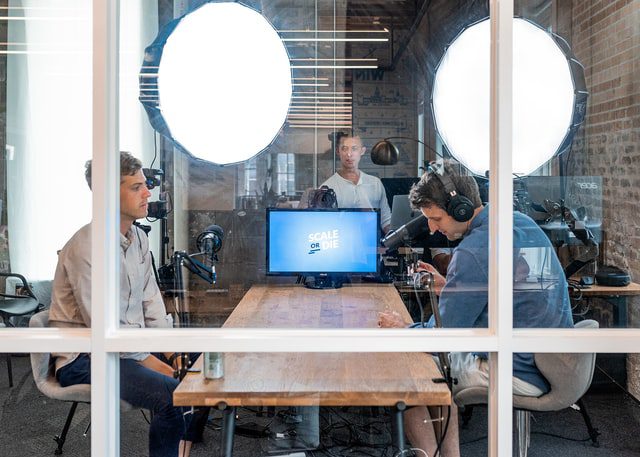
    Two people sitting at table podcast interviewGreat podcast interviews usually require some work to find the guests. However, sometimes they find you. After years of podcast productions, Troy Heinritz of The Blacklist Exposed Podcast shares a story of the interview guests who find him.

    “On the Blacklist specifically, we interviewed the stunt coordinator, the music director, the music writer, the makeup director, a few writers. We even did live watch parties at the start of the pandemic with us, the writer of the episode; and an actor, and sometimes the creator Jon would pop in as well.”

    Troy’s experience shows that it doesn’t happen overnight. He’d been working his podcast consistently for years before that call came.

    When you find those guests, you will want to produce the best possible recording. There are three keys to making your podcast interview succeed.

     Prep Your Guest

    When you find the person who will bring a new perspective and information to your audience, you need to be prepared for that interview. If you’re talking about a topic with a lot of differing opinions, make sure you understand the topic from all sides. Just asking someone a few yes or no questions is a poor interview. Be ready to challenge them, and/or ask follow up questions.

    The key to the great interview isn’t always asking the perfect question. It’s asking it in a way that draws out a story from your guest. The best way to ask a question leads to the other person telling you a story. Stories might be harder to edit, but they rarely need it. Your guest wants to tell you the story so all the usual filler words and digressions will disappear. Their excitement and urgency will show in their voice inflections, as well as their sense of humor.

    Do the Podcast Interview Prep

    A lot of interviewers don’t prep enough. They’ll read a blurb on the back of the book, or skim through the prepared notes. You can do better!

    Watch a few episodes of Hot Ones, a YouTube series where host Sean Evans and his guests eat sequentially hot wings as he asks questions that the guest never expects. His questions take deep dives into his guest’s history and experiences.

    Jordan Harbinger is another highly regarded interviewer. He preps extensively by reading books by his guests. By putting in the work, he’s ready to focus on his guests and bring everything he can to his audience.

    While you prepare, you will find new ways to address the topic with your guest. The power of Hot Ones is the unique sequence of asking questions while disarming the guest. Trying to answer a question while their mouth is on fire distracts the guest from the pre-scripted answer and they say things they’ve never said anywhere else.

    A few years back, the format that everyone copied was the On Fire format. Same questions, time after time, regardless of the topic. Take some time to come up with a twist. Just like we take time to craft a title or headings in our show notes, we podcasters can make a list of dozens of ways to ask the same question – new words, new phrases, new perspectives.

    Yes, it’s work, but in the end, you’ll have an interview with content your audience will love and your guest will be happy to promote, all while building your audience.

    Do the Screening First

    Bad interviews, regardless of the sound quality, aren’t worth your audience’s time. Pristine, perfectly recorded banalities shouldn’t use up your monthly hosting allotment. On the other hand, recordings of bad sound but brilliant information are worthless, too.

    By doing a sound test or screening, you can hopefully eliminate both.

    Some guests want the questions in advance. If you’re willing to listen to your guest read their answers, sure, send the questions. If you want more spontaneity, give them the topics but not the questions. Remind them that a bad answer can be edited out, but there’s not much you can do to rescue a bad recording. Ask your guest to conform to some standards, such as a quiet room, using headphones, and setting aside an appropriate amount of time. You deserve that kind of respect.

    I’ve had to repeat interviews because of “technical difficulties” that were the guest’s fault. The soundcheck can help you prevent them before you’re stuck with unusable recordings.

    During the prescreen, have a list of instructions for the guest and questions that you’ll want to have answered before the recording, such as the type of equipment they have and their ability to record the interview on their end.

    Remind your guest that the recording will be edited. If they stumble over their words, or say something the wrong way, an easy way to handle the problem is to ask them to stop talking completely for 5 seconds. When you go to the sound file, you’ll see the long, empty spots and know that something just before it needs to be cut.

    The Most Important Skill

    Be a good listener.

    When you listen, you’ll hear a whisper of a story. Follow up on that, not on your next question. 

    Take notes during your interview but don’t do it on your computer. You don’t want to have to edit out the sounds of your keyboard. The same for a pen or pencil that you write with – take notes, but keep the noise down.

    Keep your prepared questions handy, but let the conversation flow. You may ask a question that takes the guest a long time to answer. Sit it out quietly. Don’t put words into their mouths, or give them an idea of how you want the question answered. You can edit that long pause out. Patience gets you the unique stories, the ones they haven’t been told in any other podcast interview. That will encourage them to share your podcast episode with their guests. When you listen to your guests and respect them as people who have stories to tell, they bring you value that you take to your audience.

    Troy Heinritz says, 

    It goes to show you the old sayings are true. Treat everyone with respect, a person is a person no matter how small. That small person role, part, assistant, behind the scenes nobody may just turn out to be a big deal someday, not only for themselves, but for you as well.

    That’s how podcast interviews build your audience.

    ____________

    Kim KrajciKim Krajci, host of Toastmasters 101 podcast, has been podcasting for 7 years and writing since the creation of the stylus and clay tablets. She also teaches speech and debate and works as a social media manager.
  • Build Your Audience With Great Podcast Interviews (Part 1)

    Build Your Audience With Great Podcast Interviews (Part 1)

    This is a two part article, look out for the companion piece later this week.

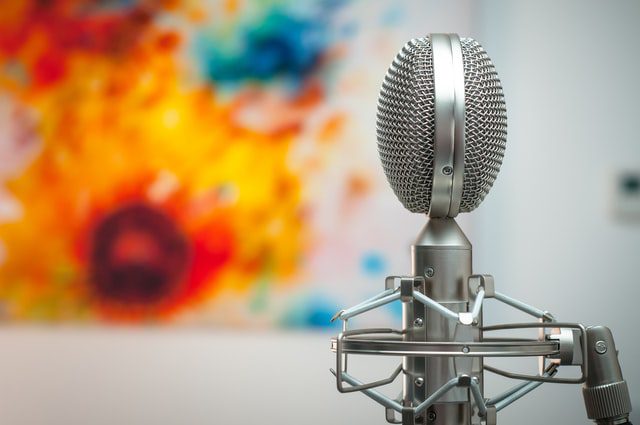
    MicrophoneIs there someone you want to interview for your podcast? Certainly, that big name will boost your audience numbers just by putting that name in the episode title. But, are you sure? Too often, podcasters put their hopes in great podcast interviews but don’t put out the effort to produce them.

    What you may need is what no one else is giving your audience. Your content is unique because it’s from you – your message, your voice, your perspective. But as a listener, if your content isn’t providing value to me, I’m going to move on. When it does provide value, I tell other people. We know that the best advertising of podcasts is by word of mouth. One person telling another, “You should listen to this.”

    Building your audience with good content will pay off in the short and long term.  Start by assessing what you have to offer.

    What Does Your Audience Want from a Podcast Interview?

    Many podcasters are determined to snag that “big name” podcast interview.  They’re convinced that the name alone in the title will bring in new listeners.  Get that big name to say yours and mention to their audience that you did an interview with them and bam!  Your numbers will jump!

    Frankly, that’s an empty hope for a lot of reasons.

    Big Name Podcast Interviews Don’t Usually Pay Off

    The big names don’t often mention these interviews on their own show. Maybe because they may lose listeners. Or maybe the interview didn’t turn out well and by preventing their audience from hearing a poor interview, they’re protecting their brand. Or, worse, the interview just doesn’t deliver value to them. “More of the same old questions” that the audience already knows isn’t worth their time to promote to their listeners.

    But the well-done interview does bring a lot of value to your audience.  It’s not just about making sure the sound is good – that is critical – but that the content is something that they can’t get anywhere else.

    How do you produce the great interview?

    Interviews take time and effort.  What you may see on a talking-heads news program is often the result of neither.  People just shouting at each other so neither is understood is a horrible interview.  

    What do you need to get and craft a good interview?

     1.  It’s not just about the big name.  It’s about what the guest has to tell you.

    Getting a lesser-known guest has a lot of potential to speak to your audience.  The big names already have an audience and probably don’t care about yours. The new name, the less-familiar expert, or even someone with the story that your audience needs to hear is a better investment of your time and effort.

    And because they’re not the big name, they’re going to be more interested in telling others about your interview with them.

    How do you find them? You know the big names in the field. Everyone knows them. Finding the up-and-coming voices is a challenge. There are a few ways you can find them, however.

    •  Go to Amazon and put in the topic or keyword into the search bar for BOOKS.  You’ll see the big names come up right away, but scroll down to see who else is listed.  Get those next names and keep a list. Start searching for your topic in Google and see where those names show up. If you can read their works online (or use the library), you’ll get to know who might be the best candidate for an interview.
    • What does your audience want to know? What do you want to know? Put your question into the search engine on YouTube and see what comes up.  This is a great way to decide who you might consider for your show. If a potential guest has a habit of ducking a question or changing the topic when the questions become too pointed, you’ll know that’s who to avoid.
    • Look for co-authors or less popular sources. If the top resource in your field is publishing articles about your topic, see who’s doing the writing and who they’re quoting.

    2.  Introducing Your Guest

    Interviews often start with introductions. In my opinion, the host with a concise explanation of why this guest is on the show and what the listener will learn does the best introduction.   

    This is a delicate point. If you give away all the goods in an intro, why should the audience stick around? You might introduce your guest with the classic “Our guest today has (done a thing) and has three things that you need to hear so that you don’t make the same mistakes.” Or a short – emphasis on short – biography with a question that creates curiosity in the listener that makes them want to stay.

    How much biographical detail you want to give the audience is up to you. I don’t often think that the bio is as important as what the guest has to say. I’ll skip over those often, but I know there are a lot of people who want to know the credentials of the guest. I’d say that your style is yours. How you want to include their biography, education, history – that’s up to you.

    Some – most – unprepared interviewers start with the question, “Tell us about yourself.” That’s too broad and invites the guest to tell us about things that aren’t particularly important to your audience (do I want to know when they graduated from high school?  Not really.)  You need to set the guest up in the intro to provide their best interview.  That means you explain to the audience who this guest is and why you want them on your show.

     3.  Editing the Podcast Interview – Play Fair!

    Any discussion is likely to go sideways at some point. The question gets an answer that doesn’t help the audience understand, or the discussion goes off on a tangent.

    Don’t be afraid to edit a conversation, but play fair. It’s wrong to change a comment’s intent by fraudulent edits. Keep the conversation legit, but consider the non-answer.  Ask yourself if it’s worth the listener’s time. If you ask a question and get a “no” then you might cut the question out of the interview, unless the “no” has something behind it, such as the start of a story.

    I try to pull out the obvious filler words or extra-long pauses. Sometimes a guest might drop in a few words that you want, such as the F bomb or another swear word or vulgarity.  If you don’t want an explicit rating, go ahead and bleep it out.  Be sure to warn the guest before the recording begins if you want to keep it clean.

    People talk about the best interview they just heard

    When you have a great interview with material that your listeners gets excited about, you know they’re going to share it and build your audience without further work from you.

    In the next blogpost, we’ll talk about the three keys you need to produce an great podcast interview that will excite your audience.

    Read part two here.

    ____________

    Kim KrajciKim Krajci, host of Toastmasters 101 podcast, has been podcasting for 7 years and writing since the creation of the stylus and clay tablets. She also teaches speech and debate and works as a social media manager.

  • Newsletters for Podcasts

    Newsletters for Podcasts

    Reach Your Podcast Audience Directly

    Blue email symbolHow many emails do you receive on a weekly or daily basis? Probably too many to count, let alone opening and reading all of them. Receive too many emails without worthwhile content? Unsubscribe. End up on an email list you’re completely unfamiliar with? Mark as spam. See spontaneous emails a few times a year? Forgettable. Sometimes it’s easier to lose subscribers than it is to gain them.

    All that aside, people ignore certain emails because they bring them no value. When interacting with your podcast audience, think about the value you are providing them, just like you do when producing your episodes. That value may be different too. Your emails should serve a purpose to its readers and not just to yourself.

    The ability to reach your audience via email can be an incredible tool, if used correctly and wisely. Like with podcasting, consistency can be key with growing an email list with a respectable open and read rate. Here are a few key steps to ensure you’re not wasting your time or anyone else’s:

    Build That Email List

    It all starts with a list. No matter how big. Not sure how to begin building your email list? There are plenty of ways to do so, read some strategies here. Here are some tactics we encourage you to try. Include a link on your website and mention it on your podcast. There’s a good chance people following your social media will take the next step here, include a link to sign up in all of your bios.

    As time goes on, you’ll lose some subscribers but that means you’re keeping the ones that find your content valuable and/or meaningful. It varies depending on the industry, but overall the average open rate of emails is 18%. Whatever email service you use will include this data and you can track your progress as you find your footing with content. Here are additional tips on how to improve your open rates and more.

    Keep it Fun

    As you begin sending out regular emails, you can get creative with the type of content you include. You can try something fun such as an audience shout out or contest for some free merch. Did you post photos of your studio and guests to Instagram? Reshare them here and include anecdotes from recording.

    Email templates are extremely easy to use and are a great way to show off your brand. We use Mailchimp, but there are plenty of services to choose from. You can send different types of emails, it doesn’t all have to be put into one email twice a month. If you’re not comfortable writing, keep the copy short and the content lively.

    Don’t Forget a CTA

    You’re emailing your audience because you want them to do something, right? Specifically mention what you want them to do in your call to action. If you want them to listen to the episode, include a player or social share that includes a brief clip. Want them to subscribe to your podcast? Include links to subscribe on multiple platforms. If you want to grow your audience, ask them to forward their friends that would enjoy listening.

    Regularly Include:

    • A link to the episode
    • Brief recap
    • A few choice pieces of the show notes
    • Call to action of your choosing

    Dos and Don’ts

    • Do edit and proofread your copy. Consider hiring an editor or asking a friend to help you review.
    • Don’t include numerous photos, gifs or videos. It’ll cause slow loading times, not a good look.
    • Do send from a designated email address associated with your podcast.
    • Don’t skimp out on a catchy, but truthful, subject line. It has to attract them but not feel like clickbait.

    Don’t get overwhelmed by all the job titles you take on as a podcast host, including newsletter-writer. Emails really can be a simple and consistent way to not only keep your audience informed but to keep in contact with them. You’ll find some people will respond and expand on your podcast community. We highlighted the importance of email lists last week on our company show, Podcast Insider, listen here. Follow some of the steps and recommendations above and you’ll be on your way to a fulfilled email list.

    Written by: MacKenzie Bennett

    MacKenzie BennettMacKenzie Bennett, has worked in podcasting for seven years, sometimes behind the mic but mainly behind the scenes as part of the marketing team at Blubrry Podcasting.
  • Podcaster of the Month: Landis Wade

    Podcaster of the Month: Landis Wade

    Charlotte Readers Podcast artwork

    Arts – Charlotte Readers Podcast by Landis Wade

    Landis has been a Blubrry podcaster since 2018 and in that time has released 278 episodes. Not only that, he’s planned out a weekly release schedule for 2022. It’s safe to say, he is a dedicated and committed podcaster. He’s enjoyed numerous features of ours over the years, particularly website integration for his show. We hope you enjoy learning a bit about his life, his podcast, Charlotte Readers Podcast and his joy for creating.

    Thank you Landis for joining us this month and kicking off 2022’s podcaster of the month.

    Tell Us About Yourself

    Having litigated commercial and employment cases in Charlotte, North Carolina for 35 years until December 31, 2018, I refer to myself as a recovering trial lawyer. A few years before I began my recovery, while still practicing law, I wrote three novellas–The Christmas Courtroom Trilogy–a humorous collection about what happens in court when lawyers defend clients who think they work for Santa Claus.

    Dipping my toe into the writing world led to the creation of Charlotte Readers Podcast: Where Authors Give Voice to Their Written Words. I realized that one of the best ways to learn about writing other than reading books and doing actual writing was talking to other authors about their books and their writing practices. Three years of podcasting led me to complete my first full length novel coming out April 5th entitled, Deadly Declarations, a historical mystery about the controversial first American Declaration of Independence of 1775.

    When I’m not podcasting and writing, I visit with family, play a little golf, and fly-fish in the North Carolina mountains.

    What Inspired You to Start Your Own Podcast?

    After 35 years as a trial lawyer, I needed to clear my head of rules of procedure and rules of evidence and make room for more creative adventures in my 60s.

    Did you hear the one about the lawyer who walked into a podcast studio? True, it sounds like a bad dad joke, but I wasn’t kidding when I told my law partners I was doing just that when I retired from the practice of law and started podcasting, something I knew nothing about. 

    The day after I retired, I hit the ground running, and while I don’t call podcasting “work,” the schedule I keep is every bit as demanding as my law practice. It’s just a lot more fun.

    My dad asked, “How do you make money at that?” I said “I don’t, Dad. It’s just something I want to do to be creative in my Act 3.” He was mystified.

     How Do You Prepare For an Episode?

    I use an online submission form on the podcast website that allows authors to provide their author bio, book description, book reviews, social media and website addresses, author photo, book cover image, and their acknowledgment to my guest agreement. I ask them to mail the book to me.

    After reading the book, I then prepare show notes and graphics and create a short outline with topics I’d like to discuss. I provide the author guest with the link for the interview and details about the technical requirements for recording. The fun part is the interview, where I ask my guests to relax for a pre recorded session where we discuss their book and their writing life and have them read an excerpt.

    What Advice Do You Have For Someone Starting Out?

    On the technical side, start small, visit the internet for how-to tips and ask questions of fellow podcasters. Most podcasters with experience remember what it was like when they started out and are willing to offer their advice about the mistakes they made and what they learned along the way.

    On the side that matters most–the thing that ignites your passion and curiosity to keep you talking–be sure you pick a topic you want to learn more about. If you think you know it all, it will be a short run podcast.

    Finally, the podcast doesn’t need to be perfect. Don’t worry about the number of downloads, and be grateful for your guests and those who choose to listen. Oh, and try to develop some patience because things will go wrong and lessons will be learned, like the time I forgot to hit record.

    Connect with Landis…

    Landis Wade headshot

  • Don’t Sabotage Your Show Before You Press Record

    Don’t Sabotage Your Show Before You Press Record

    Red rubiks cube "figure it out"The old proverb, “The road to hell is paved with good intentions,” is a great one to keep in mind if you think you have discovered the next “it” podcast . . . yet, have no connection to the “it” subject matter. You might intend to become the next My Favorite Murder or Marc Maron, but the important element you’re missing is you’re not them. However, unlucky for them, they are not you.

    Often the hardest step in creating a podcast is honing in on what the podcast is. Let’s say you love My Favorite Murder. You’re not a detective, a lawyer or a murder mystery writer, but you see how popular that show is, and you think you could make a show like it – but make it even better. Sure, there are tons of true crime podcasts. However, there are dozens of television shows about hospitals. Do people only watch one show about a hospital and never enjoy another one? Not at all! The ladies over at MFM have done you a favor by priming audiences to recognize a topic they are interested in learning more about.

    But the sink or swim of your idea hinges on, do you have a unique take on the genre? Have you read every book on terrifying serial killers and you are dying (pun intended) to share your love of this subject via a podcast? Or, do you and your BFF just want to quit your jobs and become podcasters? (Who doesn’t?) The wave of joy might carry you through the first couple of episodes, but after that, what is your show about? Why would someone subscribe to it? Can you sum it up in one sentence and get people to understand why you are the one best suited to tackle this topic?

    The bottom line is you can create a show about anything you want. But you should make the show you want to make, not the show you think you should make.

    Creating a podcast from the ground up is hard (though, using Blubrry’s Pro Podcast Production services can help you with the technical side to make sure everyone hears your perspective, loud and clear). Crafting a show that showcases your unique voice, point of view and life experience is what audiences want to hear. They are less interested in you doing something you’re less engaged in, in the hopes of it becoming popular.

    In the face of this, you can always try out your version of MFM. Post a few episodes. Using Blubrry Hosting services, you can analyze the listener statistics to see who is listening to your show and where they are. Once you get some data on your audience, it can tell you if the idea you thought was unique is something people connect to. There’s so much that goes into thoughtfully creating a show. If you skip the step of figuring out why you and why now, you’re going to have a much harder time figuring out how to make the show last.

    Hit podcasts become hit podcasts because their content connects with their audiences in an authentic way. It’s impossible to predict what is going to resonate. However, the chances of something taking off and becoming a hit are far greater if podcast creators stay true to themselves, their interests and their expertise.

    Written by: Tara Jean O’Brien

    Tara Jean O'BrienTara Jean O’Brien has been a writer, actor, improviser, podcaster, and stand-up for nearly 800 years. When not producing, editing, and hosting her podcast, Single Vs. Married, or co-hosting, Cinema Craptaculus Presents: B-sides, she also writers on Medium and recently found a floor safe hidden in her coat closet.

  • How I Use My Podcast’s Twitter Account as a Resource

    How I Use My Podcast’s Twitter Account as a Resource

    Twitter app on phoneThere are many ways that podcasters can collect information that can be used as show notes for their next episode. For me, the most efficient way is to use Twitter and Tweetdeck. This works best if your podcast is about one specific topic.
    One of my podcasts is called Shattered Soulstone and focuses on the Diablo series of games made by Blizzard Entertainment. The show started in 2011 with an emphasis on the “Diablo community.” There is a Shattered Soulstone Twitter account (@ShatteredStone), which is helpful to gather relevant information for show notes.

    The first thing I do, every day, is get on Tweetdeck and scroll through what the followers of the Shattered Soulstone Twitter posted. I scan for items that are relevant to the show’s focus. Anything that seems like something the community would want to know about gets retweeted. Most of it ends up in the show notes for the next episode.

    Community Topics

    For example, there has been an ongoing problem within not only the company that makes the Diablo games, but also in Activision (the parent company). This has led to news websites that don’t usually write about gaming to post articles about the lawsuits and other issues. Recently, the workers of those companies have started focusing on unionizing. I feel it is important to keep my listener’s updated. My goal is to have everyone hoping for the very best for the workers because they are the ones who create the games we love.

    Community Members

    The Shattered Soulstone account follows people who are working (or have worked) on Diablo games. This includes community development managers, people who were previously game developers, and the official Diablo Twitter accounts. It is a good way to find news about recently released content in the games, when a new game will release, and whenever a patch is made to existing game content. There is also an opportunity to retweet a person who announces they are leaving Blizzard and when someone announces they have started working for Blizzard on a Diablo team. Once in a while, a Lead will share information that the community has been waiting for.

    Community Creations

    In addition, I seek out the wonderful creations from the Diablo community.This can include artwork, cosplay as a Diablo character, animation, shrines to one of the characters, and more. In addition, I mention when other Diablo-focused podcasts release a new episode of their show, and point people toward websites that have helpful information for those who want to know how to play more efficiently.

    All of these things can be retweeted and shared with those who follow the @ShatteredStone Twitter account. In addition, I can use Tweetdeck to find even more Diablo content. It is easy to look up a specific Twitter account, pop it up on Tweetdeck, and scroll to where the Diablo-related tweet is. With one click, I can have the Shattered Soulstone account retweet it. Sometimes, those people will start following the podcast’s Twitter account and this helps to grow my show’s audience.

    When it is time to record a brand new episode, I can take a look at the things that I collected in the Shattered Soulstone Twitter account. Everything I wanted to talk about is right there! What works best for me is to open a browser and sort things into individual tabs. It makes it easy for me to put things together by topic so my show flows nicely. When the show is over, I use those tabs to make show notes. All of this significantly decreases time spent searching for what to talk about.

    A bonus of approaching things this way is I get to engage with members of the Diablo community. Some have joined me as a guest on my podcast. I was able to meet and talk with many of them at previous BlizzCon’s (before the pandemic), and ask questions to some of the people who worked on the games.

    In short, gathering up topics for show notes on Twitter saves a lot of time and energy that would otherwise be spent digging up things to talk about. It is especially good for podcasters who don’t have a lot of free time, or who have chronic illnesses that slow them down. Your community will organically grow the most value you give them. Be sure to follow Blubrry’s Twitter and learn more about posting on Twitter for your podcast here.

    ____________

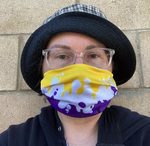
    Jen Thorpe wearing glasses, hat and face maskJen Thorpe has been podcasting since 2005. They are the host of the Shattered Soulstone podcast, which releases new episodes every week. When they aren’t podcasting, they are playing video games or Dungeons & Dragons.
  • New Year’s Resolutions For Your Podcast That You’ll Love – And May Actually Keep!

    New Year’s Resolutions For Your Podcast That You’ll Love – And May Actually Keep!

    Make 2022 your best year yet in podcasting.

    New Years Resolution written on paper, pen underneathWhether you are the type to set resolutions and actually follow them, falter somewhere around mid-February (stop glaring at me, dusty treadmill in the corner), or prefer to call them something else such as goals or a business plan, having a vision provides you a roadmap of what you’re doing, and why you are doing it. The new year is a great time to recalibrate and reframe how you go about recording and promoting your show, plus seeing what’s already working and how far you’ve come!

    We don’t need more holiday stress, so I wanted to keep it simple with FOUR easy and fun New Year’s Resolutions you may consider this year for your podcast. Feel free to focus on all four throughout the year, or just pick one and try to really get comfortable with it.

    1. Get Specific About What It Is You Want

    It’s very common to just desire more followers, downloads and a larger social media network, but what exactly does that mean to you. For some podcasts, having 60 downloads and reaching that 200th Instagram follower is fantastic and is the next ladder up on the step. For others, reaching their millionth download and selling 20 merch pieces a week may be their next move. I invite you to get REALLY nerdy in early 2022 and write down specific numbers and goals for almost every aspect of your podcast.

    It’s easier to gauge progress when you say “I’d like 30 more email subscribers per month” than “a bigger email list.”  If you have other podcasters in your life, host a “pod party” where everyone does this together and brainstorm how they can help one another. Over pizza and drinks, you can write down your specific goals and check in every couple months to see how it’s going. Please invite me to this party, it sounds nice. 

    2. Go Deeper With Your Guests

    Deep and insightful conversations are not just reserved for Oprah and Eckhart Tolle, they can be for you too. I spoke with Jeff Sirkin, host of the Long Story Short podcast, where he shares the stories of marketers and their brands in a compelling way. For 2022, he plans to dive in even more. Jeff said, “A resolution that I  have is to focus on having conversations that interest me and going DEEPER with our guests.

    Often, the thought is that if you go too deep into conversations, they will become less interesting to your audience. However, when you keep things surface-level, it can be too generic. The audience isn’t really that interested, and it’s easier to find myself checking out of the conversation. If something is interesting to me, it will only make it more interesting to listen to!” 

    3. Realize That Whatever Stage of the Game You Are In, You Can Always Learn

    For podcast vets, it’s easy to feel like we’ve put in the work and now get to curl up in the sunshine and take a nap. Unfortunately for us, but good for this article, there’s always more to learn. For me personally, my 2022 podcast resolution is to learn how to actually use TikTok to promote my show, and then post one video on the platform a week. For podcast newbies, the goal itself may be just to keep consistently growing and getting into a rhythm of promoting your show.

    Historian and comedian Dawn Brodey recently launched her show, HILF: History I’d Like To F**K, and the response to it has been even better than she imagined. Dawn hit it out of the park with her launch, and now shares her resolution for 2022. “For me, it’s about getting to the next layer outside my family, friends and social media. I’ll be inviting guests on that I don’t know personally, and promoting in groups outside of my initial sphere.”

    4. Get In Shape – But In Podcast Shape

    There is typically so much of an emphasis on health and wellness for our resolutions, which is great, and we can copy that over to podcasting. It’s a great resolution to “trim the gristle” off your show and make sure your description is current, your art is high quality, and your RSS feed is healthy and working in all areas. Once a year in January, I’ll pour an extra large eggnog and go through all the places I know our show is, and make sure they are working and everything is in order. I keep an excel spreadsheet so I know my progress.

    Be sure to tell us about any of your resolutions, and be sure to check out our Editor’s Pick section on Blubrry for some inspiration for examples of both great guests and shows.

    Happy podcasting!

    ____________

    Meryl Klemow

    Meryl Klemow is a podcast writer, guest booker, and co-host of the Campfire Sht Show podcast. Meryl is a part of the Blubrry content team, and a Senior Copywriter at Podfly Productions. She also has a T-shirt line, Pre-Canceled. Say hi to Meryl on Instagram at @MerylKlemow.
  • The Value of Spending on Marketing Your Podcast

    The Value of Spending on Marketing Your Podcast

    LightbulbIt’s so exciting when your podcast starts making some money! Suddenly you can justify buying better recording equipment, or maybe you choose to decorate your “studio”. Perhaps it goes into your pocket and helps with your personal bills – no matter what it’s doing for you and your podcast, it’s pretty cool that you can finally see some tangible results.

    Sure, money isn’t everything, but boy, does it help keep the lights on. Eventually, you will have the thought, “Yea, some money is nice, but more would be better!”

    What Are Your Goals?

    Before we get into the thick of it, let’s take a moment to consider your goals. 

    Has anything been bugging you about the quality of your podcast? 

    • Maybe the audio quality is lacking, and a new mic or mixer would help?
    • Maybe you run an interview style show, and a subscription to a service like IMDB Pro would help you to nail down interviews?
    • Perhaps your audience has been chomping at the bit for some merch, and you would like to invest in that side of your podcast?

    Prioritize what’s important to you and get those items budgeted first. But if the main problem you want to solve is, “How do I turn this money into more money?” then please read on.

    How to Turn Your Monthly Revenue into More Monthly Revenue

    The reason you have some monthly revenue is because of your audience. Either you have advertisers who want to reach your audience and pay you for the opportunity, and/or your audience supports you directly. So, it stands to reason that the larger your audience, the more revenue.

    Is this sound logic? Sure.

    Does a dollar spent on advertising necessarily translate into a substantial increase in your listener base? Kind of…

    The layperson tends to have pretty lofty ideas about how advertising works. But as podcasters, we need to have a much better understanding of what realistic expectations should be when spending money on marketing – both for our marketing knowledge and to educate those who want to market on our shows. 

    Where Should You Spend Money to Market Your Podcast?

    Well, it depends.

    Consider this question before committing to spending money on advertising, “What do I want people to do when they see this advertisement?”

    The answer will give you an idea of who or what you should do your advertising on.

    If the answer is “I want more people to listen to my podcast.” Then consider advertising on a podcast application. If you want people to listen to your podcast and see your advertisement on a podcast player, they are only one click away from listening to your podcast. Conversely, if they see your advertisement on social media, they have to jump through a bunch of hoops just to listen to your show, which is usually a bridge too far.

    But, if you want to grow your social media following, advertising on that social media platform is probably the best place to spend that marketing money.

    What Are Realistic Expectations When it Comes to Advertising and Marketing Spend?

    Depending on where you advertise and the desired outcome, you can pay anywhere from $1-10 per new subscriber. Most of the podcast platforms that our podcast has used have averaged somewhere between $2-5 per new subscriber.

    Is a new listener worth that cost? Some of them probably aren’t, to be honest. They will listen once or twice and then forget you even exist.

    Some of the listeners you gain will definitely be worth it. Some will tell all their friends about your show, subscribe to your Patreon account, and give you a five-star rating everywhere they can.

    And then there’s the new casual listener, who becomes a fan and listens regularly, but rarely if ever, acts on any of your calls to action.

    Marketing Yourself Is Important

    Just as it’s essential to reach out to other shows and do outreach, it’s important to advertise. If you aren’t doing it, you are missing out on listeners who can and will become longtime, value-producing fans of your show.

    Some people will find you if you advertise, and your monthly revenue will grow because of it. Your community will too.

    Try not to leave anything on the table, but certainly be smart about what you spend your money on, and when you notice something isn’t working, don’t be afraid to cut the cord and try another approach.

    ____________

    David DayDavid Day is the co-founder and co-host of Horror Movie Talk Podcast. When he isn’t watching horror movies he is focused on growing the podcast. Listen to his show Horror Movie Talk here.

  • Podcaster of the Month: Jennifer Fink

    General / Health – Fading Memories: Alzheimer’s/Dementia Support by Jennifer Fink

    Fading Memories PodcastIf you’re unhappy with the podcasts out there on the subject you’re interested in, make one yourself. Jennifer took the initiative some years ago and has been on a roll ever since.

    Thank you Jennifer for joining us this month!


    Tell us about yourself

    An artist & entrepreneur at heart I am a portrait photographer, podcaster, wife, Mom & dog Mom. We just moved to a new county with plans to start a new chapter of our lives. We fell in love with a community of active, friendly people and we’re excited to see what the second half of life has to offer.

     What inspired you to do your own podcast?

    I have been an avid podcast listener since podcasts began. I got into them more in 2016 after podcast players replaced having to listen via a web browser. Trying to stream a podcast & run Photoshop doesn’t make for a happy computer. In 2017, after my Dad passed away, I became responsible for my Mom who had advanced Alzheimer’s. Dad did 99% of the caregiving which left me with a lot of questions. I went looking for a podcast for Alzheimer’s caregivers and there was one. For better or worse, I just didn’t connect with that show so I decided to create my own. I figured if the only show available didn’t resonate with me, there must be more people like me needing a supportive podcast.

    How do you prepare for an episode? 

    I am blessed at having more guest requests than I can handle so my preparation process is pretty simple. Do they have a unique take on a problem that most caregivers face, do they have a solution/product and does their topic interest me. I generally have a chat with people beforehand to determine the answers to these questions, then we record. Since I am a one-person show, I try my best to keep things easy and hassle free for all of us.

     What advice do you have for someone just starting out?

    Creating a show takes a lot more time than most people would believe. If you want to grow and monetize, you’re likely going to need help or plan to work a lot. Don’t let people convince you that you have to have thousands of downloads per episode before. You can monetize. I have sponsors – still looking for the perfect one – and I get hundreds not thousands of downloads. I have a very unique niche that advertisers want to get in front of but it takes more work for me to find those advertisers and to make their investment worthwhile.

    Connect with Jennifer…

    Jennifer Fink