January was another stellar month for the podcast industry! The numbers jumped substantially from last month’s report (the December statistics) and that’s to be expected as podcasters take time off for the winter holidays.
563,481New Episodes in the Blubrry Directory
TOTAL EPISODES
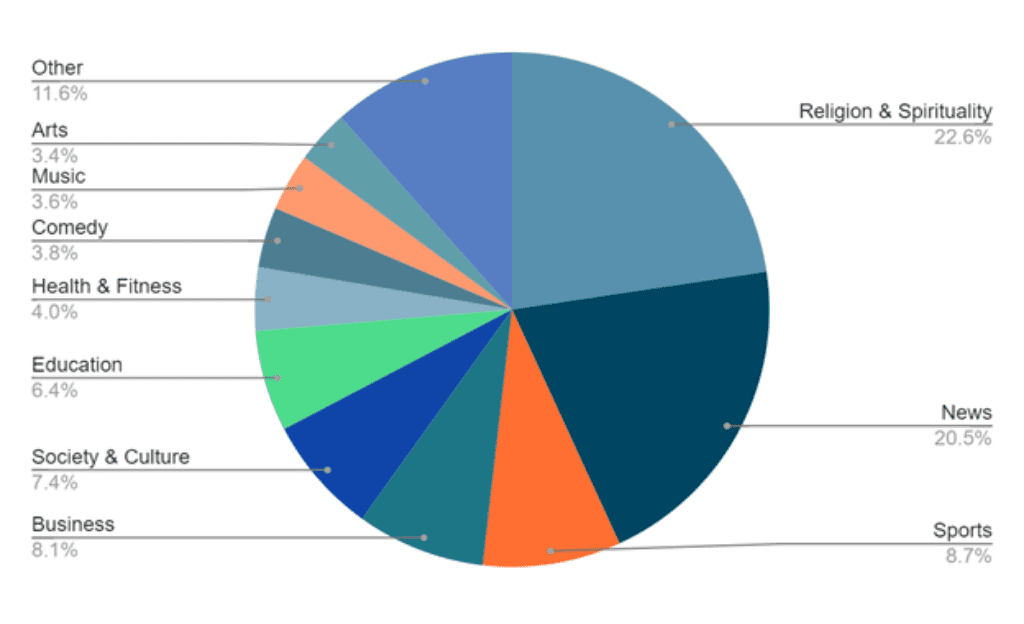
Top 10 Published by Category
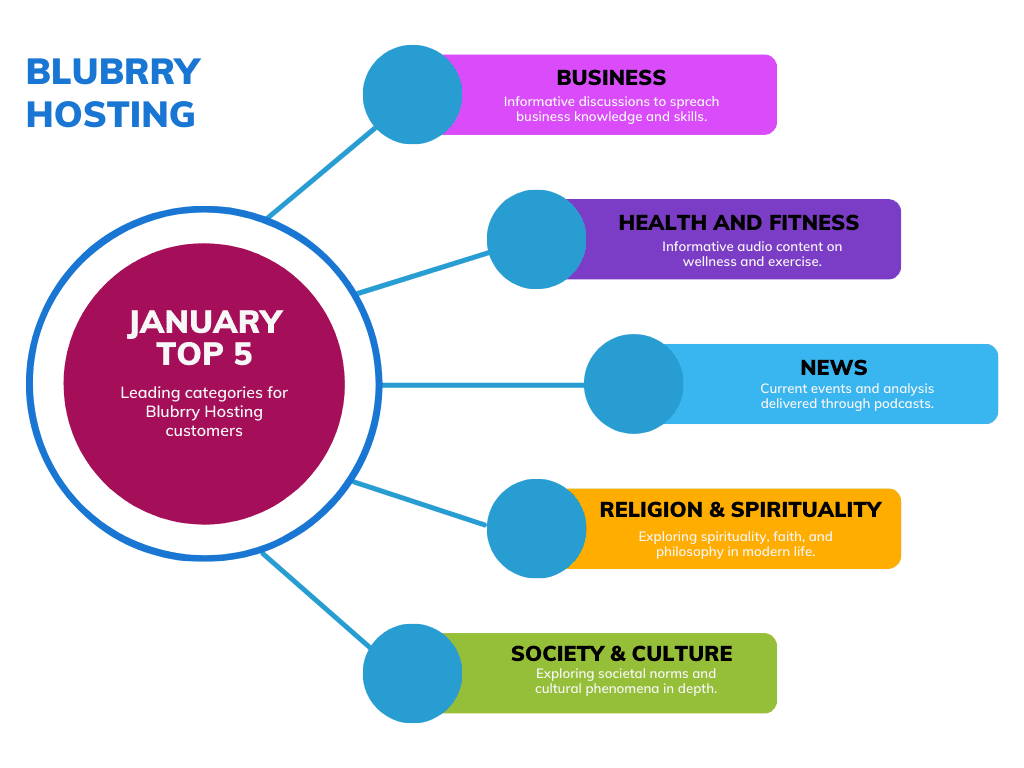
BLUBRRY HOSTING
Top 5 by Category
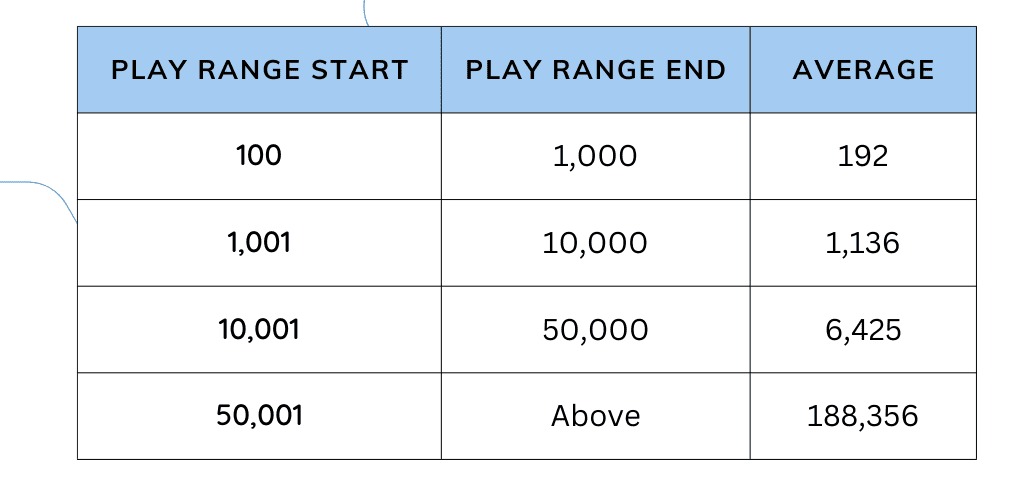
AVERAGE EPISODE LISTENS
By Show Size
Our ranges were determined when a show met the threshold one time, aka 10,001 listens/downloads, etc., during the reporting period. When a show met the threshold we included all episodes for the past 30 days that had been published a minimum of 10 days.
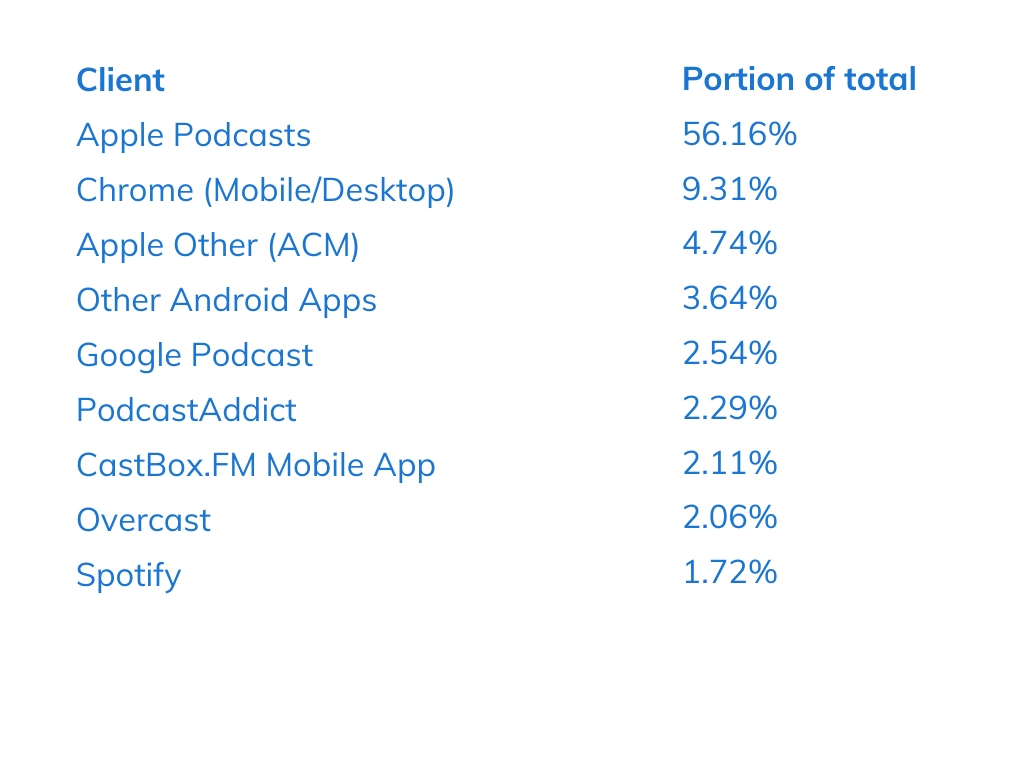
TOP CLIENTS
How Podcasts Were Consumed in January 2024 by Platform
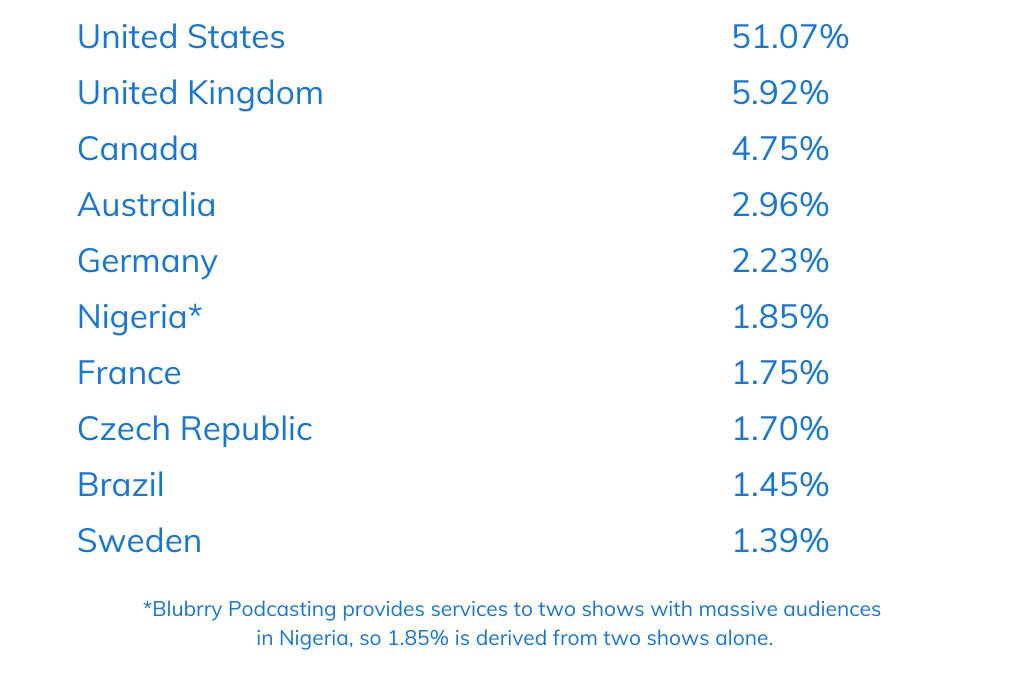
BLUBRRY TOP 10 COUNTRIES
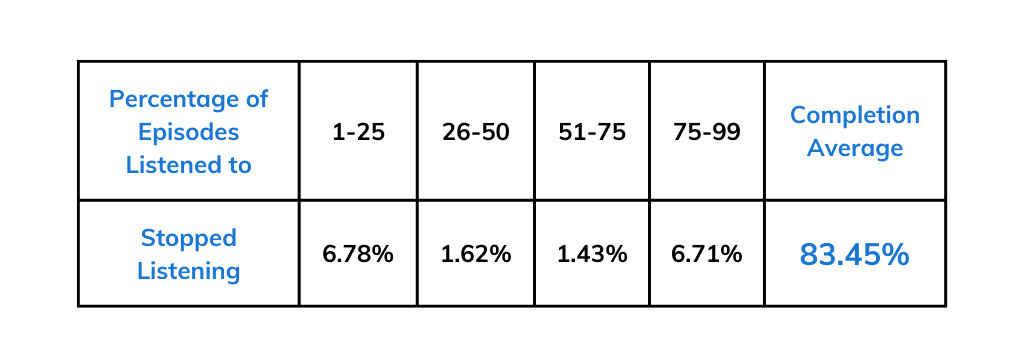
BLUBRRY GLOBAL LISTENER RETENTION
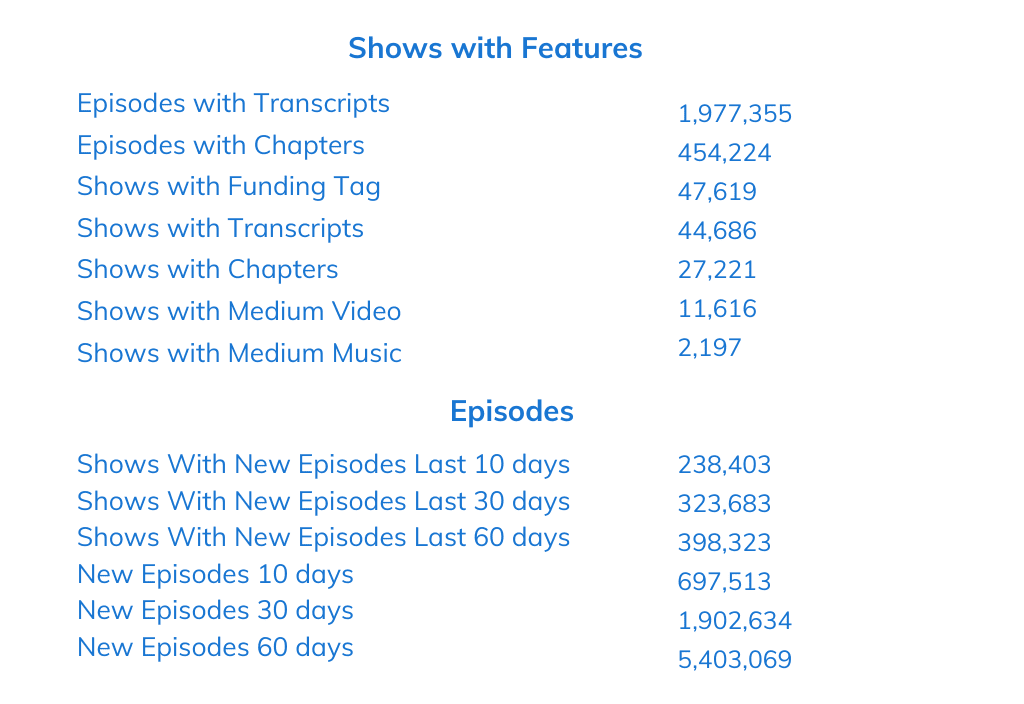
GLOBAL PODCAST INDEX STATS
Total Number of Podcasts: 4,094,443
Blubrry Podcasting provides world-class Podcast Statistics to tens of thousands of shows via redirect/prepend for those hosting on other platforms, or direct stats for our podcast-hosting customers. We have data that no other stats provider provides. Sign up for Podcast Statistics today.
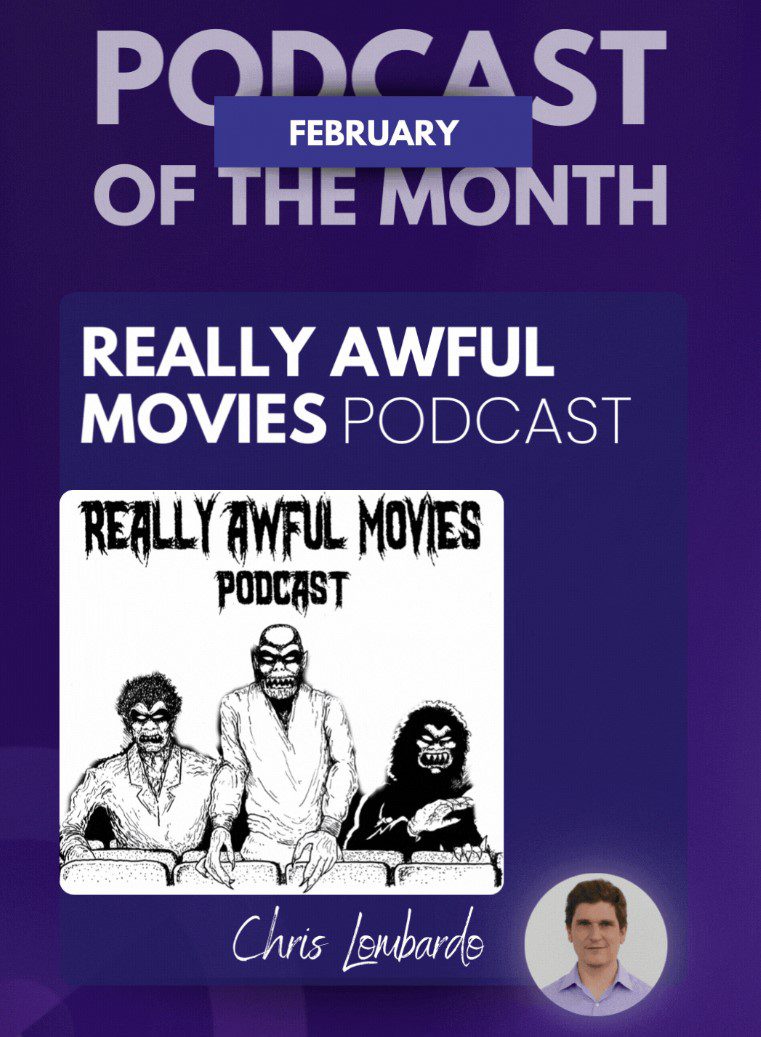
Stroll with us through the misty veils of blackened back alleys and beware of bullets and bandits as we explore the guts and ‘gory’ of cinematic shoestring thrillers. Our guide, Christopher Lombardo, is eager to lead us on a tour of the best of the worst in big-screen, low-budget entertainment in the Really Awful Movies podcast.
Our February Podcaster of the Month, Lombardo launched the weekly podcast in 2015. It offers movie buffs killer insights into low-budget horror and action flicks, along with other genres of cinema, such as musicals, monster movies and sci-fi gems – films Lombardo says “get no love or have been relegated to the far reaches of YouTube, Tubi or Netflix.”
Creep with Lombardo down the dimly lit corridors of the oft-abandoned non-blockbusters:
How would you describe your audience? When you’ve received feedback, what are some fan favorites?
For whatever reason, our audience is vastly and disproportionately British and American, and not so much Canadian where I’m based. But then again, podcasting is a truly global medium and people don’t need to be parochial in their listening habits. And it’s not for lack of trying! I routinely talk about low-budget Canadian horror cinema like Pin, Rabid, Rituals and My Bloody Valentine and wax poetic/philosophic about their individual merits.
We have a select group of diehards and engage with them on a regular basis through Insta. I’ve sent out copies of the two nonfiction books I’ve co-authored to SoCal, London, and Calgary. And it’s been crazy getting cult film recommendations (and even physical movies) sent to us from around the world. In one notable instance, a longtime fan in the Pacific Northwest suggested that we cover a terrible movie from the 80s, Longshot, with a plot based around, of all things, foosball!
Have you ever used or explored the inclusion of clips, audio, etc. in your episodes that would fall into fair use as you’re reviewing the content?
I have a busy day job: I’m a business journalist. So even finding time to podcast and edit can be trying. In the rare instance, I have a free afternoon to do more thorough editing, I’ll definitely add a small portion of a film trailer into the podcast intro, especially if it’s something with irredeemably cheesy dialogue.
You have interviewed producers, writers, etc. of the shows in these genres. Have you ever heard back from anyone associated with the films after publishing your review? And/or have you ever partnered with anyone to promote a show?
Christopher Lombardo
For better or for worse, my podcast show name sounds click-baity and I’ll bet it’s disappointed people googling and looking to see a film trashed that I’ve given plaudits. This was not my intention. It was a phrase my mom used when she asked a teenaged me, why I watched those “Really Awful Movies.”
Occasionally, I will have indie filmmakers post my reviews on their social pages, with the inevitable comment from someone who’s not read (or heard) my positive review, saying “What are they talking about, it’s not really awful!” In a way, Really Awful Movies is a good pod and blog handle, as you can weed out people with low attention spans who have not actually engaged with what I’ve said, and just assume it’s an excoriation.
I don’t do nearly as many partnerships as I could/should, and last did one mid-pandemic with Killer B Movies. If I do anymore, I am going to do video casts, with the added benefit now of being able to freely get a haircut in preparation.
As a longtime Blubrry customer, what made you decide on Blubrry? What advances are you looking forward to or hoping for moving ahead?
There were two well-regarded choices, Blubrry and Libsyn. I’ve used both and find the user interface far better for Blubrry. In fact, Libsyn was a real pain in the ass as they were in between regular and I think beta-tested versions. It just wasn’t intuitive and had a dated backend look. For the future, I’d like more design options for the site, and perhaps integration with a standard blog or other URLs.
You’re using programmatic advertising. Awesome! Have you found this an effective way to monetize? Are there others you’re using, have tried or would like to try?
The jury’s out on whether it’ll be effective. It’s simply too new! And besides, my numbers tend to take a dip around Christmas, when people (shocking, I know) have better things to do than listen to movies about ninjas, zombies, masked psychopaths, and South Asian drug cartels. I am a bit reticent about Patreon, as I’ve often held the view that to support the show, listeners should just buy my cinema books instead of donating. But I could lean into that eventually.
What are your next steps as you ascend the stairs of screams or explore the emerging annals of action?
I would like to get to newer horrors, faster. But I have a young child at home, and it’s not nearly as easy to rush out and catch the latest offerings in cinema. Also, the ‘90s represent a bit of unexplored territory for me on the podcast, for both horror and action, but for different reasons. While the ’90s can boast some of the craziest, ridiculous, and entertaining action films of all time, it is my contention that the same cannot be said about the ’90s for horror. It was a bit of a weak decade, Candyman excepted. Thus, I’d like to put that thesis to the test and see if it holds up.
When Saranne Rothberg was faced with stage IV cancer and hours of sitting in a chemo chair, she recognized that although her situation was no laughing matter, the old adage was true – laughter is the best medicine. Not one to wallow, on her first day of treatment Saranne held a “Chemo Comedy Party” for herself and others undergoing chemotherapy. Since then she has been a catalyst for comforting cancer patients and their loved ones through her Foundation, ComedyCures.
Giving Tuesday 2023 is Nov. 28, and as we launch into the season of giving, Blubrry is honored to showcase Saranne’s podcast, Beating Cancer Daily, and her mission of supporting cancer patients and their families through treatments and the healing process. It might be hard to believe when you hear the wit and ease of December Podcaster of the Month, but Saranne was hesitant to start a podcast. Now, her transformative strategies, research findings, fun, practical tips and comic insights help listeners around the world navigate their diagnosis and survivorship with humor and resilience.
Saranne Rothberg
“I hear people that don’t even have cancer are listening to Beating Cancer Daily because it’s playful and practical. There are great strategies, some fun research, and a comic perspective,” Saranne says. “I just meet up with you every day to encourage you to have the best life possible, laugh a bit, and help you feel supported.”
Saranne explains that she was misdiagnosed 30 years ago and wasn’t correctly diagnosed for another six years. She then underwent three surgeries, 44 radiation treatments, and more than two years of chemotherapy.
“When nothing worked, I was told to get my affairs in order, which I could not do because I was a single mom and I had sole custody of this beautiful little girl. So I had to figure out this cancer situation,” she said. “So many people from all different sectors had urged me to launch a podcast, whether they were from research or from medical or patients or caregivers, widows, survivors, they all said, ‘Please do it.’”
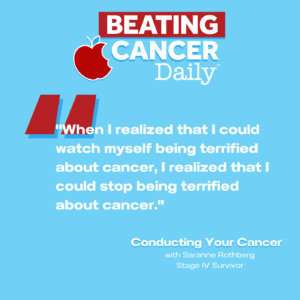
And so she did – daily. “This cancer experience can be really brutal. And it doesn’t hurt to have somebody right in your ear who has beaten stage IV cancer to help guide you through and sometimes just hold your hand. I wish I had Beating Cancer Daily when I was diagnosed.”
You launched The ComedyCures Foundation from your chemo chair in 1999 to bring levity into the lives of cancer patients and survivors. How has the Foundation grown over the years and how do you measure its impact?
From my first chemo infusion, word spread about our fun interactive ComedyCures approach and programs via patients, caregivers, hospital workers, comedians and the media. Requests for our “Chemo Comedy Parties” came from all over the United States and then globally. From 1999 until today, we’ve been able to bring joy, laughter, comedy and hope to over a million people through our ComedyCures Foundation’s live and digital events. Being asked to collaborate with Harvard, Stanford, The NIH, the US Military, United Nations, the World Health Organization, and more has been such an honor. ComedyCures has worked with nonprofit organizations, corporate partners and institutions at more than 2,000 programs. Findings from three ground-breaking pilot research studies, surveys, referrals, program demand, awards and email testimonials have helped us gauge our impact. Our “Beating Cancer Daily” podcast has quickly spread to listeners in 42 countries in just seven months.
In addition to Beating Cancer Daily and The ComedyCures Foundation, what other activities do you undertake to spread the word about the healing impact of humor?
Collaborations with over 300 comedians and comedy experts and more than 1,000 for-profit and nonprofit organizations have been the key to ComedyCures programs reaching many more people beyond our small nonprofit’s capacity. The ComedyCures LaughingLunch Break PSA Campaign with CBS Radio helped us bring comedy and joy to millions of listeners daily for 13 months with the humor of over 100 ComedyCures comedians. Our five-day ComedyCures Laughter Summit (April 2021) brought together 29 thought leaders in psychoneuroimmunology, joy, positivity and wellness from around the world, plus 24 ComedyCures comedians added to our laughter and learning during this innovative virtual pandemic conference. Teaching in hospitals, medical conventions, universities, schools, community centers, Fortune 500 corporations, the VA, scout troops, health fairs, orphanages, shelters, hospice, walk-a-thons, the United Nations and World Health Organization have helped ComedyCures spread therapeutic laughter.
Can you give a couple examples of inspirational feedback you have received from individuals who listen to Beating Cancer Daily and/or those who the foundation has supported?
One of the most incredible stories just happened recently when we received a phone call from an 86 year-old nun who had cancer. She shared that she was in a convent hospital for ill nuns who were forced to retire because of illnesses, causing their spirits to plummet. They felt our ComedyCures programs would be just the thing the sisters needed to break down isolation and deliver joy, laughter and fun daily coping strategies. We have delivered two successful monthly programs to the nuns with an upcoming holiday program scheduled.
Similarly, the Red Cross asked us to come to Ground Zero to help relief workers and nearby families. Several years later, we were asked to produce the first therapeutic reunion for the families impacted by the tragedies of September 11th and then ComedyCures helped launch the first camp for children impacted by terrorism.
A patient with advanced cancer (who had attended a ComedyCures program) awarded the Foundation a research grant to study ways to improve the lives of advanced cancer patients. Our first pilot, The Mindset and Metastatic Research Study, was called “innovative and exciting” by the American Association for Cancer Research. AACR requested our abstract and we presented our study at the 2023 global conference for 24,000 oncological researchers and others. Because of that scientific success, that same cancer patient’s foundation has supported a second ComedyCures research study for patients with advanced cancer. Those findings will be released in early 2024.
One of our most moving stories is from a critical care nurse involving a dying patient who could barely speak. The nurse played our free ComedyCures LaughLine (1-888-Ha-Ha-Ha-Ha) for her patient every day. One day the patient motioned that she had conceived a joke. The nurse called and recorded the patient’s humor for our LaughLine and relayed this powerful story. We repeated the story and her original joke on our LaughLine and the patient celebrated that she “was now famous” (just days before her passing) as word spread throughout the hospital about her ComedyCures LaughLine feature.
Learning that people who do not even have cancer are listening to “Beating Cancer Daily” to support themselves through their illness, depression, trauma, loss and disabilities has helped our podcast gather listeners in 42 countries. Winning many program awards over two decades and now making the top 2023 list for outstanding cancer podcasts has also spread the word about our ComedyCures power of healing.
It appears that Beating Cancer Daily was launched in March of 2023. Since you have been a strong advocate for humanizing cancer care since 1999, what attracted you to podcasting?
Honestly, I actually resisted doing a podcast for over a decade. I’m a live-event keynote presenter, performer and producer so I couldn’t imagine myself sitting alone in a podcast booth. Now, I am obsessed with podcasting. Launching “Beating Cancer Daily” and watching it help people around the world 24/7 has been the most amazing experience. Every day for 365 days, I take patients through their diagnosis, cancer treatments, and then through survivorship. The podcast not only helps cancer patients, survivors, family members and healthcare workers, but we now know that people who just want to improve their wellness, increase their coping strategies, and laugh a little more each day are listening. As a stage IV cancer survivor, patient advocate and comedy expert, I humanize and humorize the most challenging moments of the cancer experience. Podcasting daily is one of the most intimate creative experiences that I’ve ever had.
With topics ranging from the medical properties of food to nausea to (whether in the process of getting rid of cancer or in remission) not allowing cancer to consume or define you, where do you find the inspiration for each of your daily episodes?
As a stage IV cancer survivor and patient advocate with no visible disease (for over two decades), many of these 365 episodes come from my own cancer fighting and coping strategies which we have taught in our three groundbreaking ComedyCures research studies. I have a unique comic perspective regarding cancer. Some “Beating Cancer Daily” episodes arose from helping over a million people on six continents through our live and virtual ComedyCures Foundation’s programs. Every daily episode is different, and sometimes the episode is just a lot of fun. I call that “tumor humor,” and it’s a comedic look at how you can develop your comic perspective to get through this cancer experience. Many episodes have been inspired by patients, caregivers, comedians, researchers, quotations, questions and advice passed down by doctors, cancer elders and sages. Over 220 “Beating Cancer Daily” episodes have been distributed to date, and I am still going strong toward my 365-day goal.
What is your scheduling process for podcasting? Do you record each day? Several at a time? And how will you approach the daily podcast over the holidays?
My favorite time to record “Beating Cancer Daily” is in the middle of the night when the East Coast is sleeping and interruptions are minimal. I usually record anywhere from one to four episodes at a time. Sometimes, a podcast idea is just so exciting that I stop a meeting and I have to rush into the podcast studio and “give birth” to the episode without any delay. Before a holiday, I have done as many as eight to 10 in one day. My podcast production company suggests that we stay 30 episodes ahead but with my speaking, consulting and travel schedules, maintaining that long lead time as a busy not-for-profit CEO has been tricky. I have recorded many episodes on the road in a carpeted hotel closet. When I feature our fellow ComedyCures survivors, Comedian Missy Hall and Functional Medicine Expert Jacqui Bryan, RN, CNS, WHE, CHC, on “Beating Cancer Daily” episodes, I have to schedule them in advance and at more reasonable hours.
Consider making a tax-deductible program donation this holiday season to help keep Beating Cancer Daily commercial-free. https://www.comedycures.org/
Refer Beating Cancer Daily to a loved one wherever you listen to podcasts.
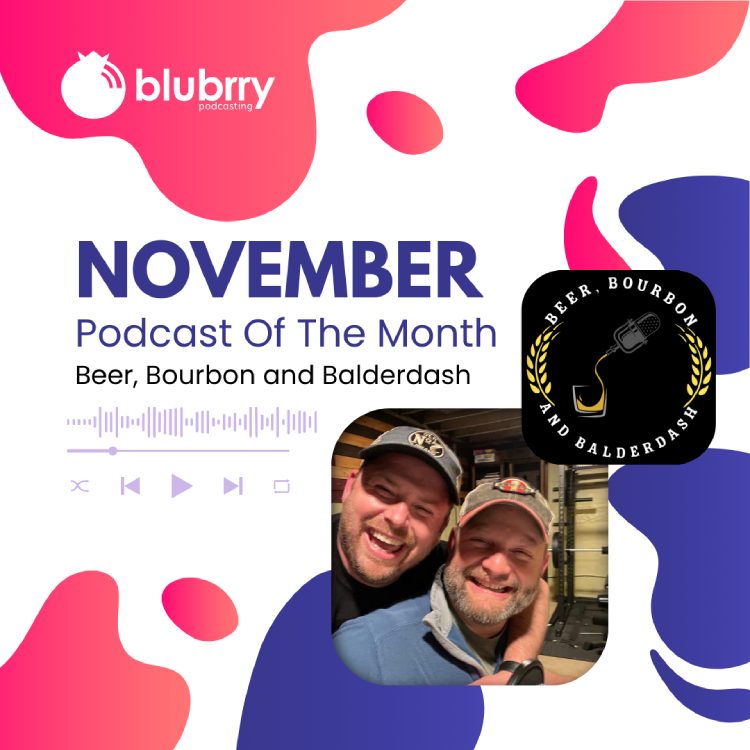
There’s not much that could top two great friends getting together to BS about the state of the world and other timely – or even untimely – topics. Unless, that is, you add craft beer and fine bourbon to that conversation to come up with an audibly intoxicating podcasting recipe. And for the foam on top? Toss in Podcasting 2.0 features for an absolutely tantalizing podcast. Those are the ingredients for Beer, Bourbon and Balderdash, compliments of our November Podcasters of the Month, Wes Olsen and John Harrison.
Although launched in February 2022, the duo’s friendship goes back a decade when they met at their sons’ soccer games. “We immediately made each other laugh and since then our families have become very close; we are family,” Wes said.
The hosts explained that Beer, Bourbon and Balderdash came about, “as many things do, while drinking and having spirited conversations (pun intended)” . . . you know, bar talk.
“We thought it would be fun to start a podcast where we drink and give our takes on all kinds of topics,” Wes said. “Since John and I don’t always agree, we also thought it was important to have people listen to what it sounds like to disagree but remain friends. I also think we agree people generally are more alike than different.”
Outside of the podcasting universe, Wes and John say they’re just a couple of Joes loving their families and enjoying life as much as they can. Wes, who identifies as a conspiracy therapist, enjoys spending time with his wife vacationing and street photography (check him out at @wesolsenphotography on Instagram).
John, who describes himself as Fun Boy, is into building and fixing things, and getting tons of satisfaction out of helping people. “I was fortunate enough to grow up in a house with a father who seemed to know how to fix almost anything and passed that skill on to me,” he said. “I love working side by side with my wife, and the two of us have taken on everything from kitchen remodels to decks and patios, to building our own off-grid cabin in central Washington.”
How do you choose which alcohols you feature on your shows? Do people contact you and ask you give theirs a try? Have you ever had to call any out for being really horrid?
We choose by what’s available and what sounds interesting to try. We haven’t had anyone reach out to us to review their products but we have received a bottle of whiskey from a No Agenda producer, that thankfully ended up being really good. We also have had some stinkers on the podcast and we try to find something good about them, but because we have no corporate sponsorships (Value4Value!) we can be honest!
Since beer can be very seasonal, we will often select ones that fit the time, like Oktoberfest. Or sometimes it fits the theme because of a clever name.
In addition to beer and bourbon, you touch on topics such as mental health, conspiracy theories, extraterrestrials and some of the most outrageous and ill-conceived ideas known to humanity. How do you balance the juxtaposition of fun, flavorful discussion with more intense conversations?
Since we see ourselves as a “Bar Talk” podcast we want to be mostly entertaining and light. We touch on topics that we find thought provoking and maybe our audience will too. In the end we want to make something we enjoy and maybe can bring a smile for an hour a week to someone else.
You livestream your show and audiences can chat with you throughout. What are advantages and disadvantages to live-streaming?
Advantages of live-streaming is getting immediate feedback and engagement from our listeners. Meeting new people and hanging out with old friends is what’s at a bar and the more we can create that type of show the better it will be.
The disadvantages would be the technical issues that can arise that your audience has to listen to, which can be long and tedious.
You guys have adopted Podcasting 2.0 – well done – while a lot of hosts are still trying to figure out what it’s all about. Can you tell us more about how you are using Podcasting 2.0, which features you are consistently using and how they benefit you? Do you have a wish list for what you would like to see in Podcasting 2.0 or in podcasting in general?
It is amazing to me how many “mainstream” and “popular” podcasts have not jumped on to Podcasting 2.0. There are so many cool benefits that they could use that would allow them to have a bigger impact on their audience. I wouldn’t say we are very popular, but we have a good base and we want to give them value by adding chapters and some artwork while they listen. As we continue to grow and go live more often, the “live tags” in Podcasting 2.0 apps become even more essential. If live chat could be integrated into that it would propel this even further.
What is your preparation routine as you’re planning your next episode(s)? Do you have – and how do you approach – a recording schedule?
Wes: We usually send texts throughout the week about topics and then I create some talking points to help keep us engaged and on track. John created a tracking sheet to record what beers and bourbons we have had and will use on the podcast so that helps a lot. Right now we go live and record on Wednesdays at 4pm PST because with us being bi-costal that seems to work best. John: I think we are still getting it figured out. We are constantly trying to figure out ways to better engage the audience and make the show better. For example we have typically decided what to drink week to week, but recording remotely requires us to plan much further out, forcing us to get better.
Anything coming up you’d like our Blubrry audience to know about with Beer, Bourbon and Balderdash?
Wes: We would like to invite the Blubrry audience to check out the podcast and reach out to us with comments and suggestions. We like constructive criticism and we even take calls on the podcast so the audience can participate. So just like going to a bar, come hang out with us and let’s make new friendships! Cheers! John: I second that. We try to be as honest and authentic as possible. We have been told by friends who listen that the podcast has the same feel as when we are just sitting around as friends chatting. We like interactions and don’t take criticism personally. If you love it, tell us. If you hate, tell us. We don’t want our show to be homogenous, average, and boring. And much like bourbon, we know we are not for everyone.
Get to know and follow Beer, Bourbon and Balderdash here:
For the uninitiated, “fancasts” are podcasts created by fans that are dedicated to a film, TV show, book, sports team, celebrity, or anything under the general umbrella of entertainment. These podcasts often expand on the world of a show, imagining expanded storylines within that world or its characters, analyzing the inner workings of these worlds, or theorizing where they think the show’s material (or season) might be going.
Fans create their own content because not only do they not want to wait for new material from the original creators to be released, but they are often looking for a place where fans can connect with acommunity of like-minded (sometimes lightly obsessed) people.
One of the most popular fancasts dedicated to all things The Lord of The Rings, isTalking Tolkien: An Unexpected Podcast. Hosts and long-time friendsEzra and Lane say they started the podcast out of love for the LOTR universe, but more specifically, “The genesis, or the Ainulindalë to be more topical, came from Ez and I rekindling our friendship.”
Sure, the television shows or stories are why people initially listen to a fancast, but Ezra and Lane really pinpoint why listeners come back for more – these shows create a unique bonding experience for the hosts and the listeners.
“We’ve had SO many interactions with listeners and received so much positive feedback. Hard to even keep track of honestly. We have the most generous listeners. So many of them have gone on to become actual friends – it’s wild. Probably the most surprising ones are when we hear from someone that we were able to keep him/her company during a really dark time in someone’s life… That’s been the most humbling thing to hear,” Lane says.
Dave Humphreys started the podcastWhat Does Star Wars Mean To You? and he had an incredible (dream-worthy, really) experience, “One of my listeners, a TV showrunner, reached out to me via one of my guests just to be on the show! I couldn’t believe it.”
A quick peek at some of this week’s top fancasts includes a show about superheroes, a show dedicated to the TV show Big Brother, and one about FC Chelsea football (soccer for us un-posh Americans). These shows may seem niche and hyper-specific to the casual observer, but a show dedicated to the band Rush, “Something For Nothing,” has over 544,000 downloads. That’s impressive for any genre of podcast!
Humphreys summarized what is so beautifully unique about fancasts, “Taking the question of, ‘What do you like about Star Wars?’ and twisting it to the more personal, ‘What does it mean to you?’ takes the hate out of the debate and refocuses the conversation on why we all fell in love with it in the first place. And when people talk openly and passionately about what they love, it’s hard not to see it from their perspective.”
It doesn’t matter if the topic is dragons, murder, or beingdisappointed in the Dodgers for the last time, the root of all fancasts is the universal desire to share our passions. Get out there, grab the mic, and don’t be afraid to let your fan-flag fly!
As the days grow shorter and the dying leaves paint the landscape with their gold, red, orange, and then, yes, brown (blech) hues, it’s easy to succumb to the gloomy vibes of the changing seasons. But even amid fall’s melancholy, you can harness a cornucopia of fresh ideas to breathe new life into your podcasting endeavors.
Just as trees shed their leaves to make way for fresh growth in the spring, so can you shed old ideas and sprout innovative ones for your podcast. Let’s explore 10 podcast ideas with autumnal references to inspire your creativity and share tips on overcoming the dreaded pod writer’s block.
“Leaf Peeper’s Guide to Podcasting”
Explore the world of leaf peeping, where you discuss the science and beauty of fall foliage while intertwining it with the art of storytelling.
“Fireside Chats: Autumn Edition”
Gather around a virtual campfire (or a cozy fireplace) to share spooky stories, reminisce about autumn adventures, and interview guests with a flair for autumnal tales.
“Pumpkin Spice Chronicles”
Dive deep into the pumpkin spice phenomenon. Investigate its history, culinary applications, and the annual pumpkin spice madness, offering listeners a taste of fall.
“Forest for the Trees”
Take your audience on a sensory journey through the forest in autumn, discussing the science behind the changing leaves, wildlife encounters, and the therapeutic benefits of forest bathing.
“The Haunted Microphone”
Combine ghost stories, paranormal investigations, and audio dramas to create a spine-tingling podcast that will send shivers down your listeners’ spines.
“Harvesting History”
Unearth fascinating stories from the past that are somehow connected to the fall season, from historic harvest festivals to mysterious disappearances in autumn.
“Autumn Appetite Adventures”
Dive into the world of fall foods and seasonal recipes. Invite chefs, bakers, and food enthusiasts to share their favorite autumn dishes.
“The Great Pumpkin Debate”
Host lively debates on polarizing autumn topics, such as the best Halloween candy, the ultimate pumpkin pie recipe, or whether or not pumpkin spice belongs in everything.
“Falling in Love with Literature”
Explore classic and contemporary literature set in the autumn season with book reviews, author interviews, and discussions about the symbolism of fall in literature.
“The Cozy Podcaster’s Club”
Create a community of like-minded podcasters who share their cozy autumnal recording experiences, tips for staying inspired, and ways to beat writer’s block.
Remember to embrace the season’s atmosphere to overcome writer’s/podcaster’s block and ensure your creative juices flow like apple cider in the fall. Take long walks in the crisp air, immerse yourself in the beauty of autumn, and draw inspiration from nature’s transformation.
As you approach the end of the year, let your stale thoughts or ideas fall away like the leaves, knowing that they will pave the way for fresh, vibrant ideas to spring forth in the remaining months and new year.
None of these ring true to you? Let us know in the comments some that do!
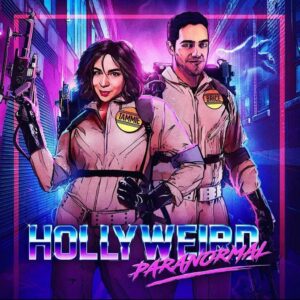
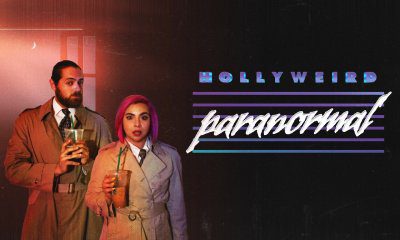
The bright lights of Hollywood cast celebrities as larger-than-life, untouchable, flawless – everything we wish we could be. But behind the glitter and glam lie dark shadows, a seedy underbelly that reaches far beyond the borders of Hollywood. Our October Podcasters of the Month, sleuths and podcast hosts Tammie Merheb-Chavez and Brice Mitchell Williams, recognized that the ghosts of crime in the Golden State remain long after its famous occupants have died.
Merheb-Chavez and Williams teamed up in 2017 to explore the twisted world of “Hollyweird Paranormal.” The podcast features true crime and paranormal activity from Hollywood through Los Angeles, California, and beyond. They tell titillating tales of true crime and its paranormal aftermath – from saving one of L.A.’s historical and haunted restaurants, to preserving Marilyn Monroe’s 1929 Spanish colonial home, to the ghosts of Mae West and Montgomery Clift.
A transplant from New Orleans, Merheb-Chavez moved to Los Angeles in 2009. In addition to being a part-time paranormal investigator, she’s a full-time costume designer for film, TV and theater. Williams lived in various states in the Midwest in conservative, Christian communities. As such, he never really believed in any kind of paranormal activity, yet life experiences have taught him otherwise.
It’s only fitting in the fright-filled, mythical month of Halloween that we delve into the fascinating and wicked world of true crime and paranormal. Merheb-Chavez and Williams share their insights on growing and sustaining your show, no matter what genre.
You have a wide scope of approaches within Hollyweird, from dead celebrities to paranormal incidents to crime, to listener tales to studying haunted locations across the U.S. How did you decide on this format and how has it benefited your show’s success?
As silly or cliche as it may sound, I think our style has mostly been an experiment in trial and error. Our journey to making the podcast what it sounds like today was born mostly out of two friends just chit-chatting during breaks at work and one day realizing, “We might have something here?!” When we first started, we didn’t know what we were doing, where this would take us, and if anyone would even listen! In the beginning, we just knew that the more we interacted with the people around us, the more we discovered that everyone had some type of paranormal story to tell. It truly is a great unifier! And we knew that many people shared our affinity for everything that surrounded this weird entertainment town we are so lucky to live in! So our initial episodes were really just a love letter to the marriage of those two worlds. We really didn’t have any idea what it would begin to morph into!
As we went on, we started branching out and meeting the amazing people who partake in this sphere and we got to know our amazing listeners. The more we progressed, the more stories we were able to spotlight and, in many ways, following that passion for collecting stories and the people who share them has been the greatest success we didn’t even know to hope for!
As we continue to move forward, I hope to continue adapting. The world of Hollywood and the world of paranormal investigations are both deeply kinetic and alive. We are watching in real-time via the strikes how drastically and quickly the entertainment industry is changing. Our future and passion will be to move forward with the changes in these fields and continue to tell the stories and experiences that bring these worlds and people together!
Each of you has had distinct experiences that piqued your interest in the paranormal. I know it’s hard to summarize, but can you each tell us what prompted you to investigate paranormal activities and start this podcast?
Brice:I would say I have always been a skeptic of what is typically considered, “paranormal.” Growing up very religiously, we really only believed in a very narrow understanding of what happens to us when we die. Unfortunately, that worldview wasn’t able to encompass the experiences I was having with my own eyes and ears and gut instinct. As with anything, when you are confronted with evidence that contradicts your worldview, you can either double-down on your beliefs or adapt to the new information being presented to you.
I have always believed in logic and in my own instincts; so I just try and trust those to guide me when I can’t fully understand the world around me. I think that mindset helps in this world of paranormal investigation because it keeps me grounded in the ability to be open to what is possible and skeptical in a way that is rooted in facts. I am the first to admit that there is so much we truly don’t understand, but I also like a little proof in my pudding! Starting this podcast with Tammie has truly just been the natural extension of both our friendship and our experiences with the paranormal! We have been extremely lucky to see some truly incredible places and investigate and meet some amazing people! The podcast is just one way that we are lucky enough to share those experiences with a wider audience!
Tammie:I’m originally from New Orleans, which is a very spooky and haunted city, so I’ve always been intrigued and curious when it came to dealing with the paranormal. I’ve had quite a few unexplainable experiences growing up and it seems that I was on this paranormal journey that has evolved and manifested into this unique paranormal podcast with Brice, who has been this amazing balance on my views.
The paranormal investigations grew after our first season when I had this urge to find the answers to the questions that have resided in my mind from the beginning, “what happens to us after we die?” “Are ghosts real?” “What are ghosts ?” and “Is there a consciousness that persists after we expire?” That’s when I realized that I wanted Hollyweird to be more than lip service, I wanted to do the fieldwork and bring our listeners along for the ride with Brice, who braved certain locations with me. I learned more from his experiences than from my own because they were shared experiences, which are the most important.
Hollyweird has been active since 2017, Well done! What are some tips for your fellow podcasters on how to sustain a successful podcast? And, importantly, how do you approach co-hosting to maintain that success?
You must always put yourself and your mental health first! We’ve seen many of our fellow podcasters go through burn-out and depart from their podcast because they’ve overworked themselves, which affected their content, clarity and drive. It’s okay AND important to take a break or a little hiatus from the microphones because life and work get in the way. We’ve always taken time off from our podcast because we have our day jobs, trips we want to take and ourselves to tend to. But, we notice something amazing happens! We notice that our listeners send us messages expressing their excitement for future episodes, we gain more inspiration with the time we allot ourselves, and it gives us time to meet new people and places that end up making their way onto our podcast.
What has helped us in this approach is that we’ve been good friends for years, which helps everything else evolve naturally and organically on our podcast journey. For podcasts with more than one host, communication and maintaining a healthy friendship with one another is very important. We’ve always made sure to be understanding of each other’s time and outside projects while being flexible with our recording schedule.
In what ways do you think podcasting can be a powerful tool for exploring the supernatural and creating a sense of mystery, and how do you approach this in your own show?
I think that podcasting is one of the mediums best suited to the exploration of the supernatural! We all, of course, love to go to a scary movie or a scary amusement park because we crave the pressure release valve of “terror!” But, much like Hitchcock movies, what is unseen is often scarier than even the best, most expensive CGI. Podcasts leave so much up to each listener’s imagination and they will be able to concoct something far spookier and personal than any more-visual medium could. Ultimately, at its core, podcasting is just very technological story-telling. I think this has always been our approach with Hollyweird. We are storytellers and story collectors. The stories will always unify and entertain, and yes, sometimes even scare! We have been so lucky that so many people have been generous with their stories and that we have gotten to witness so many incredible stories through this podcast. In many ways, we get to stand at the crossroads of history and entertainment and are able to use paranormal investigation alongside more traditional historical methods to delve into worlds that might otherwise remain mysteries. And then, through the connectivity of podcasts, we are lucky enough to share those experiences! We may be a bit biased because it is the method we have chosen for ourselves, but we can’t imagine a more intimate, more readily available tool to explore this world and then disseminate that experience than through podcasting!
How do you vet the trustworthiness of the individuals you talk to and reports you receive on paranormal activity? Can you give advice on maintaining credibility in podcasting to your fellow content creators?
We’ve created and maintained a very safe space for our listeners, especially for those who submit their personal paranormal stories for our segment of “Listeners’ Tales.” With that said, a lot of the stories submitted are pretty genuine, and each one is astonishing yet very personal. What makes them more genuine is when some of these stories open with, “I was never a believer of ghosts until…”
But, we always approach everything submitted with an open mind and logical approach. If we are sent videos and pictures, then that is when we bring in our contacts in the paranormal field who specialize in studying and analyzing these types of evidential recordings. We always vet those who uphold a great amount of ethics and education while at the same time having a fresh pair of eyes to catch onto something we missed.
The biggest advice that we can give to content creators is to have a great amount of ethics, respect and positive creativity with what you produce. The impact of your work and storytelling is pretty palpable when you’re growing your audience and creating a space for others to share.
Advances reflect new tools for users plus Podcasting 2.0 access for those hosting on other platforms
We’re proud to announce inclusive new features to our Podcast Mirror service. Now, in addition to replicating your feed to ensure consistent performance, Podcast Mirror works with any and all hosts, offers enhanced security, handles large numbers of episodes and – the most exciting news for non-hosting customers – enables all podcasters to benefit from Podcasting 2.0 features despite using non-certified podcast hosting services.
It’s rare to run into speed problems with your podcast feed, but when it does happen Podcast Mirror backs you up. The service replicates your podcast RSS feed to keep it running smoothly allowing you to also change podcast hosts at will. And it’s now available to all podcasters.
Podcasters benefit from Podcast Mirror’s added functionality that incorporates the Podcasting 2.0 evolution, offering key features to those who host on antiquated platforms that have yet to implement these groundbreaking new features. Podcast Mirror improves and modernizes your podcast feeds to best serve audiences and take advantage of many new features many hosts do not provide.
Blubrry Hosting customers will continue to be able to use Podcast Mirror for free and non-hosting customers can upgrade to an annual subscription. Current non-hosting users will get an introductory $50 annual subscription, a savings of $10 for the first year, and pay $60 per each year after.
Podcast Mirror provides super-fast performance speed and reliability, regardless of your web traffic or any technical issues. It’s simple: we mirror (copy) your podcast RSS feed, creating a fully working feed that guarantees podcast syndication. No more worrying about RSS traffic, excessive web-hosting costs and more.
Access: Compatibility with PowerPress, podcast apps, etc.
Security: HTTPS, SSL certificates and more
Insights: Detailed podcast statistics
Ease: One podcast RSS feed
We’re excited to be offering additional tools such as Podcasting 2.0 features, Podping and continued compatibility with PowerPress, all app directories and security measures. If you have questions about the switch or the benefits of using Podcast Mirror, read here to learn more.
Andy Mort is not your stereotypical rebel. A podcaster, ambient sound artist, songwriter and professional life coach, Mort calls himself a Slow Coach. Having gone through his own renaissance and revival, our September Podcaster of the Month offers inspiration and support for others’ gentle rebellion. He helps people “connect with our natural rhythms, release the hold of alienating external demands, and freely infuse everyday life with our unique creative spirits.”
“I love making spaces for weary travelers who are exhausted by the pace and pressure of modern existence,” Mort says. One of these spaces is The Haven, a virtual village in which people can escape to find the “needs beneath the noise.”
Mort’s podcast, The Gentle Rebel is an extension of that haven, offering listeners a weekly note of encouragement for more than a decade. Through music, art and outreach, he reaches introverts and highly sensitive people. Mort helps them break free from their constraints and the narratives they’ve internalized about themselves.
You started The Gentle Rebel a decade ago, then ended that chapter and rebooted in April 2022. What differentiates these chapters and what can listeners look forward to in the months/years to come?
I’ve been doing the Gentle Rebel Podcast since 2010. It has been through several iterations or chapters. The most recent one started in April 2022 when I realized after 365 episodes there was a lot of stuff I had covered a few times in different ways over a decade of exploring. I had also reached a better understanding of many of the ideas I had been circling. I wanted to consolidate the ideas in those shows so that I had a simple focused archive to refer people to when looking for support and information about particular things. Podcasting is a wonderful way to think out loud and bounce ideas around. Eventually you reach a firmer position about certain things. That’s what happened. I wanted to mark that.
I have reached the end of that consolidation process now, so I am enjoying exploring what the podcast wants to be next. The big focus is allowing space for music and practice to become part of episodes. Rather than just talking ABOUT theories and ideas in a world of abundant access to information, I want to connect with the humanness we share and provide valuable resources that give people an energizing and connecting experience to counter the frazzle and overwhelm that so many people are reporting feeling at the moment. So there will be more of that. Reflections on what it means to be human in a world of machines and plenty of space to explore that creatively.
Andy, you are a Sound Artist, Songwriter, and Slow Coach. How do these areas interconnect in your podcast, The Gentle Rebel? (And how do you define a slow coach?)
The podcast is where my creative and professional passions converge. It’s why I love the medium so much. I use podcasting as a conversation with my listeners, a place to share my stories/experiences/observations (often from my life as a performer/songwriter), and a platform to create practical experiences that leave people feeling a positive shift after listening. That final part is often where my slow coaching philosophy interweaves with my creativity.
The idea behind slow coaching is that we don’t make good long-term/big picture decisions when we’re feeling rushed or in a heightened state of stress/alertness. I want to help people see the possibilities for their lives through a state of rest and deep connection so they can make grounded decisions that reflect who they are and where they want to go next.
The world is so noisy and there are so many competing demands and voices that tell us what we should want, do and value. I want the podcast to be somewhere people can come to as a way to reconnect with themselves and the needs, feelings and sensations beneath that noise. I bring my ambient instrumental music into certain episodes as a way to help listeners connect with different states of being. I am always aware of the rhythm and pace of an episode and how important it is to create that sense of hope and possibility as somewhere to finish each one.
What approaches have you found effective for introverted individuals versus people who are more outgoing?
This focus emerged organically when the first iteration of the podcast started in 2010. It actually began life as an independent music podcast where I would share songs by artists I had played with and who were under the radar of the mainstream music industry. I began to speak between the songs and on a few occasions, talked about challenges/observations from my life as a musician. People would get in touch to say “I get that too,” especially when I spoke/blogged about things I later saw as characteristic of introversion and high sensitivity. So I naturally moved down that line, talking more about those things. And as I did so, I got more listeners looking for support and a sense of community with people who see the world through a similar lens. Knowing that you’re not alone in your experiences is a big part of what we all look for, and this is especially true if the world feels oriented toward another way of operating. I guess it comes back to permission to explore your own natural pace and rhythms and to listen to what you need to manage your energy, focus deeply on what matters most to you, and not get burned out by trying to keep up with the flow of demands and pressures from a fast and noisy world.
How have you found that music – such as your music – reaches and supports the individuals you’re touching through your podcast and through your one-on-one coaching?
Music is the language that transcends language – it speaks to us (and through us) in ways we might not be able to describe with words. I love it as a metaphor to help us navigate the challenges we face and our relationships with ourselves. And the experience of music (I do online gigs, host sound anchor rest sessions, and share/talk about songs from my Atlum Schema back catalog), which allows me to support people in different ways. I love sharing my music with other people; there is something beautiful about the energy that comes from a live stream, where we have the same experience as other people worldwide. It’s a gently rebellious joy in an on-demand world.
The language of creativity helps me to work with clients to explore their inner landscapes, dreams, challenges and everyday possibilities in playful ways. We can go deep without it feeling heavy. We can explore with curiosity and joy. As I said before, music is also a tool I use to help people return to a place of calm inner connection and grounded hope after we adventure into those new horizons.
In what ways do you think your podcast helps introverted listeners feel more connected and understood?
I guess it comes down to being a companion to people who might see and experience the world differently to the people around them. It’s the great thing about the podcast medium – it feels personal and real. Someone who you resonate with can chat about things that are important to you as you go about your day. At the broader level, podcasting has increased our collective understanding of introversion and high sensitivity. The Gentle Rebel Podcast has been a great chance to explore listener questions and observations as they come in over time. It’s just lovely to feel like I can be the voice of “someone like me” to a person who might be feeling disconnected and alone.
Are there any memorable stories, feedback or experiences from your listeners that showcase the positive effects of your podcast and your coaching in general on their lives?
There is a story that speaks to the power of podcasting in creating connections and gently transforming lives of those who encounter them. I was invited to speak, lead a workshop and perform at a gathering for highly sensitive people in Finland – all sparked by a listener who reached out and joined my Haven community. She put me forward as a potential guest at the gathering. Tuula has since become a close friend and creative collaborator. The event itself was memorable for many reasons. One in particular sticks out when it comes to thinking about the unforeseen positive effects of the podcast. At the end of a day of workshops, a Q&A and a live gig in the evening, someone came up to me and said, “Thank you so much. I love playing the piano but I’ve never played to anyone else. After hearing you speak and perform today, I realize I have the strength to do it. I now know that I want to do it.” That blew my mind. It was one of those “ahh yes, this is what makes it all worthwhile” moments.
We recently returned from Podcast Movement Denver (podcast episode to come!) where we talked a whole lot about the importance of owning your own website. We had a great time explaining how Blubrry offers you a free WordPress site when you host with us. Not only that, we make it easy to upload your audio with our PowerPress plugin.
Many creators might not fully appreciate the importance of having their site and being the source of your content. So, if we didn’t get to chat with you about it at Podcast Movement (or any of the other conferences), we’ll lay it out for you here.
A crucial element in building your podcast’s brand is having a dedicated website on your domain. Your podcast website is the go-to destination for your audience to discover the latest episodes and learn more about your show. A professional-looking website enhances your podcast’s brand image and credibility and is a great place for a lead funnel and merchandise, too!
Over time, a website can improve your authority and boost organic search results (SEO). This is in large part because when you host with us you control your brand; not being listed in search engines as a subsidiary of another hosts’ operation. When visitors land on your site, they can better understand your show’s purpose and content. Your website is also an ideal location for your audiences and prospective audiences to discover individual episodes.
A website doesn’t replace your social media presence, of course, rather it enhances it. Instead of directing your listeners to external directories, you can send them to your site, where they can explore additional relevant content, get to know you better and, heck, buy your merchandise!
Creating a cohesive online presence for your podcast can strengthen your brand and engage your audience more effectively. Consider the importance of owning your website and unlock the full potential of your podcasting journey. And know for sure that we’re right there with you, quietly helping you on your way.

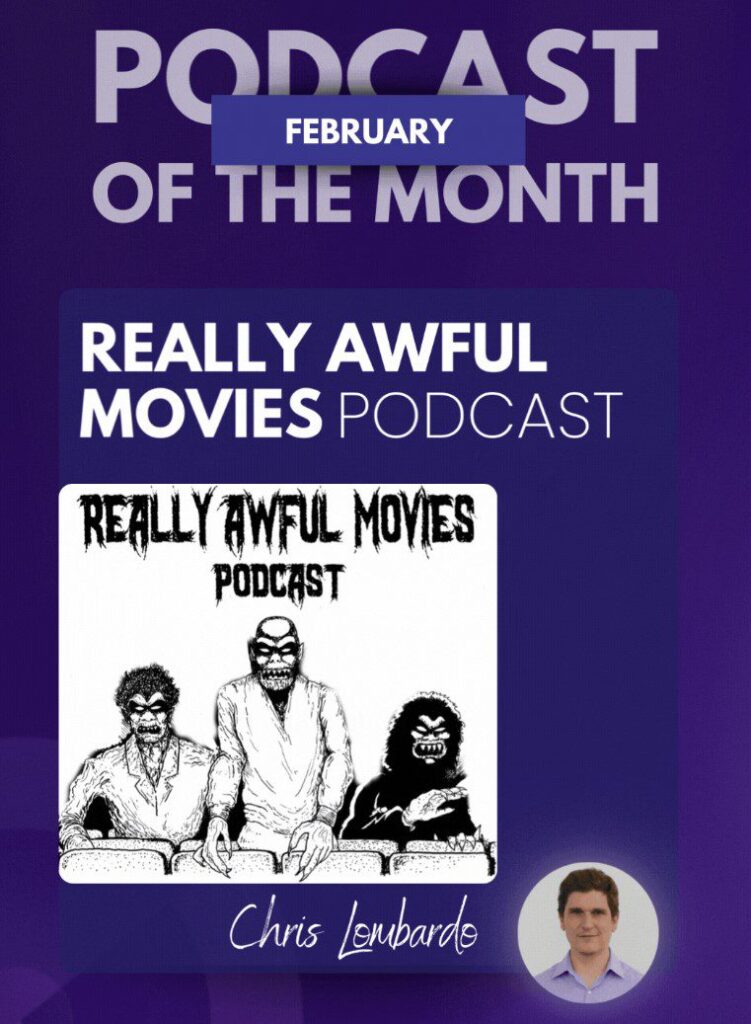 Stroll with us through the misty veils of blackened back alleys and beware of bullets and bandits as we explore the guts and ‘gory’ of cinematic shoestring thrillers. Our guide,



 One of the most incredible stories just happened recently when we received a phone call from an 86 year-old nun who had cancer. She shared that she was in a convent hospital for ill nuns who were forced to retire because of illnesses, causing their spirits to plummet. They felt our ComedyCures programs would be just the thing the sisters needed to break down isolation and deliver joy, laughter and fun daily coping strategies. We have delivered two successful monthly programs to the nuns with an upcoming holiday program scheduled.
 One of our most moving stories is from a critical care nurse involving a dying patient who could barely speak. The nurse played our free ComedyCures LaughLine (1-888-Ha-Ha-Ha-Ha) for her patient every day. One day the patient motioned that she had conceived a joke. The nurse called and recorded the patient’s humor for our LaughLine and relayed this powerful story. We repeated the story and her original joke on our LaughLine and the patient celebrated that she “was now famous” (just days before her passing) as word spread throughout the hospital about her ComedyCures LaughLine feature.
 Honestly, I actually resisted doing a podcast for over a decade. I’m a live-event keynote presenter, performer and producer so I couldn’t imagine myself sitting alone in a podcast booth. Now, I am obsessed with podcasting. Launching “Beating Cancer Daily” and watching it help people around the world 24/7 has been the most amazing experience. Every day for 365 days, I take patients through their diagnosis, cancer treatments, and then through survivorship. The podcast not only helps cancer patients, survivors, family members and healthcare workers, but we now know that people who just want to improve their wellness, increase their coping strategies, and laugh a little more each day are listening. As a stage IV cancer survivor, patient advocate and comedy expert, I humanize and humorize the most challenging moments of the cancer experience. Podcasting daily is one of the most intimate creative experiences that I’ve ever had.
 As a stage IV cancer survivor and patient advocate with no visible disease (for over two decades), many of these 365 episodes come from my own cancer fighting and coping strategies which we have taught in our three groundbreaking ComedyCures research studies. I have a unique comic perspective regarding cancer. Some “Beating Cancer Daily” episodes arose from helping over a million people on six continents through our live and virtual ComedyCures Foundation’s programs. Every daily episode is different, and sometimes the episode is just a lot of fun. I call that “tumor humor,” and it’s a comedic look at how you can develop your comic perspective to get through this cancer experience. Many episodes have been inspired by patients, caregivers, comedians, researchers, quotations, questions and advice passed down by doctors, cancer elders and sages. Over 220 “Beating Cancer Daily” episodes have been distributed to date, and I am still going strong toward my 365-day goal.
 Since we see ourselves as a “Bar Talk” podcast we want to be mostly entertaining and light. We touch on topics that we find thought provoking and maybe our audience will too. In the end we want to make something we enjoy and maybe can bring a smile for an hour a week to someone else.



 The bright lights of Hollywood cast celebrities as larger-than-life, untouchable, flawless – everything we wish we could be. But behind the glitter and glam lie dark shadows, a seedy underbelly that reaches far beyond the borders of Hollywood. Our October Podcasters of the Month, sleuths and podcast hosts Tammie Merheb-Chavez and Brice Mitchell Williams, recognized that the ghosts of crime in the Golden State remain long after its famous occupants have died.
 In the beginning, we just knew that the more we interacted with the people around us, the more we discovered that everyone had some type of paranormal story to tell. It truly is a great unifier! And we knew that many people shared our affinity for everything that surrounded this weird entertainment town we are so lucky to live in! So our initial episodes were really just a love letter to the marriage of those two worlds. We really didn’t have any idea what it would begin to morph into!

 We’re proud to announce inclusive new features to our
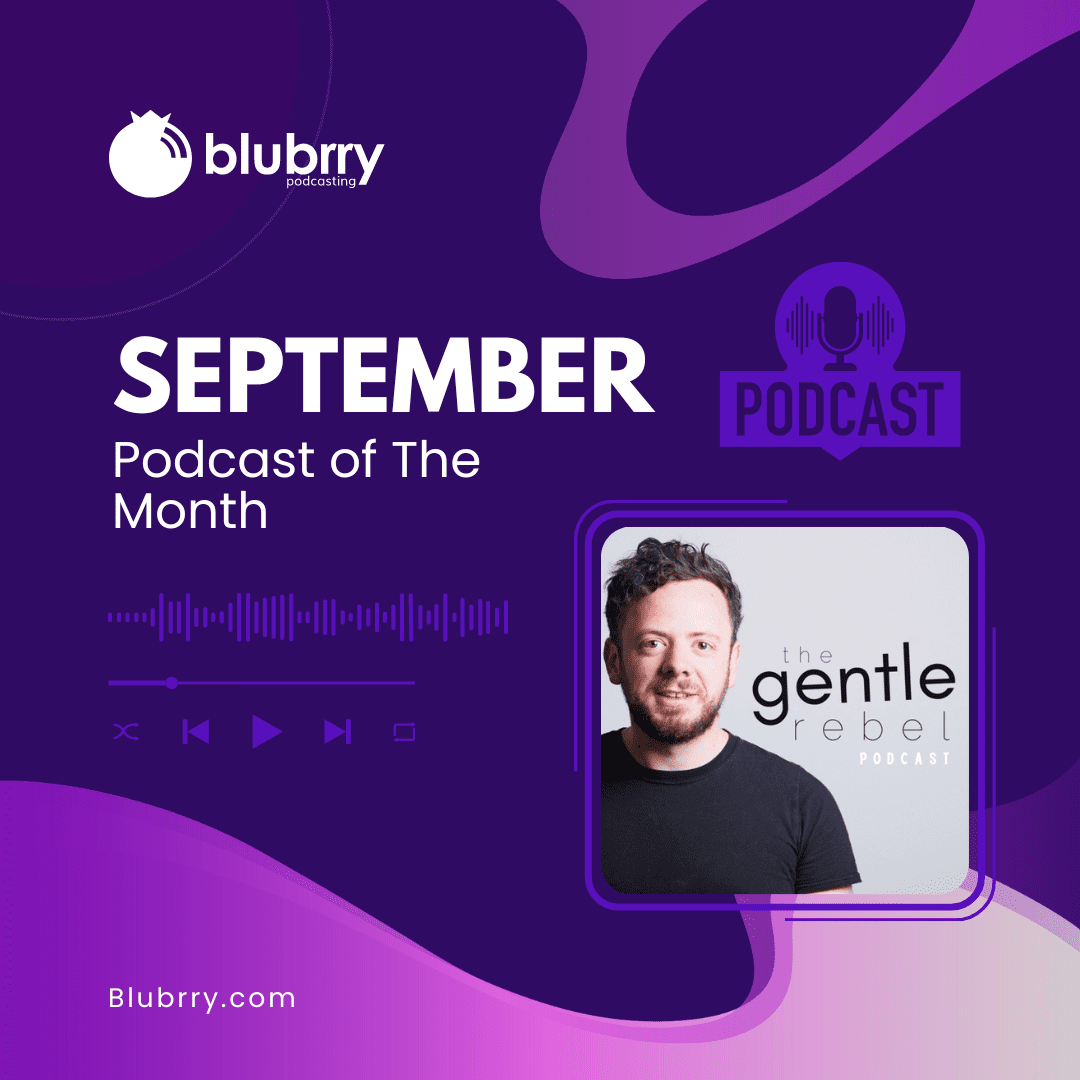
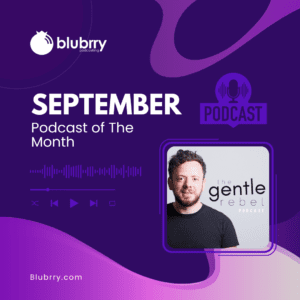 Andy Mort is not your stereotypical rebel. A podcaster, ambient sound artist, songwriter and professional life coach, Mort calls himself a Slow Coach. Having gone through his own renaissance and revival, our September Podcaster of the Month offers inspiration and support for others’ gentle rebellion. He helps people “connect with our natural rhythms, release the hold of alienating external demands, and freely infuse everyday life with our unique creative spirits.”
 We recently returned from Podcast Movement Denver (podcast episode to come!) where we talked a whole lot about the importance of owning your own website. We had a great time explaining how Blubrry offers you a free WordPress site when you host with us. Not only that, we make it easy to upload your audio with our