Tag: video podcasting

  • Video Podcasting Without Starting Over

    Video Podcasting Without Starting Over

    video-podcastingPodcasting has changed.

    What started as an audio-first medium has expanded into video, opening new ways for creators to reach audiences on platforms like YouTube and beyond. As more podcasters explore video, many assume they need to rebuild their workflow, buy expensive equipment, or even switch hosting providers.

    The good news?

    You don’t have to start over.

    If you’ve already built an audio podcast, adding video doesn’t mean abandoning everything you’ve created. It’s about expanding your content, not replacing it.

    Your Podcast Doesn’t Need a Complete Reset

    One of the biggest misconceptions about video podcasting is that it requires an entirely new production process.

    In reality, your podcast already contains the most important part:

    Great conversations and valuable content.

    Adding video simply gives your audience another way to experience your show. Some listeners prefer audio during their commute, while others enjoy watching interviews, discussions, or behind-the-scenes moments.

    Offering both formats allows you to meet your audience where they are.

    Start With What You Have

    Many successful video podcasts didn’t begin with a professional studio.

    You can start with:

    • A webcam
    • Your laptop camera
    • A DSLR or mirrorless camera
    • A smartphone with a tripod

    The goal isn’t Hollywood-level production.

    It’s creating an authentic experience that complements your podcast.

    If you’re already recording remote interviews, adding video can often be as simple as enabling cameras during your recording session.

    Keep Your Existing Workflow

    One concern podcasters often have is whether moving into video will complicate their publishing process.

    It doesn’t have to.

    The best approach is to keep the workflow you’re already comfortable with while adding video as another publishing option.

    Record once.

    Edit once.

    Publish your audio and video together.

    This lets you continue serving your existing podcast audience while also reaching viewers on video platforms.

    Reach More People Without Creating More Content

    Video isn’t about doubling your workload.

    It’s about getting more value from every episode you already produce.

    A single recording can become:

    • Your podcast episode
    • A full-length video
    • Short clips for social media
    • Promotional teasers
    • Website content
    • Email newsletter material

    Instead of creating separate content for every platform, you’re maximizing the content you’ve already invested time into creating.

    Every Blubrry Hosting Plan Supports Video Podcasting

    Some hosting providers reserve video podcasting for premium plans.

    Blubrry takes a different approach.

    Every Blubrry hosting plan supports video podcasting, giving creators the flexibility to publish audio, video, or both without upgrading simply to access video capabilities.

    Whether you’re launching your very first show or growing an established podcast, you can expand into video whenever you’re ready.

    That means you can:

    • Publish audio and video episodes
    • Manage everything from one hosting account
    • Continue using your existing podcast feed
    • Grow your audience across multiple platforms
    • Scale your content without rebuilding your workflow

    Video podcasting becomes another tool for growth not another obstacle.

    Grow at Your Own Pace

    Not every podcast needs a multi-camera production.

    Not every episode needs fancy graphics.

    And not every creator wants to become a YouTuber overnight.

    The beauty of video podcasting is that you can start small.

    Record your conversations.

    Publish consistently.

    Improve your setup over time.

    Your audience cares far more about valuable content than perfect production.

    One Recording. More Opportunities.

    our podcast has already done the hard part.

    You’ve built an audience.

    You’ve found your voice.

    You’ve created valuable conversations.

    Adding video simply helps more people discover them.

    You don’t need to start over.

    You just need to press one more record button.


    Ready to Add Video to Your Podcast?
    Whether you’re producing audio-only episodes today or planning to introduce video in the future, Blubrry makes the transition simple. Every hosting plan supports video podcasting, so you can expand your reach without changing your workflow or switching platforms.
    Start creating once and publishing everywhere with Blubrry supporting your podcast every step of the way.

  • Spring Clean Your Podcast for Growth

    Spring Clean Your Podcast for Growth

    Let’s be honest.

    Most podcasts don’t stall because the host ran out of ideas.

    They stall because things got messy.

    Old titles that don’t mean anything.

    Descriptions written years ago.

    Broken links.

    CTAs that point nowhere.

    We’ve seen this over and over.

    Creators jump straight to “I need more content.”

    No. You don’t.

    You need to fix what’s already sitting there.

    The 80% You’re Ignoring

    Here’s something most podcasters underestimate.

    Your back catalog is doing more work than your latest episode.

    According to Edison Research, a significant portion of podcast listening comes from older episodes, as listeners tend to binge shows once they discover them. You can see this behavior in reports like the Infinite Dial, where ongoing consumption`—not just new releases—drives total listening time.

    And it’s not just casual listening.

    Research from Nielsen shows that podcast listeners are highly engaged, often consuming content in longer sessions compared to other digital formats.

    So think about that.

    Someone finds your show today…

    they don’t just listen once.

    They go deeper.

    And what they find either builds momentum—or kills it.

    Titles That Kill Discovery

    Let’s not overcomplicate this.

    People click what they understand.

    Platforms like Spotify and Apple Podcasts rely heavily on your titles and metadata to determine what gets surfaced.

    There’s also a search layer most people forget.

    Google is indexing podcasts more aggressively now, meaning your episode titles can show up directly in search results.

    And yes — clarity matters.

    Research around discoverability shows that strong titles and keywords directly influence visibility.

    If your title doesn’t say what it delivers, it doesn’t get clicked.

    Simple as that.

    Your Description Is Doing Nothing

    Look, most podcast descriptions are filler.

    But behind the scenes, they matter more than people think.

    Search engines and platforms use descriptions to understand your content and decide where to place it. That includes platforms like Google, where podcasts now appear in search results, carousels, and voice search.

    And here’s the kicker.

    If your description doesn’t clearly explain the value of your show, even interested listeners won’t convert.

    Because confusion kills momentum.

    Dead Links, Dead Opportunities

    Here’s where it starts costing you.

    Broken links.

    Outdated landing pages.

    Expired offers.

    Old signup forms.

    And most creators don’t even check.

    Meanwhile, listener behavior tells a very different story.

    More than half of podcast listeners have taken action after hearing a call-to-action.

    And according to HubSpot, reducing friction in the user journey is one of the biggest drivers of conversion performance.

    So if your links are broken, you’re not just losing clicks.

    You’re losing conversions that were already halfway there.

    The CTA Problem Nobody Talks About

    Most podcasters either say nothing…

    Or they say everything.

    Neither works.

    Listeners don’t respond to noise. They respond to direction.

    There’s a reason conversion research consistently shows that fewer choices lead to higher action rates.

    This is often called decision fatigue.

    Too many options = no action.

    So instead of stacking CTAs, simplify:

    One episode. One action.

    That’s how you move people forward.

    Your Back Catalog Is a Growth Engine

    Here’s what makes podcasting different.

    Listeners don’t just scroll.

    They commit.

    They binge.

    Data shows that once a listener connects with a show, they’re likely to consume multiple episodes in one sitting.

    And this behavior is part of why podcast advertising performs so well compared to other channels — higher attention leads to higher recall and action.

    Your older episodes are not passive content.

    They’re active entry points into your ecosystem.

    You Don’t Need More Content (Right Now)

    This is where most creators go wrong.

    They think growth = more output.

    But if your system is messy, more content just creates more friction.

    Fix what already exists:

    • Top episodes
    • Descriptions
    • Links
    • CTAs

    That’s where the leverage is.


    The Real Shift

    Spring cleaning your podcast isn’t about aesthetics.

    It’s about performance.

    You’re removing friction.

    You’re tightening the experience.

    You’re making it easier for someone to:

    • Find you
    • Understand you
    • Trust you
    • Act

    Content gets attention.

    Clarity is what turns that attention into growth.

  • Monetization Isn’t Luck: Systems That Build Revenue

    Monetization Isn’t Luck: Systems That Build Revenue

    Look, we’ve heard this story a hundred times.
    A creator uploads consistently.

    The show grows slowly.

    Maybe an episode pops.

    Maybe a clip goes viral.

    Then the thought creeps in: “If the audience keeps growing, the money will follow.”

    Sometimes it does.

    Most of the time it doesn’t.

    Because revenue in podcasting and creator media rarely shows up by accident. It shows up when there’s a system behind the content.

    The podcast industry itself proves the point. Globally, podcasting generates billions in revenue each year, with estimates placing the market around $3.9–$4.9 billion annually across advertising, listener support, and related services.

    There’s clearly money in the ecosystem.

    But here’s the catch: it doesn’t distribute itself evenly.

    Attention is easy to measure.

    Revenue requires design.

    The Viral Myth

    We’ve seen it happen plenty of times.

    A clip spreads across social media.

    An episode trends.

    Analytics spike.

    And then… nothing changes financially.

    Why?

    Because traffic without structure rarely converts.

    Even in the larger creator economy, platforms generate massive revenue while most creators earn very little. Advertising across creator-driven platforms is projected to surpass $235 billion globally, yet only a fraction of that money reaches individual creators directly.

    Visibility creates opportunity.

    It does not automatically create income.

    A spike in downloads might feel like progress, but if a listener arrives, enjoys the episode, and leaves without a next step, the moment disappears.

    Moments are temporary.

    Systems stick around.

    Content Alone Doesn’t Pay the Bills

    Here’s the uncomfortable truth.

    Most creators obsess over production:

    • Recording
    • Editing
    • Posting
    • Promoting

    But very few spend the same amount of time designing what happens after someone becomes a listener.

    That’s where the real business lives.

    Podcasting alone now has millions of active shows worldwide, yet only a small percentage generate meaningful income.

    The creators who do earn consistently usually have something else operating quietly behind the scenes:

    • Consulting
    • Courses
    • Membership communities
    • Affiliate partnerships
    • Events
    • Products

    Content opens the door.

    The business happens behind it.

    The Quiet Power of Audience Trust

    Podcasting has a strange advantage that short-form platforms struggle to replicate.

    Time.

    Listeners don’t just scroll past a podcast episode. They stay with it.

    In fact, research shows that 73% of podcast listeners listen to most or all of an episode, which is an extraordinary level of attention compared to most digital media.

    Even more interesting:

    54% of podcast listeners say they’ve purchased a product or service after hearing about it on a podcast.

    That’s not passive consumption.

    That’s influence.

    Trust grows when someone spends thirty minutes with your voice every week. Over time, that familiarity becomes the foundation for real revenue.

    Ads Are a Tool, Not a Plan

    Let’s talk about advertising.

    Host-read ads, baked-in sponsorships, dynamic ad insertion — they’re all part of the podcast economy. In fact, advertising still represents the largest slice of podcast revenue, accounting for more than $3 billion globally each year.

    But here’s the part new creators miss.

    Ads depend on factors you don’t control:

    • Advertiser budgets
    • Economic cycles
    • Campaign demand
    • Seasonal spending

    Podcast CPM rates typically range between $20 and $50 per thousand downloads, which means meaningful ad revenue requires significant audience scale.

    Ads can absolutely work.

    They just shouldn’t be the only lever.

    Systems Beat Moments

    Here’s something most new creators overlook.

    A moment can bring attention.

    A system turns attention into income.

    And systems don’t have to be complicated.

    Sometimes they look like:

    • A clear consulting offer for listeners who want deeper help.
    • A simple membership community where fans gather between episodes.
    • An affiliate relationship with tools the audience already uses.
    • Or even a newsletter where listeners stay connected outside the platform.

    None of these depend on an algorithm behaving nicely this week.

    They depend on relationships.

    One Question That Changes Everything

    Try asking yourself this:

    If someone discovered your show today and loved it… what’s the next step for them?

    Not just the next episode.

    The next layer.

    Can they work with you?

    Learn from you?

    Join something?

    Support the show in a meaningful way?

    If there isn’t a clear answer, the system probably isn’t built yet.


    Revenue Is Designed

    Creators sometimes talk about monetization like it’s a lucky break.

    A sponsor arrives.

    An episode pops.

    An opportunity appears.

    But most sustainable revenue doesn’t come from chance.

    It comes from intentional structure — content that leads somewhere, relationships that deepen over time, and offers that actually serve the audience.

    Content starts the conversation.

    Systems keep the conversation — and the revenue — going.

  • Why YouTube Only Is Risky

    Why YouTube Only Is Risky

    For many creators, YouTube is the obvious starting point for video content.

    It’s the largest video platform in the world. The discovery engine is powerful. The monetization tools are built in.

    Upload a video, grow an audience, turn on ads — that’s the dream.

    But building your entire content strategy on a single platform is one of the biggest risks creators quietly take.

    Because when your business depends entirely on one algorithm, one policy change, or one platform decision, you’re not really in control.

    And history has shown that platforms change faster than creators can adapt.

    The Platform Dependency Problem

    It’s easy to see why creators lean heavily on YouTube.

    The platform has more than 2 billion logged-in users every month, according to YouTube.

    That kind of reach is hard to ignore.

    But reach comes with trade-offs.

    Creators don’t control:

    • Algorithm changes
    • Policy updates
    • Monetization rules
    • Audience access

    Your audience might subscribe to your channel, but the platform ultimately decides how often your content appears in their feed.

    And if the algorithm shifts, the visibility you built can disappear overnight.

    Algorithm Changes Can Kill Momentum

    Every experienced creator has seen it happen.

    A channel grows steadily for months.

    Then engagement suddenly drops.

    Same creator.

    Same audience.

    Same content.

    Different algorithm behavior.

    Because discovery on YouTube is heavily driven by recommendation systems. Small changes to how content is recommended can dramatically impact traffic.

    And when that happens, creators often find themselves chasing the algorithm instead of focusing on their audience.

    Ad Revenue Isn’t Predictable

    Another common assumption: once you’re monetized, income becomes steady.

    Not quite.

    YouTube ad revenue depends on RPM (revenue per thousand views), which fluctuates based on:

    • Advertiser demand
    • Viewer location
    • Niche
    • Seasonality

    During strong ad markets, RPMs rise. During economic slowdowns or seasonal shifts, they can drop significantly.

    Creators who rely exclusively on ad revenue often experience income swings they can’t control.

    Audience Ownership Matters

    One of the biggest differences between platforms is who owns the relationship with the audience.

    On YouTube, the platform controls the distribution.

    If your account is flagged, limited, or demonetized, access to that audience can shrink instantly.

    That’s why many experienced creators build platform diversification, including:

    • podcasts
    • newsletters
    • communities
    • websites

    These channels allow creators to reach their audience without relying on a single algorithm.

    Why Audio Is a Powerful Companion

    One strategy many creators overlook is expanding into podcasting.

    Audio offers something video doesn’t always deliver: long-form engagement.

    Research from Edison Research shows podcast listening has grown dramatically over the past decade. Time spent listening to podcasts has increased more than 355% since 2015, reaching hundreds of millions of listening hours each week.

    Podcast audiences also spend significant time with the content. According to Edison’s Podcast Consumer study, 23% of weekly listeners spend 10 hours or more listening to podcasts every week, highlighting the depth of engagement the format creates.

    That deeper engagement builds stronger loyalty.

    And loyalty tends to convert better into memberships, services, products, and events.

    The Smart Creator Strategy

    This doesn’t mean abandoning YouTube.

    Far from it.

    Platforms like YouTube are incredible discovery engines.

    But smart creators treat platforms as distribution channels — not the foundation of their entire business.

    A more resilient approach looks like this:

    • Video for discovery
    • Audio for loyalty
    • Email for ownership
    • Communities for engagement

    Together, these channels create a system that can survive platform shifts.


    The Real Risk

    YouTube isn’t the problem.

    Dependence is.

    The most stable creators aren’t the ones with the biggest channels.

    They’re the ones who own the relationship with their audience and build multiple ways to reach them.

    Platforms will evolve.

    Algorithms will change.

    But creators who build outside the platform — not just inside it — are the ones who stay in control.

  • Monetization Myths: What Actually Works for Video & Audio

    Monetization Myths: What Actually Works for Video & Audio

    Let’s clear something up.

    More views don’t automatically mean more money.

    More downloads don’t either.

    We’ve watched creators chase algorithms, rack up impressions, celebrate spikes… and still struggle to cover hosting, editing, or production.

    Why?

    Because most creators are building attention, not revenue.

    And the data backs this up.

    According to the Interactive Advertising Bureau (IAB) U.S. Podcast Advertising Revenue Study, podcast ad revenue surpassed $1.8 billion in recent years — and is projected to cross $2 billion. Sounds massive, right?

    But here’s what most people miss: that revenue is concentrated among top-tier shows and networks. The long tail of independent creators sees a very different reality.

    The truth is — video and audio don’t make money the way most creators assume they do.

    The “More Reach = More Revenue” Lie

    Look, we’ve all seen it.

    A clip goes viral.

    A podcast episode trends.

    Analytics light up.

    And yet… nothing changes financially.

    YouTube’s own Partner Program typically pays creators anywhere from $2–$5 RPM (revenue per thousand views) after platform cuts, depending on niche and geography. That means 100,000 views might translate into a few hundred dollars — not a sustainable business for most teams.

    Visibility doesn’t equal income. It equals opportunity.

    Meanwhile, niche creators with smaller but defined audiences quietly convert listeners into coaching clients, paid communities, SaaS users, or event attendees.

    So what’s the difference?

    Structure. And an offer beyond the content itself.

    Ads Aren’t the Finish Line

    There’s this belief that once ads show up, you’ve made it.

    Mid-rolls. Pre-rolls. DAI slots.

    Brand integrations on video.

    It feels like validation.

    Podcast CPMs commonly range from $18–$25 for mid-roll placements according to industry benchmarks often cited in reports from the Interactive Advertising Bureau. That sounds solid — until you run the math.

    At 5,000 downloads per episode, that’s roughly $90–$125 per ad slot.

    Helpful? Yes. Transformational? Rarely.

    And ad markets fluctuate. In 2023 and 2024, many digital ad sectors saw slowdowns tied to broader economic shifts. When brands tighten budgets, creators feel it immediately.

    That’s not control.

    Ads are one lever — not the system.

    Trust Converts Better Than Traffic

    Podcasting continues to grow — and with it, listener trust.

    Research from Edison Research consistently shows that podcast listeners are highly engaged and more likely to take action after hearing recommendations on shows they follow regularly.

    That’s not just about ads.

    It’s about trust transfer.

    Long-form audio builds familiarity.

    Video builds visibility.

    When creators use both intentionally — short-form video for discovery, long-form audio for depth — they create a layered relationship with their audience.

    Recognition plus trust.

    That’s when revenue becomes repeatable.

    The Real Revenue Engine

    In both video and podcasting, the creators who win treat content as a bridge — not the destination.

    Content leads to:

    • Services
    • Products
    • Communities
    • Events
    • Partnerships

    Not just ad impressions.

    For example, many B2B podcasters use their shows as authority platforms that generate inbound consulting leads. Educational YouTube channels frequently drive revenue from structured online courses hosted on platforms like Teachable or Kajabi.

    The revenue doesn’t live inside the episode.

    It lives in what the episode points to.

    Content is the introduction.

    The business happens after.

    Platforms Don’t Build Businesses — Offers Do

    You can post daily and still struggle.

    You can upload weekly and thrive.

    The deciding factor isn’t frequency — it’s clarity.

    Creators who define a clear next step — a membership, a mastermind, a premium feed, a workshop — create predictable revenue paths.

    Without that layer, even high-quality content becomes noise in an algorithm feed.

    Video + Audio Is the Sweet Spot

    Video grabs attention.

    Audio builds loyalty.

    Data from Edison Research also shows that weekly podcast listening continues to grow year over year, reinforcing that long-form audio still commands sustained engagement — something short-form platforms struggle to maintain.

    One gets you discovered.

    The other keeps people around long enough to trust you.

    Creators who use both strategically often see:

    • Higher engagement
    • Stronger authority
    • More consistent conversions

    Not because they produce more — but because they connect more deeply across formats.


    The Real Shift

    Cashing in from content isn’t about finding the perfect platform.

    It’s about building a system where content supports something deeper.

    Ad revenue in podcasting may be crossing billions industry-wide. YouTube may serve billions of views daily.

    But individual creators don’t win by playing someone else’s volume game.

    Video and audio aren’t the revenue.

    They’re the relationship builders.

    And relationships — when handled with structure and intention — are what actually pay.

  • Video Podcasting in 2025: Should You Start One?

    Video Podcasting in 2025: Should You Start One?


    Podcasting has changed — and fast. What used to be an audio-only space has now exploded with video podcasts on YouTube, Spotify, and even TikTok. Everywhere you scroll, it seems like someone’s turning their mic sessions into full-blown shows.

    But the big question remains: Is video podcasting worth it?

    Our Support Analyst Dave Clements has helped hundreds of podcasters make this decision. In our latest tutorial, he breaks down what’s driving the video podcast boom — and whether it’s the right move for you.

    What’s Behind the Video Podcast Boom

    “Platforms like YouTube and Spotify are betting big on video,” Dave explains. “It’s not just about listening anymore — audiences want to see you.”

    That visibility comes with perks. Video podcasts boost discoverability, since YouTube is the world’s second-largest search engine. They also create new ways to connect: people relate more deeply when they can see your expressions and personality.

    And there’s one more advantage — repurposing. A single video episode can become short clips for Instagram, TikTok, or YouTube Shorts, giving your content more life across platforms.


    But There’s a Catch

    Before you hit record, it’s worth knowing the trade-offs.

    Video podcasts take more time to plan, record, and edit. You’ll need extra storage, lighting, and some comfort on camera. Plus, not all podcast apps support video yet — meaning your show won’t reach every listener through traditional feeds.

    “Video is powerful,” Dave says, “but it can also burn you out faster if you’re not ready for the workload.”

    That’s why in the video, he walks through a smart way to test the waters without overcommitting — a hybrid method that lets you record your usual audio show while capturing video at the same time.


    Start Simple, Stay Smart

    The good news? You don’t need a studio to start.

    A webcam or smartphone paired with a quality microphone goes a long way. As Dave puts it, “Good audio beats good video every time.”

    Lighting helps, but connection matters more. Viewers don’t need perfection — they need authenticity.


    How Blubrry Makes It Easier

    Whether you stay with audio or jump into video, Blubrry’s here to help you publish everywhere your audience listens and watches.

    If you decide to go video-first, Blubrry’s Vid2Pod feature lets you upload your podcast to YouTube — then automatically turns it into an audio episode for all the major listening platforms.

    That means no extra uploads, no missed listeners, and no hassle.


    The Bottom Line

    So, should you start a video podcast in 2025?

    If you want to grow your reach, connect visually, and have the time to do it right — it’s a strong move. But if your focus is consistency and storytelling, audio-only podcasts are still thriving.

    Watch the full video below to hear Dave’s full breakdown — including how to test video podcasting safely and what tools he actually recommends.

  • Easily Convert Your Podcast to Video with Blubrry’s Pod2Vid

    Easily Convert Your Podcast to Video with Blubrry’s Pod2Vid

    In our multimedia world, it’s no wonder podcasting has evolved beyond simply audio. People want the option to either listen to or watch their favorite podcasts, and that’s where our Pod2Vid service comes into play. Pod2Vid is a simple and powerful tool that allows you to convert your audio podcast into a video format, perfect for sharing on platforms like YouTube. The best part? You can enhance your podcast by adding images corresponding to each chapter, making your content even more engaging for your audience.
     

    If you’d like to use Pod2Vid, order the Thrive Bundle from Blubrry now!

    Why Video Matters

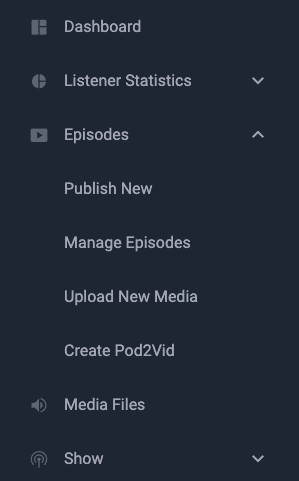
    Find Pod2Vid within the podcast dashboard sidebar under Episodes.

    The rise of video content is undeniable. YouTube, the second largest search engine in the world, has become a major platform for consuming all sorts of media, including podcasts. As more people turn to YouTube for their daily dose of entertainment and information, podcasters who only offer audio content might miss out on a significant audience segment. By converting your podcast to video, you’re opening the door to a whole new group of potential listeners—or viewers, in this case.

    Pod2Vid makes this transition seamless. Whether you’re a seasoned podcaster or just starting out, this service is designed to be user-friendly, allowing you to create a video version of your podcast without the need for complicated software or extensive video editing skills. It’s an inexpensive solution that Blubrry Thrive Bundle customers can easily take advantage of to expand their reach.

    How Pod2Vid Works

    Converting your podcast to video with Pod2Vid is straightforward. Once you’ve created your podcast’s chapters and transcript, you’re ready to begin.

    Here’s a step-by-step look at how Pod2Vid simplifies the video creation process:

    1. Select your Audio: You can start by uploading your podcast audio to Pod2Vid or selecting a media file already you uploaded. The platform accepts standard audio formats, making it easy to get started.
    2. Chapter Creation: Pod2Vid will create chapters based on AI Analysis of the content. You can add, delete, or modify the chapters.
    3. Choose Default Background and Titling.
    4. Choose Your Images: The magic of Pod2Vid lies in its ability to match your podcast’s chapters with images. You have several options for selecting images:
      1. Upload Your Own: If you have specific images in mind that perfectly capture the essence of each chapter, you can easily upload them directly into Pod2Vid.
      2. Access Unsplash: Pod2Vid is integrated with Unsplash, a popular platform offering a vast library of high-quality, royalty-free images. Search for the perfect image, and it’s added to your video with a click.
    5. Customize Your Video: After selecting your images, Pod2Vid will automatically sync them to ensure that the visuals change as your chapters progress and then finalize it for export.
    6. Publish to YouTube: Once your video is ready, you can easily publish it to YouTube, LinkedIn, X, Rumble or any other video-sharing platform. Pod2Vid makes the process smooth, allowing you to focus on creating great content rather than worrying about technical details.

    Why Pod2Vid is a Must-Have for Podcasters

    Pod2Vid is more than just a tool for creating video versions of your podcasts; it’s a way to enhance your content and engage your audience on a deeper level. Here’s why every podcaster should consider using Pod2Vid:

    • Expand Your Audience: By offering your podcast in audio and video formats, you cater to a broader audience. Some people prefer to watch content, especially with relevant visuals that enhance the listening experience.
    • Boost Engagement: Videos are inherently more engaging, mainly when they include visual elements that align with the content. With Pod2Vid, you can keep your audience hooked from start to finish.
    • Increase Visibility: YouTube is a massive platform with millions of users. By converting your podcast to video, you tap into this audience and increase your podcast’s visibility.
    • Cost-Effective Solution: Pod2Vid is part of the Blubrry Thrive Bundle, an affordable option for podcasters to enhance their podcast production. You don’t need to invest in expensive video editing software or hire professionals—Pod2Vid has you covered.

    Are you excited? We are! Pod2Vid is an invaluable tool for podcasters looking to take their content to the next level. By offering your audience the option to watch or listen to your podcast, you’re meeting the demands of today’s multimedia consumers and setting yourself up for tremendous success.

    With Pod2Vid, Blubrry makes it easy and affordable to create engaging, high-quality videos that resonate with your audience. So, why wait? Start converting your podcasts to video today and watch your audience grow!

  • Video Podcasting Considerations

    Video Podcasting Considerations

    This Podcast Insider article is being released on July 13, 2020 — the year of which that will live in infamy. Your audience is living a different life than in 2016 when we published, ‘Where Are Your Podcast Listeners Tuning In?’ Back then, listening to podcasts via desktops or tablets made up only about one-third of total listens. Now, that portion is much greater because people are home and listening to podcasts in front of their computer screens. Thus, this is an excellent time to consider producing a video podcast.

    To quickly summarize, a video podcast shares a video file over an RSS feed just like an audio podcast shares an audio file (what most people think of as a ‘podcast’). Video podcasts were more prevalent in podcasting’s early days, but they faded in popularity as smartphones and audio podcast apps became popular.

    In addition to the fact that your potential audience size is currently growing and becoming ever-more thirsty for video content, it’s a good time to consider video podcast for the following reasons:

    • The technology of video podcasting is well established.
    • While many are creating new audio podcasts, few are making video podcasts — you can stand out from the crowd.
    • Video editing has never been easier.
    • The last reason is important enough to require its own paragraph. With a video podcast you ‘own’ the means of dissemination of your content. Many YouTube, Instagram and TikTok stars complain about their distribution platform because the corporate entities that own those websites often make decisions that are not in the best interests of creators. Harmless videos are negatively tagged, demonetized or blocked to the detriment of the content creator. There is no such arrangement when you release a video podcast episode over your own RSS.

    To fully consider the prospect of producing a video podcast, ask yourself the following questions:

    1. Do I have the time to dedicate to a video podcast? It is a significant commitment.
    2. Can I learn how to or do I have the financial  means to outsource the technical skills needed to produce a video podcast? Even with the best equipment, video editing requires a particular set of skills.
    3. Do I have the personality to be in front of a camera for an extended period of time? It takes a special kind of person to record themselves saying the same thing eight different ways knowing that only the best one is going to be used.

    If you’ve ever thought about starting a podcast, consider starting a video podcast in 2020. Blubrry can help. Blubrry offers a free online podcasting manual that includes a specific section on audio vs. video podcasting. And, if you do want to outsource the technical work of your video podcast, consider Professional Podcast Solutions from Blubrry. Lastly, if you have questions about video podcasting enter them in the comments below — our amazing community of podcasters can be a great help.