
Tag: podcast

  • Managing a Podcast Team Without Losing Control

    Managing a Podcast Team Without Losing Control

    Let’s get this out of the way.

    Building a podcast team sounds like the upgrade.

    A producer to keep things moving.
    An editor to clean it up.
    A host to carry the show.
    Someone booking guests.

    On paper, it feels like you’ve got everything covered.

    That’s the pitch.

    Reality?

    Dead air between decisions.
    Episodes stuck in editing.
    Guests booked for the wrong direction.
    And a host wondering what the show is even about this week.

    We’ve seen this play out more times than we can count.

    Too Many Cooks, No Showrunner

    Here’s where it usually breaks.

    Nobody owns the show.

    Everyone contributes. Nobody decides.

    And that sounds collaborative… until you’re stuck in a Slack thread debating episode titles for two days while your release schedule quietly dies.

    Look, a podcast isn’t a group project.

    It needs a showrunner. Someone who can say, “This is the direction,” and move things forward without asking for five approvals.

    Without that?

    You don’t have a podcast.

    You have a committee.

    They Learned It the Hard Way

    A few years back, we saw a branded podcast with a small team—host, producer, content lead, plus two people from marketing who “just wanted to be involved.”

    Bad sign already.

    At first, it felt productive. Everyone had input. Ideas were flying.

    Then came episode three.

    They had three outlines.

    Two different tones.

    One confused host asking, “So… what are we actually talking about?”

    They shipped it anyway.

    It flopped.

    Not because the content was bad. It just didn’t feel like anything. No identity. No spine.

    That’s when it clicked.

    More people didn’t make it better.

    It made it diluted.

    Control Isn’t the Enemy

    There’s this weird idea that structure kills creativity.

    No.

    Lack of structure kills consistency.

    And consistency is the only thing that builds an audience.

    You can’t grow a show if every episode feels like a different experiment.

    You need guardrails.

    Not to limit the team—but to keep the show recognizable.

    Decide Once. Not Every Week.

    Here’s a mistake most people kept making.

    Re-deciding things they already decided.

    Format. Tone. Episode length. Audience.

    Every meeting turned into a reset.

    “Should this be more casual?”

    “Should we try something different this week?”

    Stop.

    Make those decisions once.

    Write them down. Stick to them.

    Because every time you revisit the basics, you slow everything down—and your audience feels that inconsistency immediately.

    Access Is Not Ownership

    This one’s subtle, but it matters.

    Just because someone can upload an episode… doesn’t mean they should control the feed.

    We’ve seen teams hand out backend access like it’s nothing.

    Next thing you know, someone renames an episode, changes the description, or uploads a draft version to your live RSS feed.

    And once that hits Apple or Spotify?

    Good luck cleaning it up across all the RSS scrapers.

    Your feed is your distribution engine. Treat it like it matters.

    Because it does.

    The Invisible Mess Behind the Mic

    From the outside, a team podcast can look polished.

    Clean audio. Strong guests. Consistent drops.

    Behind the scenes?

    Absolute chaos.

    Google Docs everywhere.

    Multiple versions of the same script.

    Feedback coming in at random times from people who weren’t even part of the original plan.

    Sound familiar?

    Here’s the kicker.

    Listeners can feel that chaos—even if they don’t know why.

    It shows up as hesitation. Lack of clarity. Weird pacing.

    That’s not a production issue.

    That’s a team issue.

    Not Everyone Needs a Voice

    This one usually gets pushback.

    “But we want everyone involved.”

    Cool.

    Do they all need to be on the mic?

    Because those are two different things.

    Some people are better behind the scenes—research, prep, booking guests, shaping the narrative.

    Putting everyone on the mic just because they’re part of the team?

    That’s how you lose focus fast.

    And focus is everything.

    The Revenue Side Gets Messy Fast

    Now let’s talk about the part nobody wants to say out loud.

    Money.

    Or the lack of it.

    The moment a team podcast starts getting traction, the revenue grind shows up—DAI deals, baked-in ads, sponsorship conversations.

    And suddenly:

    “Who owns this?”

    “How do we split it?”

    “Who decides what deals we take?”

    If you didn’t define that early, it gets awkward.

    Fast.

    We’ve watched solid teams fall apart over this.

    Not because of greed.

    Because of confusion.

    Meetings Won’t Fix This

    More meetings won’t save a messy podcast.

    Clear roles will.

    Defined ownership will.

    A simple system will.

    You don’t need another call to “align.”

    You need fewer decision-makers and clearer boundaries.

    So… How Do You Keep Control Without Killing the Team?

    You don’t control everything.

    You control the direction.

    There’s a difference.

    Let the team contribute ideas, prep, execution.

    But the final call?

    That has to sit with one person.

    Otherwise, every episode becomes a negotiation.

    And that’s not sustainable.

    The Real Trade-Off

    Here’s the question nobody asks upfront:

    Do you want a collaborative process…

    or a growing podcast?

    Because you can have both—but only if someone is willing to lead.

    Not manage.

    Lead.

    Make decisions. Hold the line. Protect the show.


    What This Actually Comes Down To

    A team podcast doesn’t fail because of talent.

    It fails because of blurred lines.

    Too many opinions. Not enough direction.

    Too much access. Not enough ownership.

    And the worst part?

    Most teams don’t even realize it’s happening until the show starts slipping.

    Fewer downloads. Slower production. Less excitement.

    Then someone says, “Maybe we just need better topics.”

    No.

    You need structure.

    Because without it, you’re not running a podcast.

    You’re just reacting every week and hoping it works.

  • How to Turn Your Podcast Into a Long-Term Growth Engine

    How to Turn Your Podcast Into a Long-Term Growth Engine

    Most podcasts don’t fail. They stall.

    Big difference.

    They don’t crash and burn. They just… sit there. A few episodes in, maybe some early traction, then nothing moves.

    We’ve seen this a thousand times.

    People think growth comes from more content. More episodes. More clips. More posts.

    It doesn’t.

    It comes from direction.

    And if you look at actual listener behavior, it makes sense. According to Edison Research’s Infinite Dial, podcast listeners are intentional. They choose what to listen to. They don’t just randomly stick around unless something pulls them in.

    That “something” isn’t more content.

    It’s structure.

    Stop thinking in episodes

    Here’s the first shift.

    Your podcast is not a collection of episodes.

    It’s a system.

    Or at least, it should be.

    Because if every episode is doing its own thing, chasing its own idea, trying to stand alone… then nothing compounds.

    No momentum. No buildup. No reason for someone to stick around beyond a single listen.

    And that’s the problem.

    Growth doesn’t happen episode by episode.

    It happens when everything connects.

    The day it stopped working

    We remember this clearly.

    We had a show that was doing “fine.” Decent downloads, good guests, solid feedback. On paper, it looked like it should grow.

    But it didn’t.

    We tried everything. Better titles. Different formats. Even tweaked the intro music like that was going to change anything.

    Nothing.

    Then someone emailed us and said, “I like your show, but I don’t know where to go after the first episode.”

    That was it.

    No path.

    We were building content, not a journey.

    Growth comes from what happens next

    Not the first play.

    Not the click.

    What happens after.

    Do they keep listening?

    Do they move to another episode?

    Do they start recognizing your voice, your patterns, your thinking?

    Because here’s the kicker.

    If someone listens once, you have attention.

    If they listen five times, you have influence.

    And there’s data behind that. Nielsen’s podcast insights show that podcast listeners often consume content in longer sessions compared to other formats.

    That’s binge behavior.

    That’s where growth lives.

    Most people are chasing the wrong thing

    Downloads.

    Always downloads.

    We get it. It’s the easiest number to look at. It feels like progress.

    But downloads don’t mean much if no one comes back.

    We’ve seen shows with thousands of plays per episode that don’t convert into anything real. No business. No audience loyalty. Just numbers.

    And we’ve seen small shows, really small, turn listeners into clients, partners, opportunities.

    Why?

    Because they built trust.

    The engine you didn’t build

    Let’s call it what it is.

    A growth engine isn’t about traffic. It’s about movement.

    Episode to episode. Listener to listener. Content to outcome.

    If your podcast doesn’t guide people somewhere, it’s not an engine.

    It’s a collection.

    And collections don’t grow.

    You don’t need more content

    You need connection.

    Between episodes.

    Between ideas.

    Between you and the listener.

    “This ties back to what we talked about last week.”

    “Next episode, we’re going deeper into this.”

    Simple lines. But they matter.

    They create continuity.

    Without that, every episode feels like a dead end.

    Let’s talk about the revenue grind

    Look, no one says it out loud, but most people start a podcast because they want it to lead somewhere.

    Leads. Clients. Sales. Something.

    But here’s where it falls apart.

    They start thinking about cashing in too early.

    Running ads before there’s an audience. Thinking about DAI or baked-in spots when there’s barely any consistent listenership.

    We’ve seen people set up full monetization systems for shows getting 50 downloads.

    That’s not strategy. That’s impatience.

    The real money doesn’t come from ads early on.

    It comes from trust.

    From someone listening enough times to think, “Okay, these people know what they’re talking about.”

    That’s when doors open.

    And if you’re wondering whether podcasting actually drives revenue long-term, it does—but not instantly. The IAB Podcast Advertising Revenue Study shows steady growth in podcast-driven revenue year after year.

    But that growth is built on consistency and audience loyalty.

    Not shortcuts.

    The quiet signals that it’s working

    You won’t see it in your dashboard right away.

    It shows up differently.

    Someone references your episode on a call.

    A listener emails you about something you said weeks ago.

    You get a message that starts with, “I’ve been listening for a while…”

    That’s it.

    That’s the engine starting to move.

    Most podcasts are built to start, not to last

    That’s the truth.

    They’re built around excitement, not structure.

    Around ideas, not systems.

    And when the excitement fades, there’s nothing holding it together.

    So it slows down.

    Then it stops.

    So how do you actually build this thing?

    Not with a full overhaul.

    Not with a rebrand.

    You start asking better questions.

    If someone finds your podcast today, what happens next?

    Is there a clear path?

    Do your episodes build on each other?

    Is there a reason to stay?

    And even outside podcasting, this behavior is consistent. According to HubSpot’s conversion research, people are far more likely to take action when the path is clear and simple.

    Same idea here.

    Clarity drives action.


    One last thought

    A growth engine doesn’t feel bigger.

    It feels smoother.

    Easier to follow. Easier to stay. Easier to trust.

    And that’s the part most people miss.

    They’re trying to grow by adding more.

    When they should be fixing what’s already there.

    Because when it works, you don’t need to push it.

    It starts pulling people in on its own.

  • Can Your Podcast Grow Your Business?

    Can Your Podcast Grow Your Business?

    Lets stop pretending.

    Yes… but not the way most people think.

    That’s the honest answer.

    We’ve seen too many business owners start a podcast thinking it’s going to magically bring in leads, close deals, and somehow turn into this passive revenue machine.

    Then three months later?

    Silence.

    No traction. No ROI. Just a bunch of episodes sitting there.

    So what went wrong?

    It’s not a marketing channel first

    Here’s the part people don’t like hearing.

    Your podcast is not a sales tool.

    At least not at the start.

    It’s a trust builder. A credibility engine. A long game.

    Look, people don’t listen to podcasts to get pitched. They listen because they’re trying to learn something, solve something, or just feel like they’re not the only one figuring things out.

    And the moment your show feels like a funnel?

    They’re out.

    And this isn’t just a gut feeling. Listener behavior backs it up. According to Edison Research, podcast listeners are highly engaged, but they choose content intentionally they’re not passively consuming whatever shows up.

    Which means if you lose their trust early, you don’t get a second shot.

    The weird call we still remember

    We once spoke with a business owner, smart guy, solid offer, knew his stuff.

    He launched a podcast and within five episodes, he was already talking about running ads, setting up funnels, pushing listeners to book calls.

    We asked him one simple question:

    “How many people are actually listening right now?”

    He paused.

    “Uh… like 30.”

    Exactly.

    Thirty people.

    And he was trying to optimize conversions like he had an audience of 10,000.

    That’s the disconnect.

    Audience first. Always.

    You don’t get to cash in if no one’s paying attention.

    And attention doesn’t come from having a podcast.

    It comes from having something worth coming back to.

    We’ve said this before and we’ll say it again, growth isn’t about getting listeners. It’s about what those listeners do next.

    Do they stick around?

    Do they binge?

    Do they start trusting you?

    Because that’s where business actually starts.

    And there’s real data behind that. According to Podgagement, podcast listeners are far more likely to stay engaged for longer sessions compared to other content formats.

    That’s your advantage, if you use it right.

    The shows that actually drive revenue

    They don’t sound like ads.

    They don’t even sound like marketing.

    They sound like someone who knows what they’re talking about… and isn’t trying too hard to prove it.

    That’s the difference.

    We’ve seen shows with small audiences bring in real business, not because of volume, but because of alignment.

    Right audience. Right message. Right timing.

    You don’t need thousands of downloads.

    You need the right hundred people.

    And if you’re wondering whether podcasting even moves money, the answer is yes, but not in the way people expect. The shows consistent growth in podcast-driven revenue, but that’s built on audience trust and consistency, not quick wins.

    The trap: chasing downloads

    Here’s where most people mess it up.

    They start tracking downloads like it’s the only thing that matters.

    Refresh. Refresh. Refresh.

    Meanwhile, they’re ignoring the bigger question:

    “Is this actually helping my business?”

    Because downloads don’t pay you.

    People do.

    And people don’t convert just because they listened to one episode.

    They convert because they trust you.

    That takes time.

    Even conversion research outside podcasting proves this. According to HubSpot, too many choices and premature CTAs actually reduce action. People need clarity and trust before they move.

    Same applies here.

    This is where it starts working

    There’s a shift that happens.

    It’s subtle at first.

    Someone mentions your podcast on a call.

    A client says, “I’ve been listening to your episodes.”

    You get an email referencing something you said three weeks ago.

    That’s when you know.

    The podcast is doing its job.

    Not loudly. Not instantly.

    But effectively.

    Let’s talk about the revenue grind

    Yeah, you can run ads later.

    DAI, baked-in, sponsorships, all of that comes into play once you have consistent listenership.

    But that’s not where most business podcasts make their money.

    They make it through:

    Conversations → Relationships → Clients

    That’s the path.

    Not:

    Episode → CTA → Sale

    Big difference.

    So… can your podcast grow your business?

    Yes.

    But only if you stop treating it like a shortcut.

    It’s not there to replace your sales process.

    It’s there to make it easier.

    Warmer leads. Better conversations. Less convincing.

    Because by the time someone reaches out, they already know you.

    They’ve heard you.

    They trust you.


    One last thing

    If your podcast disappeared tomorrow…

    Would it impact your business?

    Would anyone notice?

    Would it change how people see you?

    If the answer is no, that’s where to start.

    Not with more episodes.

    Not with better gear.

    But with a clearer role for your podcast in your business.

    Because when it’s done right, it’s not just content.

    It’s leverage.

  • Podcast Workflow for Consistency

    Podcast Workflow for Consistency

    podcast-workflowYou don’t have a motivation problem

    You have a workflow problem.

    Many podcasters quit early due to inconsistency, not lack of ideas

    We’ve seen this a thousand times—someone starts a podcast, drops 3–5 episodes, maybe even hits a groove… then disappears. Not because they ran out of ideas. Not because they weren’t talented.

    They just couldn’t keep up.

    Consistency isn’t about discipline. It’s about having a system that doesn’t fall apart the moment life gets busy.

    The week everything almost fell apart

    Let’s be real for a second.

    Years into podcasting, we hit a wall. Publishing weekly, doing everything—recording, editing, writing show notes, uploading, dealing with RSS hiccups, all of it.

    One missed episode.

    Then another.

    Then overthinking every release. Downloads dipped. Everything started feeling off. It wasn’t the show—it was the workflow.

    Stop treating every episode like it’s special

    This one stings.

    Every episode does not need to feel like a masterpiece.

    If we’re constantly reinventing the process—new format, new outline, new editing style—we’re setting ourselves up to burn out. Fast.

    What works? Repetition.

    Same structure. Same segments. Same flow.

    Think of it like a show, not a one-off project. Even the biggest podcasts out there? They’re running tight systems behind the scenes.

    That’s why they don’t miss.

    Batch or fall behind

    We can try to wing it every week. Most people do.

    And most people quit.

    Batching isn’t exciting. Recording 2–3 episodes in one go doesn’t feel creative. But scrambling the night before a release? That’s worse.

    Here’s the kicker—momentum doesn’t come from inspiration. It comes from stacking work ahead of time.

    Record ahead. Edit ahead. Schedule ahead.

    Give yourself breathing room.

    Your real workflow isn’t what you think it is

    People say their workflow is:

    “Record → Edit → Publish”

    That’s just the surface.

    The real workflow includes:

    • How long it takes to start recording
    • How often editing gets delayed
    • How messy file organization is
    • How many steps it takes just to publish one episode

    All the little friction points? That’s what kills consistency.

    Fix those.

    Tools don’t save you—but bad ones will slow you down

    We all like good tools. Hosting platforms, DAI setups, analytics dashboards—they help.

    But let’s not pretend tools solve everything.

    Switching platforms won’t fix inconsistency.

    But using clunky tools that make publishing harder? That’ll absolutely slow everything down.

    The workflow should feel smooth. If uploading an episode feels like a chore every time, something’s off.

    The 80% rule nobody talks about

    Not every episode needs to be perfect.

    80% is enough.

    Clean audio. Clear message. Done.

    There’s no need to obsess over every cut, every pause, every tiny detail. Most listeners won’t notice. The ones who do care more about the message than the polish.

    Perfection is where podcasts go to die.

    Consistency builds trust (and yeah… money too)

    Let’s be honest.

    You can’t really start cashing in if you’re inconsistent.

    Sponsors don’t trust it. Listeners don’t rely on it. Even the data becomes messy and hard to read.

    Want to run DAI later? Want baked-in ads that actually perform?

    Then show up. Regularly.

    That’s the baseline.

    So what actually works?

    Simple system.

    Not easy—but simple.

    Record on the same day.

    Edit within 24–48 hours.

    Schedule before even thinking about the next episode.

    Repeat until it feels automatic.


    One last thing

    You don’t need more ideas.

    You don’t need better gear.

    You don’t need a bigger audience—yet.

    You need a workflow that holds up on your worst week.

    Because that’s the week that decides whether the podcast survives.

  • How to Structure a Podcast for Long-Term Growth

    How to Structure a Podcast for Long-Term Growth

    Let us save you a year.

    Your podcast isn’t growing because it has no structure.

    Not because of your mic.

    Not because of your host.

    Not because “the algorithm hates you.”

    Structure.

    That’s the thing no one wants to fix because it’s not sexy.

    This Is Where They Messed It Up

    Early on, we observed someone that has a show and he was convinced it would take off.

    Good guests. Solid downloads. People even emailed him saying they loved it.

    And still… flatlined.

    One listener actually replied to his newsletter and said, “I like your show, but I never know where to start.”

    That one stung.

    Because he was right.

    He built episodes. He didn’t build a path.

    People Don’t “Follow” Podcasts the Way You Think

    Look, listeners don’t behave like subscribers on a blog.

    They don’t politely wait for your next drop.

    They go all in… or they disappear.

    And when they stay, they really stay. Research from Nielsen shows podcast listeners are highly engaged, often listening in longer sessions than other types of content.

    Someone finds your show, hits play, and within 20 minutes decides:

    “Am I sticking with this?”

    And if the answer is yes?

    They binge.

    If the answer is “eh”… you’re done.

    So the real question is:

    What happens after Episode One?

    The Random Episode Trap

    We’ve seen this a thousand times.

    Creators treat their podcast like a dumping ground for ideas.

    One week it’s a solo episode.

    Next week it’s an interview.

    Then a trend reaction.

    Then something completely off-topic because “it felt right.”

    That’s not strategy.

    That’s improvising in public.

    And yeah, it might feel creative.

    But to a listener?

    It feels like work.

    Nobody Wants to Work to Listen to You

    Harsh, but true.

    If we have to figure out which episode to play next, we won’t.

    We’ll go find a show that makes it easy.

    That’s your real competition, by the way.

    Not other podcasters.

    Friction.

    Give Me a Reason to Keep Going

    You know what works?

    Continuation.

    Not in some overproduced, cinematic way.

    Just… connection.

    “This builds on what we talked about last episode.”

    “Next episode, I’m breaking this down further.”

    That’s it.

    Now I have a reason to stay.

    Without that?

    Every episode feels like a dead end.

    The Binge Factor Is Everything

    Here’s the part most people underestimate.

    Growth doesn’t come from new listeners.

    It comes from what those listeners do next.

    Do they listen to one episode?

    Or five?

    Or ten?

    That difference is your growth curve.

    Not your social posts. Not your clips. Not your ads.

    Binge behavior.

    That’s the game.

    Your First 60 Seconds Are Carrying Too Much Weight

    We skip intros. Everyone does.

    If you spend 45 seconds warming up, thanking people, teasing nothing…

    We’re gone.

    We’ve literally dropped shows mid-sentence because we could feel the rambling coming.

    You don’t get patience anymore.

    You get a shot.

    Use it.

    “But My Content Is Good”

    We hear this all the time.

    And yeah, it probably is.

    That’s not the issue.

    Good content in a bad structure still loses.

    It’s like handing someone a great book with the chapters out of order.

    Technically valuable.

    Practically useless.

    The One Thing Most Shows Refuse to Do

    Commit.

    That’s it.

    Commit to a direction long enough for it to work.

    Everyone wants flexibility.

    “I don’t want to box myself in.”

    “I want to talk about different things.”

    Cool.

    Just don’t expect growth to follow that.

    Because audiences don’t rally around randomness.

    They rally around clarity.

    Let’s Talk About CTAs (Yeah, I Know…)

    Most podcasters either ignore this…

    or turn into late-night infomercials.

    “Follow, subscribe, join this, click that, check the link, download this—”

    Stop.

    You’re not running a clearance sale.

    One episode. One move.

    Maybe it’s “listen to the next episode.”

    Maybe it’s “check out the link.”

    But pick one.

    Because when everything is important, nothing sticks.

    There’s a reason for that. Conversion research shows that fewer choices lead to higher action rates. Too many options kill momentum.

    The Revenue Side Nobody Wants to Admit

    Here’s the uncomfortable truth.

    If your structure is weak, your revenue will be too.

    Doesn’t matter if you’re doing DAI, baked-in ads, affiliate plays, whatever.

    If listeners aren’t sticking around…

    they’re not hearing your pitch.

    And if they’re not binging…

    they’re not building trust.

    No trust, no clicks. No clicks, no cashing in.

    It’s that simple.

    You Don’t Need More Episodes

    You need better continuity.

    That’s the shift.

    Because right now, most podcasts feel like a series of one-offs.

    No thread. No progression. No payoff.

    Just… content.

    And content alone doesn’t build anything.

    So What’s the Fix?

    Not a full rebrand.

    Not a new logo.

    Not even more downloads (yet).

    Just start thinking like this:

    If someone lands on your show today… what path are they walking?

    If you can’t answer that in 10 seconds…

    there’s your problem.


    Before You Go

    If you’re serious about building a podcast that actually grows, structure is only half the equation.

    The other half? Having the right foundation behind it—hosting, analytics, and tools that actually help you understand what your audience is doing after they hit play.

    Because guessing your way through growth only gets you so far.

    If you want to see how it all connects, take a look at Blubrry’s podcast hosting and what it’s built to support—from better insights to smarter growth.

    It’s a good place to start if you’re done winging it.

  • How to Start a Podcast

    How to Start a Podcast

    Follow Our Step-by-Step Guide

    Podcasting has become an integral part of digital media. With advancing technology and growing audiences, starting a podcast requires careful planning and the right tools. Leading the way in podcast innovation since 2005, Blubrry Podcasting has been instrumental in shaping the industry from its earliest days. As a pioneer in podcasting services, Blubrry offers a comprehensive suite of tools designed to simplify the entire podcast path.

    Dave ClementsMeet Blubrry’s Dave Clements!

    Ready to watch your podcast grow? Let’s hear from our expert Dave Clements, Blubrry’s technical support expert, on essential tips for success!

    “If you’ve been dreaming about starting a podcast but don’t know where to begin, you’re in the right place… Defining your goal first makes every other step easier and more effective.”

    Blubrry’s hosting with plans for every budget is the go-to platform — especially for those who aim for leading-edge technology and top-notch security. Blubrry ensures podcasters keep their brand and freedom of speech without undue censorship.

    Its leading-edge podcast AI (PAI) assists creators in planning, producing, and promoting shows, while its streamlined directory submission process ensures maximum visibility across major platforms. Podcasters benefit from Blubrry’s IAB-certified statistics for accurate audience tracking and can rely on the industry’s top-rated support team for guidance at every step.

    Essential Steps to Launch Your Podcast

    “The goal is to pick broad topics that can last you for the long haul. You want enough variety to keep your content fresh, but also a theme or niche that can provide enough material to create episodes for a long time.”

    • Define Your Podcast Strategy
      • Choose a specific niche and target audience
      • Develop a unique value proposition
      • Plan your content calendar
      • Decide on episode length and frequency

    Set Up Your Technical Infrastructure (equipment)

    “You don’t need to spend a fortune to start a podcast but good audio is an absolute must. We recommend the Samson Q2U because it’s reliable, sounds great, and it’s not going to break the bank.”

    • Purchase a professional-grade USB microphone (recommended: Shure MV7X or Rode PodMic)
    • Invest in noise-canceling headphones
    • Select recording software (e.g., Adobe Audition, Hindenburg, or our friends at Descript)
    • Choose a quiet recording space with a basic acoustic treatment

    Establish Your Online Presence

    • Register your domain name
    • Set up a podcast-optimized website
    • Create social media accounts
    • Design professional cover art and branding materials

    Select Your Hosting Platform

    • Choose a reliable podcast host with robust analytics
    • Ensure your host offers:
      • Dynamic ad insertion capabilities
      • Automated transcription
      • Multiple RSS feed options
      • Integration with major directories
    • Optimize Your Production Process
      • Enlist podcast AI through the Thrive Bundle
      • Create a pre-recording checklist
      • Develop a post-production workflow
      • Use AI-powered editing tools for efficiency
      • Implement batch recording when possible

    Distribution and Marketing

    “Start with friends and family. Share your podcast directly with people you know and encourage them to listen, share, and leave reviews. Even if it’s not their cup of tea, they can still give you some very honest feedback about what you might be able to do better.”

    • Submit to major podcast directories (Apple Podcasts, Spotify, Google Podcasts)
    • Implement SEO best practices
    • Utilize audiograms and video clips for social media
    • Engage with your audience across platforms

    Monitor and Analyze Performance

    • Track key metrics (downloads, listener retention, engagement)
    • Gather listener feedback
    • Adjust content strategy based on analytics
    • Create a media kit that updates daily
    • Monitor industry trends and adapt accordingly

    Best Practices for 2025

    “Short-form video content is still king. Create 30-second clips from your episodes to share on TikTok, Instagram reels, and YouTube shorts. Even with a small network, one viral video can grow your audience incredibly fast.”

    • Incorporate video podcasting options for multi-platform distribution
    • Use AI tools for transcription and content repurposing
    • Implement dynamic content insertion for personalized listener experiences
    • Focus on mobile-first optimization
    • Create interactive elements for audience engagement

    Ready to learn how to grow? Click on the video to benefit from more of Dave’s wisdom!

    Remember that consistency and quality are key to building a successful podcast. Start with the essentials and upgrade your setup as your audience grows. And, importantly, you can turn to Blubrry and its top-notch features and support team for every podcasting need.

  • February 2024 Statistics Report

    February 2024 Statistics Report

    January was another stellar month for the podcast industry! The numbers jumped substantially from last month’s report (the December statistics) and that’s to be expected as podcasters take time off for the winter holidays.

    563,481 New Episodes
    in the Blubrry Directory

    TOTAL EPISODES
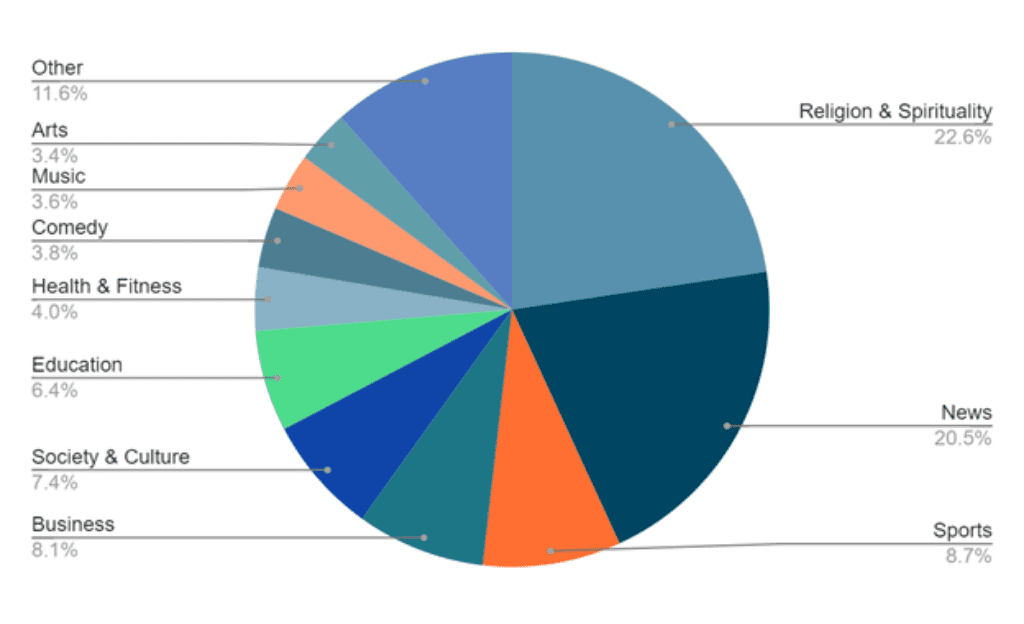
    Top 10 Published by Category

    Feb report total episodes

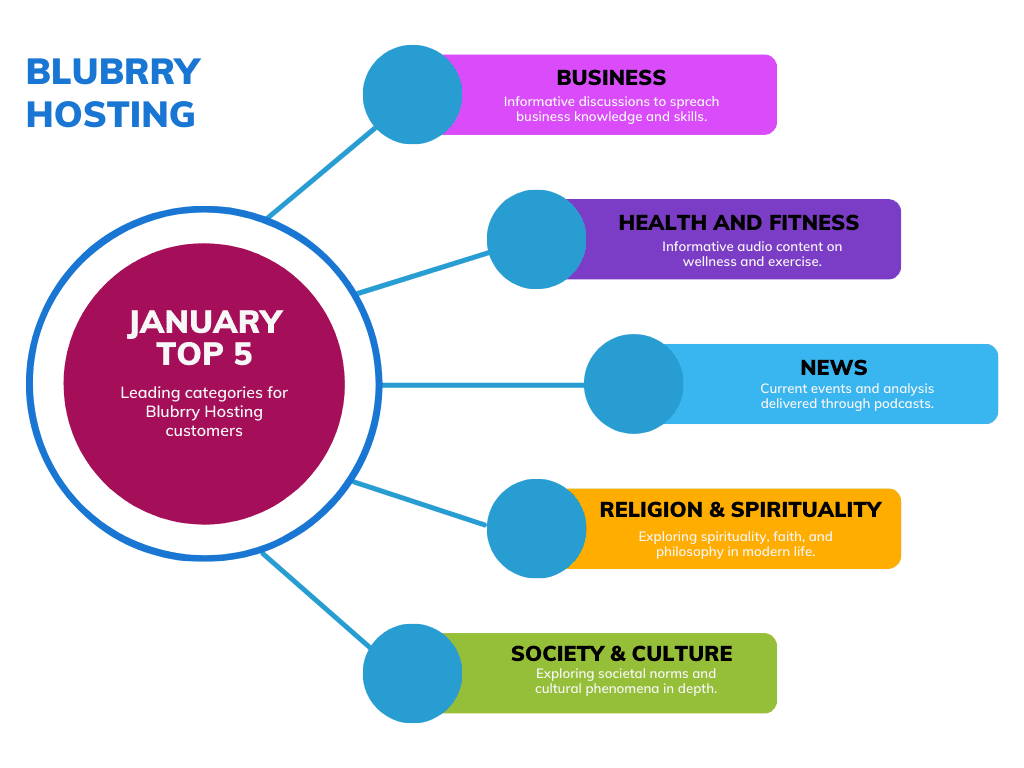
    BLUBRRY HOSTING
    Top 5 by Category

    Blubrry Top 5 categories

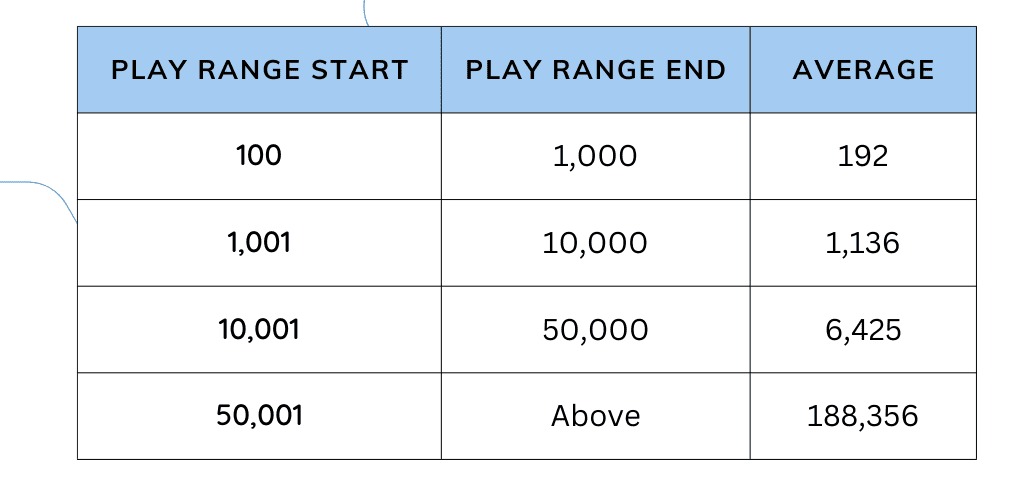
    AVERAGE EPISODE LISTENS
    By Show Size

    Average Episode Listens by Show Size

    Our ranges were determined when a show met the threshold one time, aka 10,001 listens/downloads, etc., during the reporting period. When a show met the threshold we included all episodes for the past 30 days that had been published a minimum of 10 days.

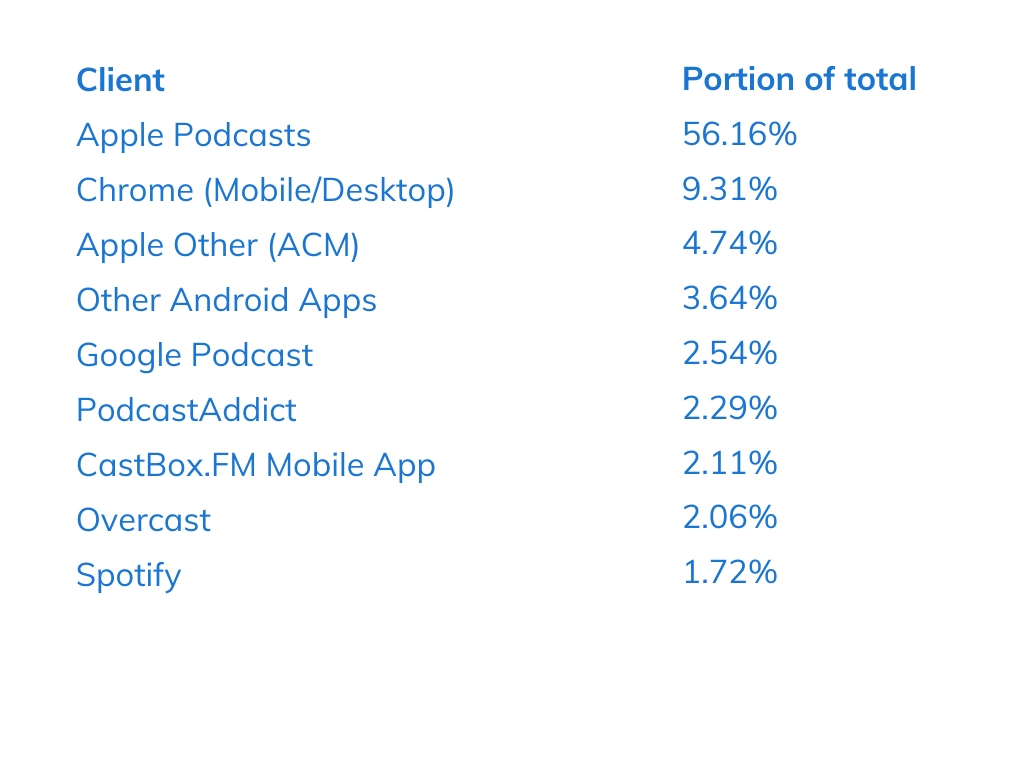
    TOP CLIENTS
    How Podcasts Were Consumed in January 2024 by Platform

    Top clients  February 2024 report

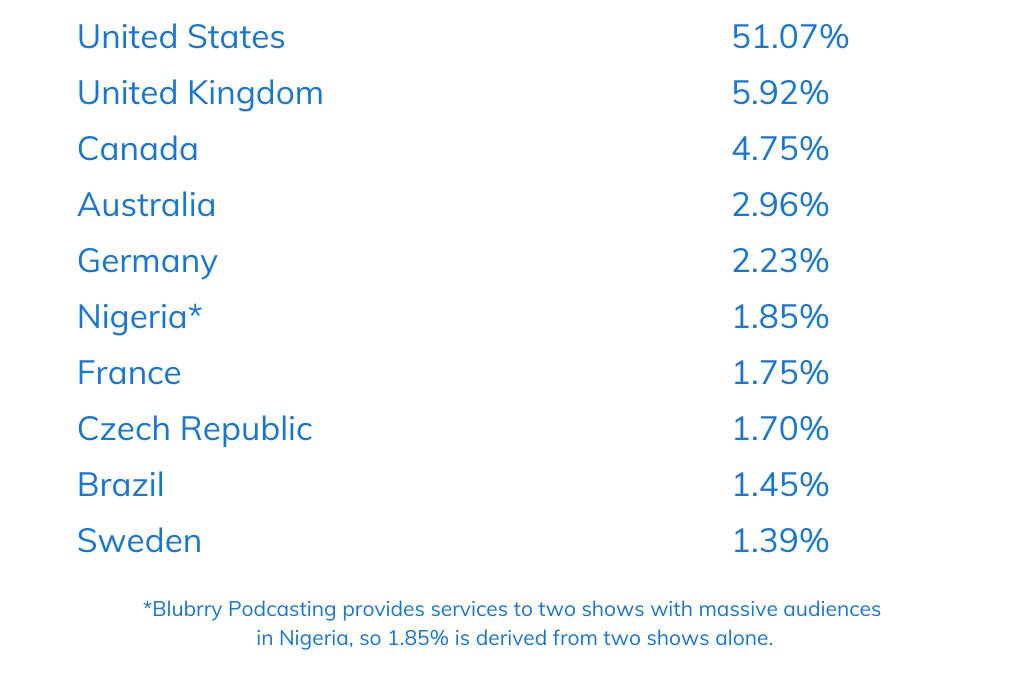
    BLUBRRY TOP 10 COUNTRIES

    Blubrry Top 10 Countries January

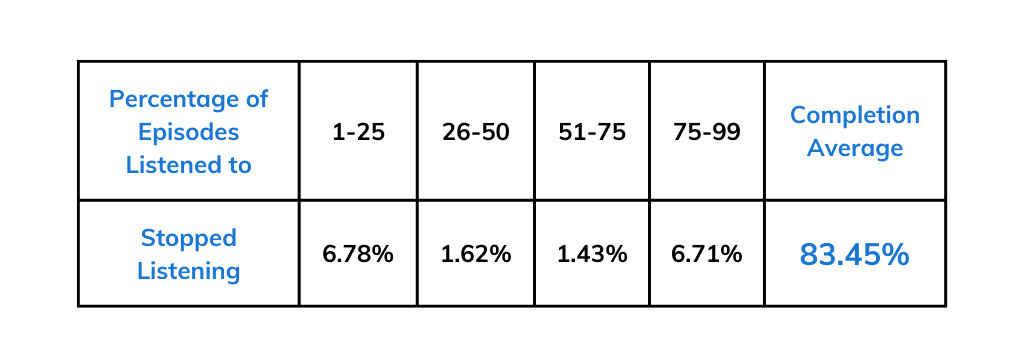
    BLUBRRY GLOBAL LISTENER RETENTION

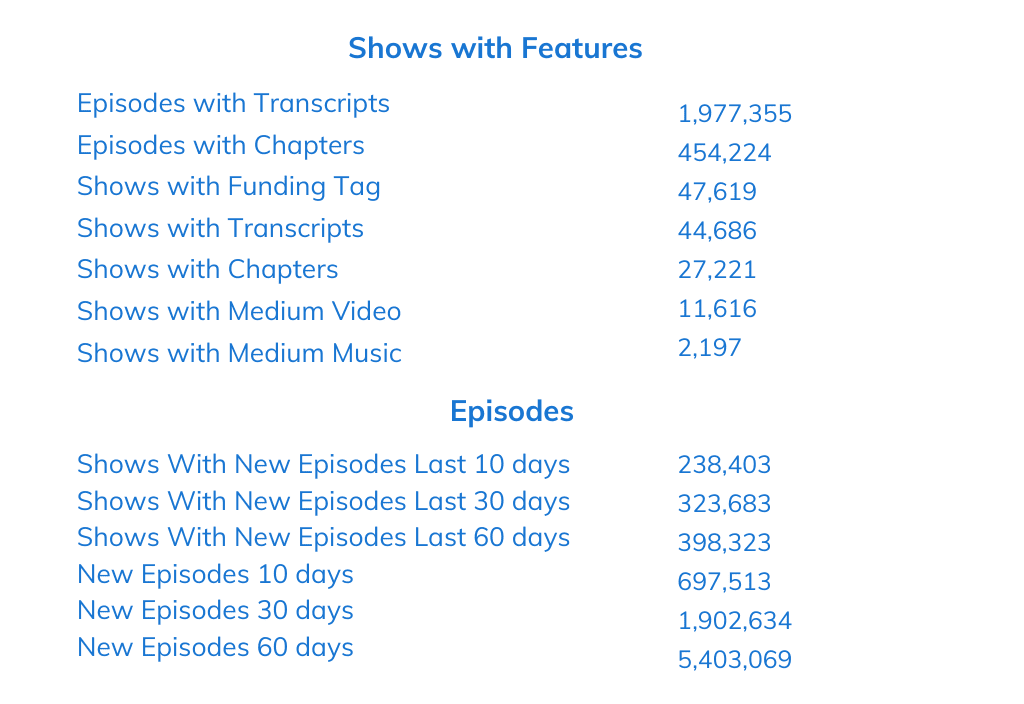
    GLOBAL PODCAST INDEX STATS
    Total Number of Podcasts: 4,094,443

    Blubrry Podcasting provides world-class Podcast Statistics to tens of thousands of shows via redirect/prepend for those hosting on other platforms, or direct stats for our podcast-hosting customers. We have data that no other stats provider provides. Sign up for Podcast Statistics today.

  • Two Free Podcast Hosting Services Shut Down – Your Podcast 017

    Two Free Podcast Hosting Services Shut Down – Your Podcast 017

    Podiant and Opinion, two free podcast hosting companies shut down recently. Should you do a transcript of your show? There are many positives and negatives of written transcripts is for your podcast. Advertising in podcasting is rising and becoming more relevant for all types of podcasters. Podcasters should be aware and begin preparing for advertising ahead of time. Lastly, there is no way to know how many people are subscribed to your show. All of this is discussed on today’s episode of Your Podcast with Todd Cochrane and Mike Dell.

    Thanks for listening to the show and please subscribe at PowerPressPodcast.com.

    We love our PowerPress users, please leave us a review.

    News

    Topics

    Support

    • Who are my subscribers? Why nobody can tell you that other than your listeners.
    • Having a podcast PAGE on your site and why that is just extra work. Use the blog roll instead. Blogging and podcasting are very, very similar. Your blog posts should be with your podcast posts (assuming they are on a similar topic.)
    • Upgrading and downgrading podcast hosting every month; Blubrry has many customers doing this. The only way to do this where it’s not costing you more is to upgrade 2 days prior to the next payment date.

    To ask questions or to comment on the show, contact Todd and Mike here: yourpodcast@blubrry.com

  • What’s in a Name? Titles, Filenames & Domains – Your Podcast 016

    What’s in a Name? Titles, Filenames & Domains – Your Podcast 016

    What’s in a name? For a podcast names can contain quite a bit of pertinent information. Show names, episode titles, file names and domain names are crucial and helpful for a podcast. There’s also a lot of places where it can go wrong.

    Stick around in episode 16 for information on a Yeti microphone and what Google is up to. Todd and Mike also share some tips on how best to get support, this week on Your Podcast.

    Thanks for listening to the show and please subscribe at PowerPressPodcast.com.

    We love our PowerPress users, please leave us a review.

    News

    • Blue Microphones introduces, the Yeti Broadcaster: Bundled with Hindenburg Journalist software – making you a pro podcaster in no time.
    • Think Google was taking a backseat to podcasting? Think again: Google buys the podcast app, 60db

    Topics

    • File names, episode titles, titles of the main podcast and the author tag: What’s the best practice for naming all of the properties of your podcast feed?
    • MP3 file names: Name your files in a way you can understand them and keep them short. No spaces, no punctuation (other than underscore _ or dashes – ).
    • Blogging and podcasting on the same site, a match made in heaven: People that are checking out your podcast should be interested in your blog and those reading your blog might be interested in your podcast. Why not run them together on the same page of your site? If it’s the same topic, then it would only stand to reason it would be the same audience.

    Support

    • Include some sort of contact information in your podcast and in your show notes – you’d be surprised how many people want to contact you.
    • Provide your email on your website; at the very least include a contact form.
    • Be sure to set the iTunes/Apple email tag to an email you CHECK regularly!
    • When submitted a ticket and/or email to Blubrry please include the following: email address you use at Blubrry and show name (possibly including the feed).

    To ask questions or to comment on the show, contact Todd and Mike here: yourpodcast@blubrry.com

  • PowerPress 7.1 With all the iOS 11 features – Your Podcast 009

    PowerPress 7.1 With all the iOS 11 features – Your Podcast 009

    More evidence that Soundcloud is in trouble, how to submit your podcast to Spotify, Veronica Belmont is podcasting again, and PowerPress 7.1 with all the new iOS 11 features. All of that with Mike and Todd, covering a few tech topics as well. Thanks for listening to the show and please subscribe at PowerPressPodcast.com.

    Happy National Blueberry Day! (July 8th)!
    Eat some Blueberries and/or order professional statistics or media hosting from we-moved-the-blog-to-this-site-when-we-made-a-new-website.blubrry.com/ (promo code Blubrry005 for a free month).

    News:

    Topics:

    Tech:

    • File names – Best practices to make sure you are naming your media files correctly. KEEP IT SIMPLE!
      File names should only contain numbers, letters, dashes or underscores. No spaces, symbols, periods (other than the .mp3) or commas. This will insure that your files are compatible with all podcast apps and directories (including Apple Podcasts, Google Play Music and Stitcher).
    • PLEASE Contact us first instead of going on social media. We monitor email 7 days a week, have a phone number for support during business hours (9-5 US Eastern Time) and we are the best place to go for help with your show using Blubrry tools. Just call 1-877-729-8642 ext. 1 for support. Leave a voicemail if it’s after hours and we will get back to you. Or email support@blubrry.com.

    To ask questions or to comment on the show, contact Todd and Mike here: yourpodcast@blubrry.com