
Category: Your Podcast

  • Turn Your Podcast Into a Brand Powerhouse

    Turn Your Podcast Into a Brand Powerhouse

    Celebrate the ‘YOU’ in Your Brand
    Are you ready to become the go-to voice in your niche — and maybe even a household name? According to Dave Clements, Blubrry Podcasting’s support analyst and longtime podcast advocate, your podcast might just be the impetus you need to build a magnetic personal brand.

    “Ever dream of becoming the go-to voice in your niche — maybe even the next household name? Your podcast can be the rocket fuel for that personal brand,” says Dave. “Today I’ll show you how to turn a show into a magnetic, memorable YOU-brand that listeners follow everywhere.”

    Why Podcasting Builds Deeper Branding Connections

    Unlike fleeting social media posts, podcasting builds trust through long-form storytelling and consistency.

    “A podcast is more than episodes; it’s a weekly (or daily) handshake with your audience,” Dave explains. “That intimacy builds trust faster than any headline or selfie ever could.”

    This kind of consistent, personal connection is exactly what elevates you from content creator to brand identity.

    Define Your YOU-DNA

    Before you can amplify your message, you have to define it. Dave recommends answering three core questions to establish what he calls your “YOU-DNA”:

    • Pick Your Flag – What do you stand for? What problem do you solve?
    • Define Your Persona – Choose three adjectives that represent how you want listeners to feel.
    • Identify Signature Topics – Choose 2–3 core themes that you’ll revisit regularly.

    “Write those answers down,” Dave advises. “They become your brand’s compass and keep you from drifting off-message.”

    Align Every Podcast Touchpoint

    Once your brand identity is clear, it’s time to make sure every aspect of your podcast reflects it:

    • Voice & Storytelling – Let your energy match your persona; bring in real stories.
    • Signature Segments – Add a recurring element like a “Hot Take Minute.”
    • Intro/Outro Rituals – Repetition creates recognition.
    • Visual Echoes – Use consistent images, fonts, and colors across cover art, audiograms, and your site.
    • Metadata – Show notes and episode titles should sound like you, too.

    “Tools like transcripts or AI-generated social snippets inside our dashboard help you push that same voice onto blogs, reels, and newsletters—no copy-paste fatigue,” Dave notes.

    Go Beyond the Feed

    A strong personal brand doesn’t stop at the RSS feed. Dave recommends:

    • Sharing show notes and bonus content via email.
    • Turning mic moments into short-form video teasers.
    • Appearing on other podcasts and collaborating with like-minded creators.
    • Hosting live streams or Q&As to further humanize your brand.

    Create a Community, Not Just an Audience

    “Personal brands thrive on two-way energy,” Dave says. “Give your listeners a name, read their emails on-air, drop bonus content for top supporters. When fans feel seen, they market you for free.”

    Analyze and Adapt

    Don’t forget to measure your efforts. Use analytics to track which segments are boosting retention or what changes increase engagement.

    “Data isn’t just numbers; it’s feedback on you,” Dave reminds us. “Dive into your analytics—download trends, listener geography, even episode-level retention.”

    Your YOU-Brand Starts Now

    “Ready to level up from ‘just another podcaster’ to a recognizable voice?” Dave asks. “Nail your YOU-DNA, align every touchpoint, amplify across platforms, and iterate with data.”

    And with tools like Blubrry’s transcripts, AI snippets, and robust analytics, you’ve got everything you need to build your unforgettable you-brand, one episode at a time.

    Ready to get started? Visit Blubrry Podcasting and explore the tools that can make personal branding simple, powerful, and scalable.
  • How to Start a Podcast for Teachers and Educators

    How to Start a Podcast for Teachers and Educators

    Advice from Blubrry’s Dave Clements

    Teacher and Educator PodcastTop teachers and educators understand the importance of constant evolution in engaging their students, connecting with fellow educators, and sharing their expertise with a broader audience. Enter podcasting, the next and future stellar teaching tool for education podcasts! At Blubrry Podcasting, we’ve seen firsthand how educators are using podcasts to bring learning to life — and we’re here to help them get started.

    We chat with Dave Clements, Blubrry support analyst, to walk through how educators can dive into the world of podcasting with ease.

    “Podcasting isn’t just about talking into a mic — it’s about creating a learning experience that goes beyond textbooks and lectures,” Dave explains. “It’s an incredibly powerful medium for teachers.”


    Why Educators Should Start a Podcast

    Podcasting allows educators to transform their lessons and reach a wider audience. According to Dave, there are three major reasons educators should consider starting a podcast:

    • Expand Your Classroom: “Your classroom doesn’t have to end at the school walls,” says Dave. “Podcasting allows students to study anywhere, anytime—it’s flexible and fits into their busy lives.”
    • Share Expertise: Teachers can connect with peers worldwide, discussing best practices and sharing experiences that can inspire others.
    • Build a Community: “Podcasting creates an avenue to build a real sense of community, not just with students but with parents, other educators, and even industry experts,” Dave adds.

    Podcasts also double as professional development tools, enabling collaboration and growth within the education field.


    The Tools You Need to Get Started

    You don’t need a professional recording studio to start your podcast. Dave recommends three basic tools to launch:

    • A Good Microphone: “Invest in a solid USB microphone like the Audio-Technica ATR2100x or Samson Q2U,” Dave advises. “They’re affordable and sound fantastic.”
    • Recording & Editing Software: Free tools like Audacity and GarageBand are perfect for beginners. “Don’t overcomplicate things,” Dave says. “Start simple and build from there.”
    • A Reliable Podcast Host: That’s where Blubrry comes in. Blubrry provides everything you need to publish, distribute, and grow your podcast, with special programs designed specifically for educators and students.

    “At Blubrry, we make sure you can focus on your content, not the technical headaches,” Dave reassures.


    How Blubrry Makes Podcasting Easier for Educators & Students

    Blubrry believes starting a podcast should be straightforward and accessible, especially for educators. Here’s what’s available:

    • Educator Account: Free podcast hosting for your first year! Simply apply and start your educational podcast without worrying about the cost.
    • Student Discount: Students receive 50% off hosting plans for one year, making it easier to engage in podcasting projects.
    • Easy-to-Use Publishing Tools: “Our dashboard is designed to be intuitive. You don’t have to be a tech wizard to get your podcast published and distributed,” Dave emphasizes.

    Blubrry takes care of the hosting, distribution, and analytics, freeing educators up to focus on what matters most: teaching and inspiring through content.


    Publishing & Growing Your Podcast

    Once your episodes are ready, it’s time to get them into the world. Here’s Dave’s simple checklist for publishing through Blubrry:

    1. Upload Your Episode: Drag and drop your audio file into Blubrry’s user-friendly dashboard.
    2. Add Show Notes & Transcripts: “This helps make your content more accessible and easier to find,” Dave points out.
    3. Distribute Everywhere: Submit your podcast to platforms such as Apple Podcasts, Spotify, and iHeart Radio with just a few clicks.

    And once you’re live, promote your podcast! Share it with your students, post on social media, and collaborate with fellow educators to grow your audience organically.


    Ready to Get Started?

    Starting a podcast as an educator is more achievable than ever. Here’s your quick action plan:

    • Choose your podcast topic and format
    • Get the right microphone and editing software
    • Sign up for Blubrry’s Educator or Student Plan
    • Publish and promote your episodes

    “Your voice has the power to inspire,” says Dave. “Podcasting can help you reach students and fellow educators in ways you never imagined.”

    If you’re ready to start, visit we-moved-the-blog-to-this-site-when-we-made-a-new-website.blubrry.com/ and take advantage of our special educator and student discounts today. Your community is waiting — start your podcasting path now!

  • How Podcast AI Helps Podcasters Create Viral Topics

    How Podcast AI Helps Podcasters Create Viral Topics

    MarketingAs of this writing, there are approximately 4.5 million podcasts out there, according to Podcast Index. That’s a lot of competition! Yet the possibility of your show going viral is simply two factors: capturing the right topic at the right time. You can study trends and other viral podcast topics to get ideas, but we have a better way to help you narrow that down: the planning function of Blubrry Podcasting’s Podcast AI!

    For creators juggling content planning, audience engagement, and production, finding that perfect, trending idea can feel like a shot in the dark. That’s where podcast-focused AI steps in, turning creativity into a smarter, more strategic process.

    Podcast AI tools are revolutionizing the way creators brainstorm and plan their episodes. These tools analyze vast amounts of data — from listener behavior to trending search terms — to identify themes and angles that are not only relevant but have the potential to go viral. Instead of relying on guesswork or spending hours researching what’s trending, podcasters now have a powerful assistant that helps uncover topics they may never have thought of on their own.

    Get to Know Blubrry PAI

    Blubrry Podcasting, a longtime leader in podcast hosting and analytics, has brought the AI revolution to the forefront. Its AI technology, available both as a standalone tool and integrated with their cutting-edge podcast hosting platform, helps podcasters discover topics with high audience potential. It goes beyond simple keyword suggestions by analyzing engagement patterns, cultural moments, and content gaps to surface themes that align with a podcast’s niche — and that listeners are hungry for.

    Imagine you host a podcast about entrepreneurship. You might be planning to do another episode on startup funding, a tried-and-true topic. But Blubrry’s Podcast AI suggests a fresh twist: “How Gen Z Founders are Disrupting Traditional Venture Capital.” It’s timely, niche-specific, and uniquely positioned to grab attention — especially on social media platforms where viral content often starts. That’s the kind of creative edge this AI provides.

    Blubrry’s AI also considers your podcast’s history and audience trends. It looks at what has performed well in the past, compares it with current industry movements, and offers suggestions tailored to your style and goals. For new podcasters, it can spark that first batch of episode ideas. For seasoned hosts, it can prevent creative burnout and keep content feeling fresh and relevant.

    Virality isn’t guaranteed by topic alone, but it starts with an idea that resonates. When a podcast episode taps into what listeners are already curious about — or introduces a conversation they didn’t realize they were ready for — it’s more likely to be shared, discussed, and featured across platforms. Podcast AI tools like Blubrry’s increase the chances of hitting that sweet spot by helping creators stay one step ahead of the curve.

    In today’s fast-moving media landscape, the combination of human creativity and AI-powered insight is a game-changer. Whether you’re an indie podcaster or part of a production team, using tools like Blubrry’s Podcast AI can be the secret weapon that transforms your next episode from good to unforgettable — and maybe even viral.

  • Why Blubrry? The Best Podcast Hosting for Your Show

    Why Blubrry? The Best Podcast Hosting for Your Show

    If you’re starting a podcast or looking to switch hosts, you’ve probably come across a ton of options—each claiming to be the best. So why choose Blubrry?
    Let’s break it down and, most importantly, let’s compare Blubrry side-by-side with other podcast hosting platforms.

    What Makes Blubrry Stand Out?

    Podcasting isn’t just about hitting record and hoping for the best. You need reliable hosting, in-depth stats, monetization options, and tools that make your life easier. That’s where Blubrry comes in.

    Unlike other hosts, we don’t put unnecessary restrictions on your podcast. No cut-off limits, no holding your data hostage, and no forcing you into a specific ecosystem. You stay in control.

    Side-by-Side Comparison: Blubrry vs. Other Podcast Hosts

    Feature Blubrry Other Hosts
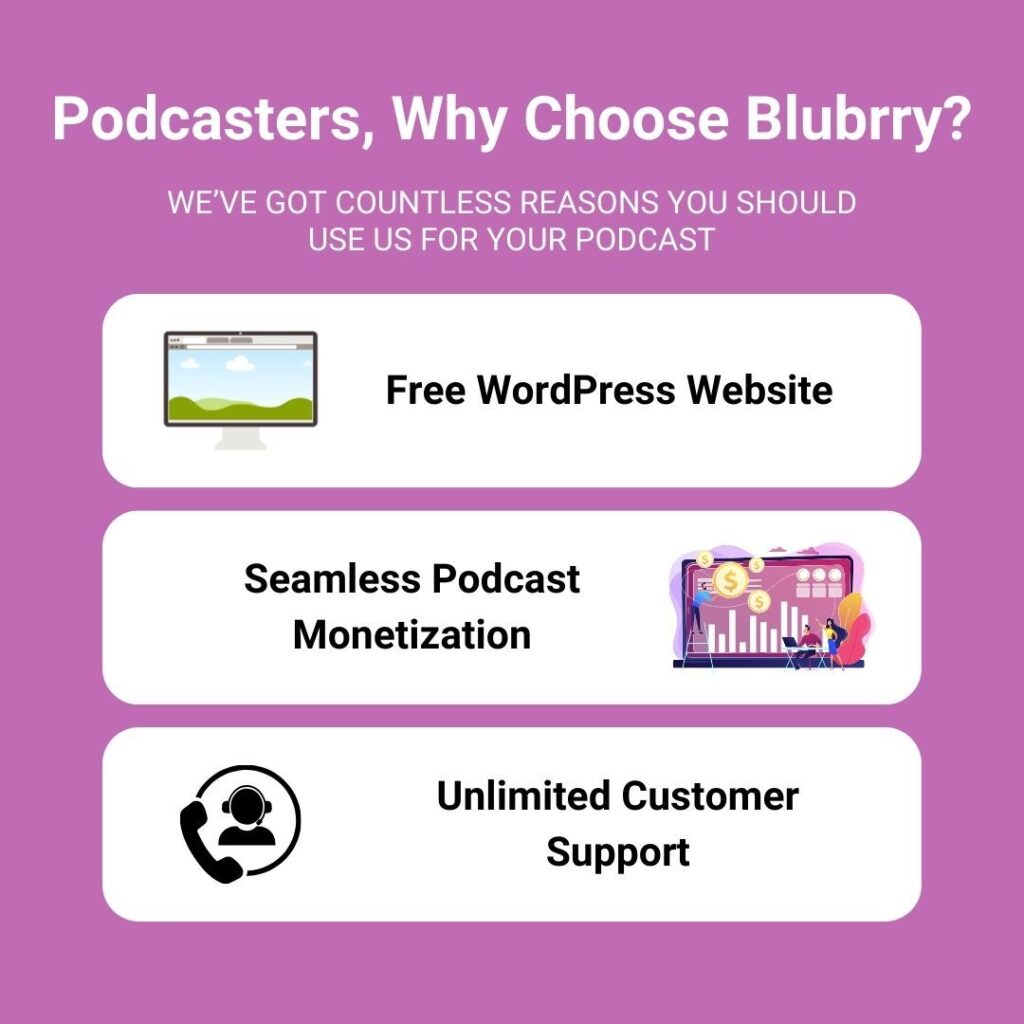
    No Cut-Off Limits ✅ Yes ❌ Some limit hours/storage
    IAB-Certified Podcast Statistics ✅ Yes ❌ Many offer basic stats only
    Free WordPress Website ✅ Yes ❌ Usually an extra charge
    Advanced Podcast AI Tools ✅ Yes ❌ Limited or none
    Seamless Podcast Monetization ✅ Yes ❌ Some offer limited options
    Industry Experience (Since 2005) ✅ Yes ❌ Many are newer players
    Unlimited Customer Support ✅ Yes ❌ Support often limited

    No Limits, No Headaches

    Ever heard of hosting platforms that cut you off after a certain number of episodes or downloads? Yeah, that’s frustrating. With Blubrry, there are no arbitrary cut-off limits—you can podcast freely without worrying about restrictions.

    Other platforms might throttle your bandwidth or charge extra when your audience grows. We don’t. Whether you’re just starting out or have a massive listener base, we give you the freedom to podcast on your terms.

    Podcast Statistics That Actually Matter

    Data is everything when it comes to growing your show. However, not all analytics are created equal. Blubrry offers IAB-certified podcast statistics, which means the numbers you see are accurate, trustworthy, and accepted by advertisers.

    Want to know where your listeners are tuning in from? Which episodes perform best? What platforms do they use? Blubrry’s analytics provide deep insights so you can make smart decisions about your content strategy.

    Free WordPress Website with PowerPress

    Unlike some podcast hosts that leave you to figure out your website on your own, Blubrry provides a free WordPress site with every hosting plan. And if you already have a site? Even better. Our PowerPress plugin makes it easy to integrate your podcast seamlessly.
    Think of it this way: why build your audience on someone else’s platform (like social media or a free podcast host) when you can own your podcasting home? With Blubrry, your website is yours—no unexpected shutdowns, no ads slapped onto your content without your permission.

    AI? No, Smart Podcasting Tools

    Let’s be real—“AI tools” is a buzzword that gets thrown around a lot. What we offer are practical, time-saving AI podcasting tools designed to help you:

    • Improve discoverability with automatic episode transcripts.
    • Generate dynamic content to make your show more engaging.
    • Optimize your workflow so you spend less time on busywork and more time creating.

    These tools aren’t gimmicks—they’re built to help real podcasters, whether you’re running a passion project or a full-scale production.

    Built by Podcasters, for Podcasters

    Here’s something the big-name platforms won’t tell you: Many of them are run by large corporations more focused on their bottom line than on your podcast’s success. Blubrry? We’ve been around since 2005, and we’re run by podcasters who understand exactly what you need.

    We’ve seen the podcasting industry evolve, and we’re committed to giving creators the best tools and support to thrive—without locking them into restrictive platforms or taking control of their content.

    Thinking About Switching? Let’s Make It Easy

    If you’re already hosting somewhere else but feel like you’re missing out, we’ve got you covered. Blubrry offers free migration, and we make the process smooth and stress-free. Plus, we’re offering a discount for podcasters switching to Blubrry—because making the right choice for your show shouldn’t come with a price tag.

    So, why Blubrry? Because we’re here to help you own your podcast, understand your audience, and grow your show without limits.

    Ready to take control of your podcasting future? Start today at we-moved-the-blog-to-this-site-when-we-made-a-new-website.blubrry.com/.

  • How to Start a Podcast

    How to Start a Podcast

    Follow Our Step-by-Step Guide

    Podcasting has become an integral part of digital media. With advancing technology and growing audiences, starting a podcast requires careful planning and the right tools. Leading the way in podcast innovation since 2005, Blubrry Podcasting has been instrumental in shaping the industry from its earliest days. As a pioneer in podcasting services, Blubrry offers a comprehensive suite of tools designed to simplify the entire podcast path.

    Dave ClementsMeet Blubrry’s Dave Clements!

    Ready to watch your podcast grow? Let’s hear from our expert Dave Clements, Blubrry’s technical support expert, on essential tips for success!

    “If you’ve been dreaming about starting a podcast but don’t know where to begin, you’re in the right place… Defining your goal first makes every other step easier and more effective.”

    Blubrry’s hosting with plans for every budget is the go-to platform — especially for those who aim for leading-edge technology and top-notch security. Blubrry ensures podcasters keep their brand and freedom of speech without undue censorship.

    Its leading-edge podcast AI (PAI) assists creators in planning, producing, and promoting shows, while its streamlined directory submission process ensures maximum visibility across major platforms. Podcasters benefit from Blubrry’s IAB-certified statistics for accurate audience tracking and can rely on the industry’s top-rated support team for guidance at every step.

    Essential Steps to Launch Your Podcast

    “The goal is to pick broad topics that can last you for the long haul. You want enough variety to keep your content fresh, but also a theme or niche that can provide enough material to create episodes for a long time.”

    • Define Your Podcast Strategy
      • Choose a specific niche and target audience
      • Develop a unique value proposition
      • Plan your content calendar
      • Decide on episode length and frequency

    Set Up Your Technical Infrastructure (equipment)

    “You don’t need to spend a fortune to start a podcast but good audio is an absolute must. We recommend the Samson Q2U because it’s reliable, sounds great, and it’s not going to break the bank.”

    • Purchase a professional-grade USB microphone (recommended: Shure MV7X or Rode PodMic)
    • Invest in noise-canceling headphones
    • Select recording software (e.g., Adobe Audition, Hindenburg, or our friends at Descript)
    • Choose a quiet recording space with a basic acoustic treatment

    Establish Your Online Presence

    • Register your domain name
    • Set up a podcast-optimized website
    • Create social media accounts
    • Design professional cover art and branding materials

    Select Your Hosting Platform

    • Choose a reliable podcast host with robust analytics
    • Ensure your host offers:
      • Dynamic ad insertion capabilities
      • Automated transcription
      • Multiple RSS feed options
      • Integration with major directories
    • Optimize Your Production Process
      • Enlist podcast AI through the Thrive Bundle
      • Create a pre-recording checklist
      • Develop a post-production workflow
      • Use AI-powered editing tools for efficiency
      • Implement batch recording when possible

    Distribution and Marketing

    “Start with friends and family. Share your podcast directly with people you know and encourage them to listen, share, and leave reviews. Even if it’s not their cup of tea, they can still give you some very honest feedback about what you might be able to do better.”

    • Submit to major podcast directories (Apple Podcasts, Spotify, Google Podcasts)
    • Implement SEO best practices
    • Utilize audiograms and video clips for social media
    • Engage with your audience across platforms

    Monitor and Analyze Performance

    • Track key metrics (downloads, listener retention, engagement)
    • Gather listener feedback
    • Adjust content strategy based on analytics
    • Create a media kit that updates daily
    • Monitor industry trends and adapt accordingly

    Best Practices for 2025

    “Short-form video content is still king. Create 30-second clips from your episodes to share on TikTok, Instagram reels, and YouTube shorts. Even with a small network, one viral video can grow your audience incredibly fast.”

    • Incorporate video podcasting options for multi-platform distribution
    • Use AI tools for transcription and content repurposing
    • Implement dynamic content insertion for personalized listener experiences
    • Focus on mobile-first optimization
    • Create interactive elements for audience engagement

    Ready to learn how to grow? Click on the video to benefit from more of Dave’s wisdom!

    Remember that consistency and quality are key to building a successful podcast. Start with the essentials and upgrade your setup as your audience grows. And, importantly, you can turn to Blubrry and its top-notch features and support team for every podcasting need.

  • When is It OK to Build on Another Person’s Property?

    When is It OK to Build on Another Person’s Property?

    As the podcast industry has evolved, the question of where to build your podcast’s presence has become increasingly complex. Blubrry CEO Todd Cochrane has long espoused the importance of owning your brand entirely and warned of building your show on platforms that can take control of them — or even take them away. However, while the fundamental principle of maintaining control over your content remains crucial, the modern podcasting ecosystem requires a nuanced approach.

    “I have always warned podcasters about signing with an often-free hosting service that essentially takes over the rights to their show,” Cochrane explains. “That’s still true, but let’s face it, you want exposure for your show and you want it to be seen in the spaces where the audiences go.”

    He noted that Blubrry’s hosting plans make submitting podcasts to top directories such as Apple and Spotify easy, while hosting with the security of Blubrry.

    The Historical Context

    Importance of Podcast MarketingFor years, podcasters have faced a significant dilemma: the allure of “free” hosting services that often came with hidden costs — some through lost monetizing opportunities but primarily the potential loss of content rights and creative control. Many creators learned this lesson the hard way, losing their hard-earned content and audience to platforms prioritizing profit over creator rights.

    “At Blubrry, we are adamant about the podcasters maintaining their show’s brand and rights,” Cochrane said.

    The Current Landscape

    However, today’s podcasting environment presents a delicate balance between visibility and control. While major directories and platforms offer unprecedented reach, they also come with strict content guidelines that can sometimes result in unexpected show removals or restrictions.

    “Certainly, podcasters will want to host with a credible company such as Blubrry, and distribute their shows to the larger directories,” Cochrane said.

    Finding the Right Balance

    two sided scaleThe solution lies in adopting a hybrid approach:

    • Maintain primary hosting with a creator-first platform like Blubrry, ensuring complete ownership and control of your content
    • Strategically distribute your content to major directories for increased visibility
    • Keep your RSS feed under your control, allowing for quick pivots if needed
    • Understand platform guidelines while maintaining your authentic voice

    Content Guidelines and Freedom of Expression

    While Blubrry stands firmly against hate speech and content that violates constitutional freedoms, we recognize the importance of protecting legitimate expression. The key is finding the balance between responsible content creation and avoiding overly restrictive censorship that might stifle important voices and perspectives.

    The Smart Approach

    Today’s successful podcasters understand that building on another’s property isn’t inherently wrong — it’s about how you do it. By maintaining control of your content through independent hosting while leveraging major platforms for distribution, you can maximize your reach while protecting your rights as a creator.

    Remember: True independence in podcasting comes from maintaining control of your content while strategically utilizing available distribution channels to grow your audience. Hosting with Blubrry Podcasting is the best way to build your show and keep your brand in-house!

  • Plan Ahead for Holiday Listeners and Growth

    Plan Ahead for Holiday Listeners and Growth

    Be consistent during the holidaysAs the holidays approach, podcasters may wonder if they should take a break from their show or push through the festivities with fresh content. While it’s natural to consider taking time off, especially when family and relaxation are calling, it’s important to remember that consistency in podcasting can be a game-changer for your show’s growth — especially during the holiday season.

    Why Consistency Matters in Podcasting

    Consistency is key when it comes to building and retaining an audience. According to a recent survey by Edison Research, 41% of the U.S. population over the age of 12 listens to podcasts every month. Of those listeners, the majority are tuning in weekly, with many making podcasts a part of their daily routine. This shows that podcast fans crave regular content, and many rely on it as part of their entertainment or educational habits.

    By maintaining a consistent publishing schedule, even during the winter holidays, you’re signaling to your audience that they can rely on you. Regular uploads help build trust and strengthen the relationship with your listeners. And trust is the foundation of a successful podcast.

    Holiday Listeners: A Silver and Golden Opportunity

    It’s easy to assume that podcast listenership might drop during the holidays when people are busier with shopping, traveling, and spending time with loved ones. However, statistics show otherwise. Data from Nielsen indicates that podcast consumption often remains stable or even increases during the holiday season. In fact, many people take the opportunity during holiday travel or downtime to catch up on their favorite shows or explore new ones.

    People are looking for engaging content while driving to see family, flying across the country, or simply unwinding at home with a warm drink. A 2023 report supported by our own data revealed a 5-10% increase in downloads during the Thanksgiving to New Year period, with Dec. 15-Jan. 30 as the biggest subscriber pickups. The reason? With more free time, listeners are exploring new genres and diving into podcasts they might not have time for during their usual busy schedules.

    This is a fantastic opportunity for podcasters to attract new listeners who are sampling different shows while they have a bit more time on their hands. If you go silent during this period, you could miss out on connecting with potential fans who are actively looking for fresh content.

    Consistency Without Sacrifice: The Power of Planning Ahead

    The good news is that maintaining consistency doesn’t mean you have to sacrifice your holiday break. With a bit of planning, you can keep your podcast active without being tethered to the microphone during family gatherings or holiday festivities.

    Here are some strategies to help you stay consistent and make the most of the holiday season:

    1. Batch Record Your Episodes: Take a weekend before the holidays to batch record several episodes. This way, you can schedule them in advance and have a stress-free holiday knowing your content is still going live as planned.
    2. Revisit Popular Past Episodes: If recording new content feels overwhelming, consider re-releasing some of your most popular episodes from the past year. Add a brief new introduction or commentary to give it a fresh spin.
    3. Plan Special Holiday Content: Think about creating a themed holiday episode or a special message for your listeners. It’s a great way to engage with your audience and show appreciation while keeping things light and festive.
    4. Schedule Everything in Advance: Use podcast scheduling tools to set your episodes to go live at your regular time, even if you’re away. Platforms like Blubrry’s hosting service make it easy to upload and schedule episodes in advance, giving you peace of mind.

    Engage With Your Audience During the Holidays

    In addition to scheduling your episodes, don’t forget to stay engaged with your listeners on social media. You don’t have to be glued to your phone, but scheduling a few posts in advance or checking in occasionally can keep the conversation going. Share what you’re listening to, ask your audience about their favorite holiday traditions, or simply wish them a happy season. Also, remember the power of just saying “Got your message, will reply ASAP” to acknowledge that you’re paying attention to your fans.

    Consistency Creates Momentum

    Consistency isn’t just about meeting your current audience’s expectations; it’s also about building momentum. Regular episodes, even during quieter times like the holidays, contribute to your show’s growth in podcast directories. Podcast algorithms, such as those used by Apple Podcasts and Spotify, tend to favor shows that publish new content consistently. This can help boost your visibility and make it easier for new listeners to discover your show.

    Planning Ahead Makes It Possible

    Ultimately, it’s about striking the right balance. You don’t need to work through the holidays to keep your podcast on track—you just need a solid plan. By batch recording, scheduling, and using past episodes, you can enjoy your break while maintaining your audience’s trust and engagement.

    So as you prepare for the holidays, take a moment to map out your podcast schedule. With a bit of foresight, you can stay consistent, reach new listeners, and come back refreshed and ready to dive into the new year.

    Happy podcasting and happy holidays! And remember, as the new year approaches, it’s a great time to expand and grow your show. Our hosting plans, time-saving features and support team can help.

  • Podcasting: Hobby vs. Business

    Podcasting: Hobby vs. Business

    Business or Hobby podcastPodcasters are often divided into two camps: the hobbyists and the serious business moguls. For hobbyists, podcasting is the ultimate excuse to talk incessantly about their niche obsessions — like the history of pine-needle basket weaving or the intricacies of cheese-making — without being interrupted by eye rolls. They relish the freedom to record in their pajamas while sipping coffee and revel in the joy of having at least three listeners who aren’t related to them. 

    On the flip side, serious business podcasters are armed with marketing strategies, high-end microphones, and dreams of sponsorship deals that rival Super Bowl ads. They meticulously plan each episode, aiming for viral content while obsessively tracking metrics. Whether it’s a passion project or a path to fame, every podcaster finds their groove — often while editing out those pesky pauses and ‘ums’ at 2 a.m.

    Podcasting has become the go-to medium for sharing stories, ideas and expertise. For folks considering starting a podcast, whether for fun or profit, understanding the nuances of hobby podcasting and professional podcasting is an important starting point. 

    Podcasting as a Hobby

    Launching a podcast as a hobby is an excellent way to dive into audio content without significant pressure. Here are some key aspects to consider when podcasting for fun:

    1. Passion-Driven Content: Hobbyist podcasters typically choose topics they are passionate about. This can range from discussing favorite books or movies to exploring niche interests like bird watching or vintage car restoration. The primary goal is to share enthusiasm with like-minded listeners.
    2. Flexibility: As a hobbyist, you have the freedom to create and publish content at your own pace. There’s no strict schedule to adhere to, allowing you to balance podcasting with other commitments.
    3. Minimal Investment: Starting a hobby podcast requires minimal financial investment. Basic equipment, such as a good-quality microphone and headphones, along with free or low-cost editing software, is sufficient to get started.
    4. Personal Growth: Podcasting as a hobby can help develop new skills, such as public speaking, content creation, and audio editing. It’s a great way to learn and grow without the pressure of financial success.

    Podcasting as a Business

    Turning a podcast into a business requires a more strategic approach. Here are key considerations for making podcasting your job:

    1. Target Audience and Niche: Successful business podcasts often target a specific audience or niche. Identifying a gap in the market or addressing underserved topics can help attract a dedicated listener base.
    2. Consistent Content Production: To build a loyal audience, consistency is crucial. This means setting a regular release schedule and sticking to it. Whether it’s daily, weekly, bi-weekly, or monthly, listeners should know when to expect new episodes.
    3. Quality and Professionalism: High-quality audio, engaging content, and professional presentation are essential for attracting and retaining listeners. Investing in better equipment, professional editing, and even a dedicated recording space can make a significant difference.
    4. Monetization Strategies: There are several ways to monetize a podcast, including sponsorships, advertising, merchandise sales, and premium content. Blubrry Podcasting offers programmatic advertising, Dynamic advertising, Premium Podcasting, Value4Value and more monetizing options through its platform. Building relationships with brands and understanding different revenue streams is key to financial success.
    5. Marketing and Promotion: Business podcasters need to actively promote their shows to grow their audience. This involves leveraging social media, guest appearances on other podcasts, collaborations, and possibly even paid advertising.

    Transitioning from Hobby to Business

    For hobbyists looking to turn their passion into a profession, here are some steps to consider:

    1. Evaluate Your Content: Assess whether your current podcast content can appeal to a broader audience or if it needs refinement to become more marketable.
    2. Plan and Strategize: Develop a business plan that includes your goals, target audience, monetization strategies, and marketing plan. Setting clear, achievable objectives will guide your transition.
    3. Invest in Quality: Upgrade your equipment and software to ensure professional-grade production. Consider taking courses or hiring professionals for tasks like editing and marketing.
    4. Build a Brand: Create a strong, recognizable brand for your podcast. This includes a professional logo, consistent branding across platforms, possibly a catchphrase and a compelling story that resonates with your audience.
    5. Network and Collaborate: Engage with other podcasters, industry professionals, and potential sponsors. Networking can open doors to opportunities that help grow your podcast into a business.

    Podcasting for Business Success Statistics

    Hobby or BusinessWe asked ChatGPT about the potential for earning the big bucks via podcasting and this is what it said:
    The earnings of podcasters can vary significantly based on factors such as audience size, niche, and monetization strategies. On average, podcasters with around 10,000 downloads per episode can expect to make between $500 to $900 per episode from sponsorships and ads​ (FinanceBuzz)​​ (Captivate Unlimited)​. For instance, with a CPM (cost per mille) rate of $18 to $50, podcasters can earn between $180 and $500 per episode if they have 10,000 downloads​ (Wired Clip)​.

    However, only a small percentage of podcasters achieve substantial earnings. According to various sources, top-tier podcasters such as Joe Rogan can earn up to $800,000 per episode, with overall annual earnings reaching millions​ (FinanceBuzz)​​ (What To Become)​. On the other hand, many podcasters earn modest incomes, often supplementing their revenue through affiliate marketing, merchandise sales, and listener donations​ (Captivate Unlimited)​​ (DemandSage)​.

    The path to significant earnings in podcasting involves growing a dedicated and engaged audience, which can take time and consistent effort. Successful podcasters often combine multiple revenue streams, including advertising, subscriptions, premium content, and live events, to maximize their income​.

    Ultimately, while it’s possible to make podcasting a full-time job, it requires strategic planning, audience growth, and effective monetization methods to achieve substantial financial success.

    Does that all sound right to you? We’d like to know whether you approach podcasting as a hobby, business or both! Let us know how you podcast by taking our poll.

  • Fancasts are Fan-tastic!

    Fancasts are Fan-tastic!

    Fans find community in podcastingFor the uninitiated, “fancasts” are podcasts created by fans that are dedicated to a film, TV show, book, sports team, celebrity, or anything under the general umbrella of entertainment. These podcasts often expand on the world of a show, imagining expanded storylines within that world or its characters, analyzing the inner workings of these worlds, or theorizing where they think the show’s material (or season) might be going.

    Fans create their own content because not only do they not want to wait for new material from the original creators to be released, but they are often looking for a place where fans can connect with a community of like-minded (sometimes lightly obsessed) people.

    One of the most popular fancasts dedicated to all things The Lord of The Rings, is Talking Tolkien: An Unexpected Podcast. Hosts and long-time friends Ezra and Lane say they started the podcast out of love for the LOTR universe, but more specifically, “The genesis, or the Ainulindalë to be more topical, came from Ez and I rekindling our friendship.”

    Sure, the television shows or stories are why people initially listen to a fancast, but Ezra and Lane really pinpoint why listeners come back for more – these shows create a unique bonding experience for the hosts and the listeners. 

    “We’ve had SO many interactions with listeners and received so much positive feedback. Hard to even keep track of honestly. We have the most generous listeners. So many of them have gone on to become actual friends – it’s wild. Probably the most surprising ones are when we hear from someone that we were able to keep him/her company during a really dark time in someone’s life… That’s been the most humbling thing to hear,” Lane says.

    Dave Humphreys started the podcast What Does Star Wars Mean To You? and he had an incredible (dream-worthy, really) experience, “One of my listeners, a TV showrunner, reached out to me via one of my guests just to be on the show! I couldn’t believe it.”

    A quick peek at some of this week’s top fancasts includes a show about superheroes, a show dedicated to the TV show Big Brother, and one about FC Chelsea football (soccer for us un-posh Americans). These shows may seem niche and hyper-specific to the casual observer, but a show dedicated to the band Rush, “Something For Nothing,” has over 544,000 downloads. That’s impressive for any genre of podcast!

    Humphreys summarized what is so beautifully unique about fancasts, “Taking the question of, ‘What do you like about Star Wars?’ and twisting it to the more personal, ‘What does it mean to you?’ takes the hate out of the debate and refocuses the conversation on why we all fell in love with it in the first place. And when people talk openly and passionately about what they love, it’s hard not to see it from their perspective.”

    It doesn’t matter if the topic is dragons, murder, or being disappointed in the Dodgers for the last time, the root of all fancasts is the universal desire to share our passions. Get out there, grab the mic, and don’t be afraid to let your fan-flag fly!

  • What Is A Podcast RSS Feed?

    What Is A Podcast RSS Feed?

    RSS feeds aren’t exactly user friendly to all, so we wanted to simplify them a bit so that everyone can understand. We explain not only what a podcast feed is but the importance of having one.

    What is a podcast RSS feed anyway?

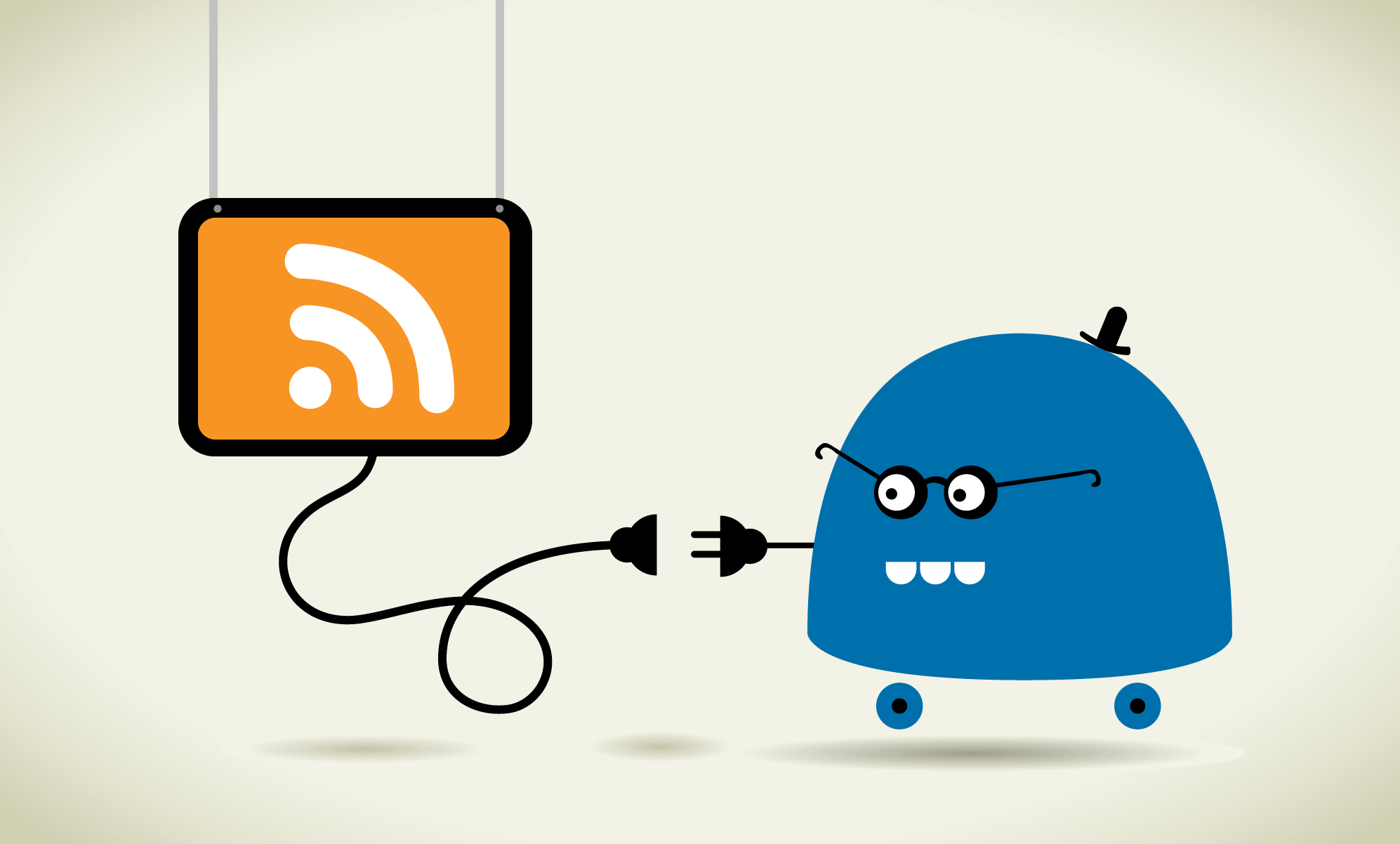
    RSS stands for “Rich Site Syndication” or “Really Simple Syndication”. In short, according to Wikipedia, RSS “is a type of web feed which allows users to access updates to online content in a standardized, computer-readable format.” In human language, that means you and your audience can use an RSS feed to consume your content someplace other than your website. Remember blog aggregators/readers? That’s how they work(ed). And, if you have a podcast, the podcast RSS feed is how platforms like Apple Podcasts, Google Podcast, Spotify, and others get your podcast info: they are more like an old-school phonebook, in that they simply list your information, but your podcast is actually served from wherever you host your media files. Your podcast RSS feed tells them things like your show name, the podcast episode title, the duration, etc. By the way, if you’re looking for an incredibly flexible, fast, stable place to host your podcast media files, be sure to check out our Podcast Hosting plans. Or, if you’re wondering how to get your podcast on Apple Podcasts, check out our step by step guide.

    Why you need a podcast RSS feed

    Put yourself in your listener’s shoes… or eyes & ears… for a minute. When you post anything to your website, your RSS feed defaults to listing a certain number of your most recent items. For example, WordPress defaults to listing the 10 most recent posts. The thing is, podcast readers will ignore anything in the default RSS feed that isn’t a podcast. So, if you’re publishing a handful of blog posts per month as well as a podcast per week, your default feed will only serve up those four podcasts. Your listeners are missing out.

    BUT! If you have a podcast-only RSS feed as Blubrry users do, your listeners will have access to more of your awesomeness because the feed won’t be filled up with blog post content. Just the podcasts. You should have a podcast-only RSS feed.

    Three ways to create a podcast RSS feed

    Something to seriously consider as you set out on your epic podcasting journey: do you want to own and control your podcast RSS feed? The answer, if you truly care about your own story, is most likely yes. In which case, read on.

    1. The PowerPress WordPress plugin. It’s free. It’s super simple. It’s one of the most trusted ways to share your story with the world. The PowerPress WordPress plugin makes creating your podcast RSS feed ridiculously easy. That’s why there are tens of thousands of active installs, all over the world. We began developing the PowerPress WordPress plugin way back in 2008 because we wanted an easier way to create a podcast RSS feeds for our own podcasts. There is even a step-by-step guide on how to create your podcast RSS feed over at we-moved-the-blog-to-this-site-when-we-made-a-new-website.blubrry.com/.
    2. If you don’t have a WordPress site we provide one to every customer for free and it has PowerPress included. There certainly are a plethora of other options, but none are as simple to use or widely adopted and it’s integrated into the free WordPress site for those that do not have one.
    3. There is no three.

    Ok. Those are the basics of what a podcast RSS feed is, why you might want one, and how to set up your very own podcast RSS feed. Be sure to check back often for more podcast RSS tips and tricks. And, as always, if you’re a Blubrry customer and you have any questions at all, give us a call. We have real, live humans ready, willing and able to help you build your podcast– including technical support in setting up a podcast RSS feed.

    We should also mention that sometimes our corporate customers or podcasters experimenting in the space do not want to go the WordPress route. That's really ok as we have a solution for you where you can publish directly on we-moved-the-blog-to-this-site-when-we-made-a-new-website.blubrry.com/ as well and we will provide you an RSS feed from there. We always want to suggest the best solutions first, as we truly believe you should build your brand on your .com this results in the best SEO for your show.