At Blubrry, we constantly hear from folks about their desire to start a podcast, yet they remain hesitant to take that initial leap. The world of podcasting can seem like an intimidating frontier, fraught with technical challenges, fear of the unknown and, gosh, am I good enough, smart enough and will people like me?
People wonder if they have the right equipment, if their ideas are worth sharing, or if they can gather a dedicated audience. However, at Blubrry, we want to emphasize that now is the perfect time to leap into the world of podcasting. We understand these concerns, and we’re here to reassure you that we’ll be with you every step of the way, providing the guidance, tools and support you need to turn your podcasting vision into a reality.
So, why do we all want to podcast in the first place? Let’s explore why we are so enamored of this revolutionary medium — who knows, one of these reasons might inspire folks to take the leap.
Conveying Unique Ideas and Interests
Podcasting offers a platform for individuals to express themselves freely, without the constraints of traditional media. Whether it’s discussing niche hobbies, exploring unconventional theories, or sharing personal stories, podcasts provide a space for unfiltered self-expression. By creating their own shows, podcasters can connect with like-minded individuals who share their vision and create a sense of community around their content.
Sharing Expertise and Motivating Change
For those who possess specialized knowledge or expertise in a particular field, podcasting serves as an effective tool for sharing valuable insights and motivating change. Many podcasters use their shows to educate and inspire their audience, offering guidance and advice on various topics. From business and finance to health and wellness, podcasters have the power to influence and shape the future.
Promoting a Business or Product
Podcasting has also become a popular avenue for businesses and entrepreneurs to promote their products or services. By hosting a podcast, companies can establish thought leadership, build brand awareness and connect with their target audience on a more personal level. But one hint: Make sure it’s not about you, but rather how what you offer can benefit others.
Entertainment for Yourself and Others
Many podcast enthusiasts seek entertainment through captivating storytelling, engaging interviews and thought-provoking discussions. From true crime mysteries to comedic banter, podcasts offer a diverse range of entertainment options that cater to different tastes.
Education Innovations and Tools
Podcasts have become a valuable educational resource, allowing listeners to expand their knowledge on a wide range of subjects. Whether it’s learning about history, science, personal development, or language acquisition, educational podcasts provide an immersive and engaging learning experience.
What is your why when it comes to wanting to start a podcast? Is there something holding you back? Let us know in the comments! And be sure and check out our Podcast Manual for a step-by-step guide as you get going! And you can always contact us at we-moved-the-blog-to-this-site-when-we-made-a-new-website.blubrry.com/support.
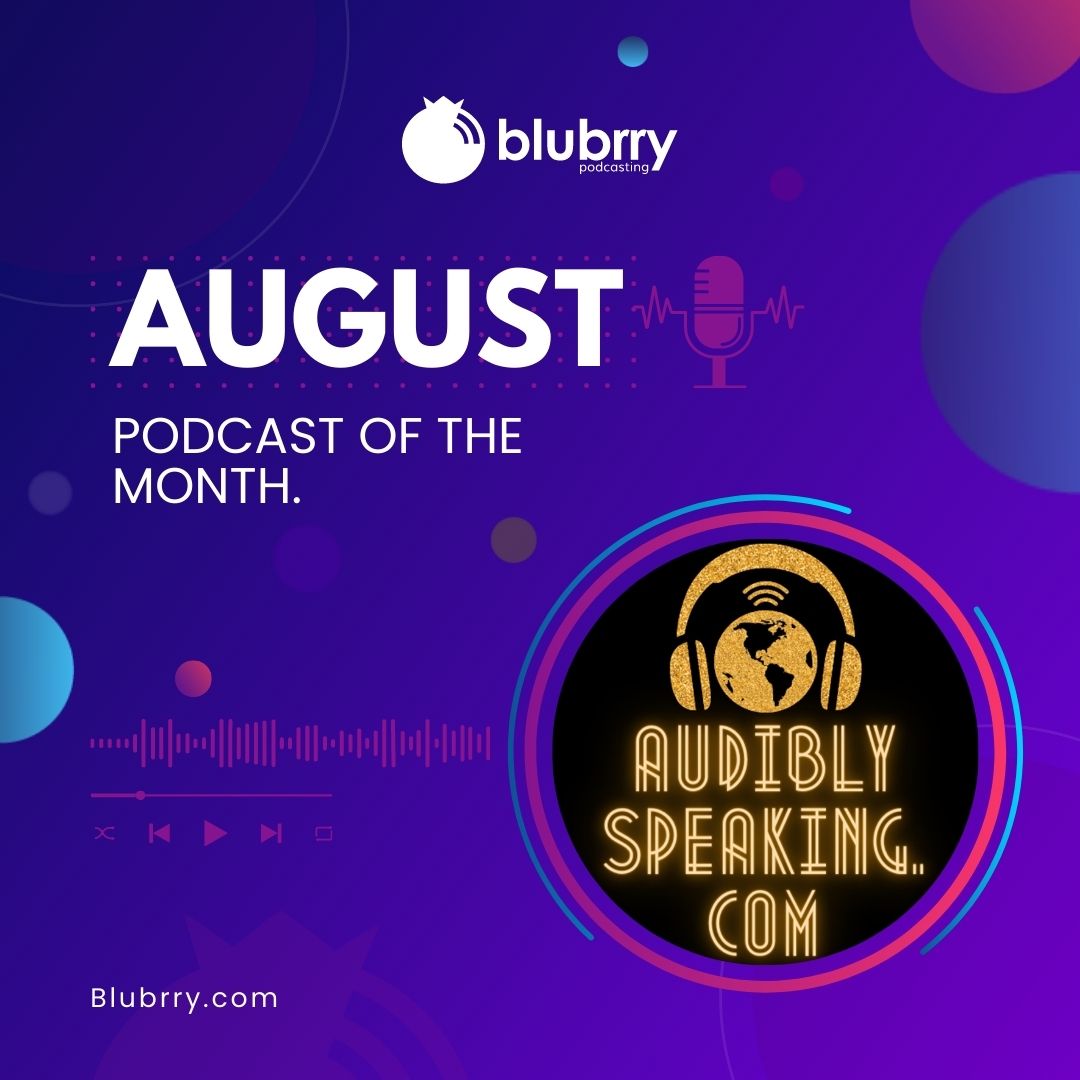
It’s back-to-school time! Our August Podcaster of the Month is a longtime educator who is dedicated to spreading his knowledge in the classroom – and far beyond – via his podcast Audibly Speaking: Listening to History. Rick Reiman is a Professor of History at South Georgia State College. He launched his podcast in October 2018 and has published 267 episodes. He earned his Ph.D. in History in 1984, and has published on the subjects of the New Deal and the assassination of John F. Kennedy.
Reiman teaches a course in Modern Western Civilization, in which the entire course is taught with an Open Educational Resource textbook and 30 podcast lectures of less than 15 minutes each, hosted on Blubrry. He has published an article in a scholarly journal on the use of podcasting as a pedagogical tool in online courses based on this experience. Students are provided the resource for free and can listen to the episodes while on the go, as well as repeat the listening experience at will. Reiman has found that the student scores for the course with podcast episodes are slightly higher than in the courses used as comparators.
Your podcast blends readings of historical fiction – Arthur Conan Doyle is a favorite I noticed – and fact, as well as modern topics that are impacting history. What inspired you to design this approach?
I have a special interest in audio narration. My professional expertise is in the field of Recent American history, in which I hold a Ph.D. On the one hand, I like to record classic books that are no longer in copyright in order to hone my skills as an audio narrator, for purely personal reasons. I feel that I am doing better as an audio narrator because of these repeated recordings and I enjoy doing them. I especially enjoy seeing, thanks to Blubrry statistics, how many “clicks,” and from where in the world I get for some episodes as opposed to others. I enjoy speculating on the reasons and this also helps me improve my audio narration skills, I think.
Richard Reiman
On the other hand, I record the results of recent historical research because I want to spread the word on what historians think is important in American history, and how that research can guide us through the stresses and strains of our present political moment. Between the Sherlock Holmes stories and the historical reflections, the result is a potpourri of quite different programming. Since the Conan Doyle stories are set in a particular time frame, they too fit the bill of historical documents, and they are copyright-free of course, thus lending them well to audio narration. Conan Doyle, who was also a doctor, modeled the Holmes character on a mentor of his, who had the intensity of focus and ethical excellence of autistic persons of his day and ours. I am fascinated by this aspect of the Holmes character, that his skills and nobility sprang from his eccentricities, and seek to help listeners today understand that it is the main character and his characteristics and not just the puzzles of the Holmes stories that are particularly interesting.
Why do you think it’s important for people to learn about history, and how do you believe podcasting promotes this education?
We know that we can’t understand ourselves with an understanding of our own individual backgrounds and pasts. Why is it any different for the nation and culture which surrounds us and determines our possibilities and challenges? As citizens of a democratic Republic, we have a responsibility to understand our problems when we make decisions about them. History, more than any other subject, helps us to do so. Podcasting is accessible. Sound is one of the liveliest arts. People live by stories. Podcasting is essentially the telling of stories. I believe that they are useful. I hope that they are also enjoyable.
In what ways can understanding history help us make better sense of the present, and what strategies can you recommend to convey that through podcasting?
Human nature never changes. Therefore, by looking at the history of people like ourselves, who lived in past times, we can see over their lifetimes how they succeeded and often failed to overcome challenges that face human beings like ourselves. We can learn from those failures (what not to do) as well as successes. History never repeats itself–the notion that it does is a fallacy. But there are enough things that do not change–people’s desire for love, acceptance, power, ambition and so much else–that history provides a set of insights and considerations, not an exact road map, for our future course as individuals. Podcasting is not just a story-telling art. It imposes a requirement that the story be told in a limited time frame. People’s attention spans are growing shorter and shorter. The already-educated read long books. Podcasting reaches the educated and the would-be educated alike.
Can you tell us about a particular historical event or figure that you find especially fascinating or inspiring (Sherlock Holmes, perhaps?) and why that is?
I already mentioned why I think that Sherlock Holmes deserves more attention. But, since so many of my episodes are readings of the Holmes short stories, I will say more. (By the way, I have also recorded the entire novel, The Hound of the Baskervilles, and not just the short stories, on my podcast.) Although a fictional character, Holmes was modeled after Doyle’s real-life teacher, Dr. Joseph Bell. Holmes was the archetype of a model citizen. He helped poor clients more than the rich, loved to give the snobbish and the wealthy their comeuppance, and was devoted to both justice and the imperatives of his craft. Many characters in the stories underrate Holmes and insult him for his peculiarities, but he confronts these insults with quiet dignity and uses them to his advantage to solve his cases. He is really quite inspiring and Doyle is such a marvelous writer, making his points with brilliant concision.
How do you hope your podcast will impact listeners and inspire them to learn more about history, and what strategies have you found to be successful to engage and connect with your audience on this topic?
Given that there are hundreds of thousands (millions?) of podcasts out there, the episodes have to be very interesting or at least enjoyable in order to gain a listening audience. The first thing I care about is that the episode be enjoyable, although it may not seem so from the title. I hope that people enjoy them. If people like one episode they are likely to sample another. That said, I probably would have stopped recording these episodes if my main goal was to impact people. I have no evidence that anyone has listened to an entire episode of any of my hundreds of episodes. I have never received an email from anyone indicating that they enjoy my podcast. I do not infer from that, that few do. I simply do not know. So, yes, I hope my podcast episodes have impact and are enjoyed. I continue to make them in part because of that hope, but also because of the essential fact that I enjoy producing them and believe that it makes me more skilled at audio narration and just basic reasoning. To paraphrase Sherlock Holmes, my work is my own reward.
Next week, we’ll be upgrading the storage limits of all hosting plans. In a continued effort to provide additional value to our offerings, we decided to reward our advanced users with significantly more storage overall.
This means we will be discontinuing our no-fault-overage allowances. Effective Tuesday, March 15, 2022, all hosting customers will have a higher monthly quota available. This does not mean that users cannot reach out to the support team and request a small one-time bump when they have a larger than expected or an additional episode that month.
If you’re not familiar with our plans, our Advanced Hosting plans not only offer more storage but also include our Advanced Statistics and domain mapping. You can read more about those here. If you’re interested in publishing more frequently or want unique stats information, you can upgrade to our advanced plan at any time – prorated too.
The new storage options will be helpful to any podcaster who produces a video podcast or is focused on extremely good audio quality. Based on that, you could increase your encoding rate with the new storage limits. Our new advanced plans offer a minimum of six hours of content at standard encoding rates each month.
“Additional storage allows a podcaster more flexibility with their schedule and episode length. This bump helps with both quality and quantity,” said CEO Todd Cochrane. “We have made numerous announcements over the past six months and will continue to make advancements on our website and tools for podcasters growth in 2022.”
Focus on Features is an ongoing series that explores the catalog of tools/services offered by Blubrry.
Most podcast consumption happens within apps like Apple Podcasts, Google Podcasts, and Spotify. But the core of your podcast distribution should always be your website. That includes having an attractive, intuitive, easy-to-use audio player that invites visitors to begin listening right there. Blubrry has a Podcast Player for that.
What it is: Blubrry’s player is an embeddable audio player that can be used for playback of podcast episodes. The look of the player can be customized to match your show’s branding, including show artwork and colors. It also has built-in subscribe buttons for syndication platforms like Apple Podcasts, Google Podcasts, TuneIn (UPDATE: TuneIn currently not able to accept new podcasts), and more.
How it works: The Blubrry Podcast Player is available to all Blubrry Media Hosting customers. The player can be embedded on any web platform that supports iframes, using embed codes that can be found in the Blubrry Podcaster Dashboard. The player can also be automatically displayed on WordPress sites using Blubrry’s free PowerPress plugin.
What it isn’t: The player is not a playlist player; it is a single-episode player only. The Blubrry Podcast Player is for playback of audio only; the player does not support video playback.
As a podcaster, it’s best to serve your audience in as many places as possible. That includes your podcast website. Get the Blubrry Podcast Player and make it easy to start listening to your show right on the spot. P.S, our own show, Podcast Insider, uses the player on each episode featured on this blog.
Consider joining Blubrry’s Affiliate Program; here’s why. The Blubrry Co. keeps the individual at the center of all its decisions and this is best reflected in what many feel is the most lucrative affiliate program offered by a podcast hosting company. How much money can you make as a Blubrry affiliate, you may ask? In this article we allow a look behind the curtain and share the details of Blubrry’s affiliate program, including commissions paid out to affiliates.
First some background.
Initiated in 2014, three are currently more than 2,000 affiliates promoting Blubrry hosting across the world. You, as an affiliate, make money when you refer people who then sign up for Blubrry hosting. AND you receive an end-of-year bonus based on the percentage of the year’s sales that resulted from your past referrals. The way the bonus is set up, you will make more money year after year as customers stay longer.
Let’s talk real numbers about the commissions earned by Blubrry affiliates.
As an affiliate, you earn a commission amount equal to the first month’s fee for the plan your referral chooses. So if your referral chooses Blubrry’s $20 ‘Medium’ plan, you will earn $20 after 3 months total (first month free, two monthly payments).
Some affiliates earn $1,000 plus every month.
Most affiliates earn $100 per month or less.
Annual bonuses tend to grow to over $1,000 as more referrals continue to use Blubrry services.
Annual bonuses represent a passive form of income that is delivered at the end of each year.
It is easy to become a Blubrry affiliate. Below are a few of the details of the program, some of which may surprise you.
You don’t need to use Blubrry services yourself to be a Blubrry affiliate.
You do not need to have a podcast to be an affiliate.
You only need a website with which to share your affiliate codes and links to Blubrry.
All payments are made via Paypal.
Payments are automatically released every other month (February, April, June, August, October and December) if the commission amount is over $50.
Todd is solo this week, and he reflects on the past year along with giving insights for 2021. The future of podcasting is bright, and with audience growth on the rise, podcasters will continue to build bigger audiences as we bring 2020 to a close and usher in 2021. We do thank you for your continued business and trust in making your shows the Blubrry Way.
Happy New Year to you and yours.
Thanks for joining us on this episode of Podcast Insider. Looking to be a guest on the show? Let us know.
Best Practice: Keep on Podcasting through the holidays.
If you have a question or feedback, click on the “Leave a voicemail” in the show notes at PodcastInsider.com. Record your question and we may answer it on the show.
National Women’s Equality Day is Wednesday, Aug. 26. In recognition of this, we’ve listed the most popular podcasts hosted, produced or promoted by women. These women hold coveted top spots on the most reputable charts in the United States and around the world. While women are co-hosts or contributors on other top podcasts, the following podcasts have women as hosts or producers and are individually committed to the promotion of their podcast. The information below was pulled from the rankings published between Monday, Aug. 3, to Sunday, Aug. 9.
The three podcasts below are among the top 10 podcasts globally listed on Chartable:
#1 Crime Junkie Podcast hosted by Ashley Flowers and Brit Prawat
#3 Office Ladies Podcast hosted by Jenna Fischer and Angela Kinsey
#7 The Rachael Maddow Show hosted by Rachael Maddow
The five podcasts below are among the top 10 podcasts in the U.S. listed on Apple Podcasts.
Of course these are not the only women’s podcasts with a strong following. This is just a snapshot of the most popular podcasts in midsummer 2020. Use the comments below to share your favorite podcast hosted, produced or promoted by women.
There are two best practices to increase audience engagement. One approach is to focus on individual relationships with your podcast listeners. The other approach is to focus on your audience as a whole and ask for their thoughts and opinions. There are particular techniques with each of these approaches that every podcaster can use to improve audience engagement.
Deepen Existing Relationships: The listeners that have already reached out to you have proved they are more engaged than your general audience. You should do everything you can to continue your conversations with them. Below are three techniques to deepen your existing relationships with listeners.
Respond to every correspondence sent to the show. Moreover, end each of your replies with open-ended questions to elicit further discussion. “What makes this your favorite episode?” or “What do you think it is that makes podcasts so popular?” or “How do you think I could improve the podcast?” are examples of questions that will continue the conversation and deepen their engagement with you and your show.
Acknowledge your interactions with your listeners on your podcast. After gaining permission from the listener, either quote them as listener feedback or just weave your conversation with them into the show in other ways. This will prompt others to reach out to you as well as endear yourself to your engaged listeners.
Once a listener has emailed, commented or messaged you, feel free to initiate contact with them as your time allows. A kind word or wishing them well from out of the blue deepens a listener’s connection to the podcast like little else.
Ask All Your Audience For Their Thoughts and Opinions: If you wonder how often you should seek input from your audience, you may want to abide by the words of 12th Century Philosopher Peter Abelard. He said, “The key to wisdom is this – constant and frequent questioning, for by doubting we are led to question, by questioning we arrive at the truth.” If you want to know your audience, ask them questions constantly and frequently. There are many online survey tools you can use for this purpose, but podcasters hosting with Blubrry have a built in survey tool that you can use. All you need to do is log into your Blubrry Podcaster Dashboard and in the Make Money section of the Dashboard click on the link for Audience Surveys.
The Audience Survey has 12 standard questions that ask demographic and background questions of your audience. Also there is an opportunity for your listeners to leave you comments. You should fully use that comments field! Prompt your audience consistently to leave you specific comments that will help you understand them better. Frequently use prompts such as “Fill out the survey and use the comments field to tell me about your worst job,” or “Fill out the survey and use the comments field to tell me why I should make my podcast longer.” or “Use the comments field on the survey to enter the month and date of your birthday so can give you a birthday shout on the show.” And as people respond, use the skills described in the section above to continue the conversation.
Do you have any tips to strengthen audience engagement? Please use the comments below to share your wisdom.
There are times in our lives when offering short, clear directions have the best results. For example, “Don’t Walk”, “No Swimming”, and “Dry Clean Only”, saves lives and laundry. Starting a new podcast also might be one of these times.
So, below are 10 clear directions that all new podcasters should hear after releasing their first episode.
Tell all your friends about your show.
Work on your website.
Learn podcasting best practices.
Listen to your own show.
Plan for your next episode.
Appear on other podcasts.
Use social media.
Engage with your listeners.
Invest your time and your money in your podcast.
Do not spend all your time watching your download stats.
Are 10 things too much for you to remember? When you read something memorable you also notice compelling themes buried inside the great literature. Inside the list above you will find three themes that should inspire your behaviors after you have released your first podcast episode.
Theme #3: Focus on the right things. Do what you can to make your next episode better. Invest your time and money toward making your next show the best so far. Learn more about your topic or about the craft of podcasting. Don’t obsess over individual show stats, spend that time assessing the strengths of your previous episodes and planning for your future.
Theme #2: Your podcast is more than just your audio show. Use everything at your fingertips to make people aware of your new podcast and increase their engagement with you. Have a social media outlet so you can talk to your listeners and they can talk to each other. Have a website where listeners can learn more about you and the podcast. And whatever platform you create beyond your audio podcast, make sure to update it consistently so people will keep coming back.
Theme #1: Promote yourself. Ask your in-person friends and online acquaintances to listen to your podcast. Ask them to share your show with their friends. Be bold and appear on other podcasts that you listen to or are similar to yours. Have a booth or table at meetings and conferences to discuss your topic and meet potential listeners face to face. The old adage is that you are your harshest critic, but you can also be your strongest champion.
Are three themes too much for you to remember? Think back to your first job. Often where you worked had a motto or mission statement intended to inspire you to do great things. Here is a single motto that will help you grow beyond your first episode. It is simple. Produce content that you can be proud of and be proud of what you are doing. If that is your motivation, you can do no wrong. Go forth and do great things.
Do you feel inspired? What has this advice inspired you to do? Join the ‘Blubrry Podcasting Group’ on Facebook and share your recent actions with like-minded, inspired podcasters such as yourself. You may inspire others.
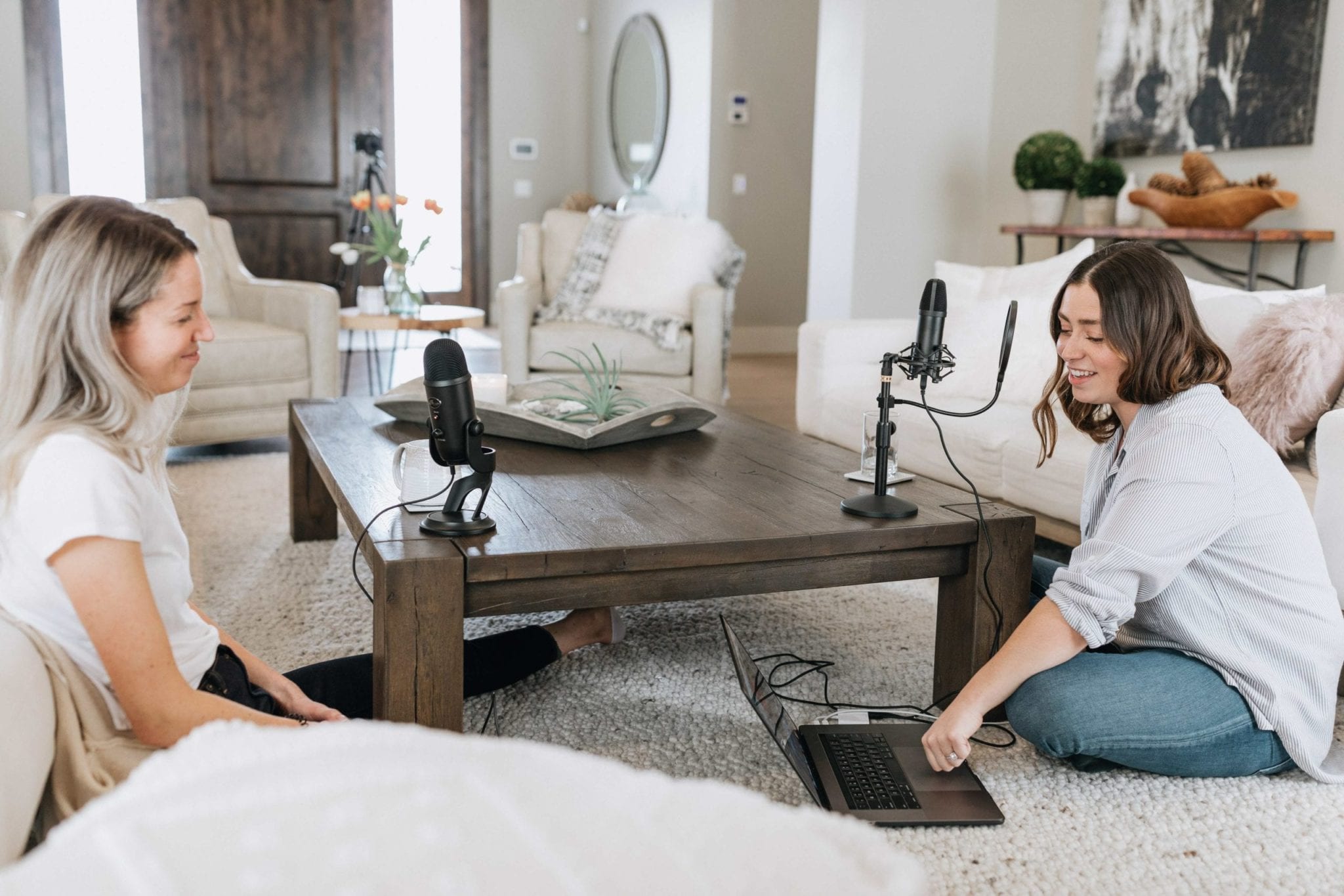
Having a podcast is an excellent way to get your voice heard. Moreover, if done well you can amplify your voice by having others on your show. If done poorly, bringing guests on your podcast can dilute your unique message, that even your fans will unsubscribe. One way to ensure the guests add value to your podcast is to prepare them for success. Below are four tips to help you prepare your guests so they always amplify what you want to say.
TIP #1: The best way to prepare your guest for your show is to tell them what to expect. Before you record with your guest they should:
Know a bit about your podcast
Easily be able to join you for the recording
Know why you are having them on your show
Understand what you’ll be talking about
Below is a sample email to a potential podcast guest on the non-existent True Believer Crime Podcast. Notice that, while farcical, this includes all of the information recommended above. Feel free to use this as a template next time you have a guest on your show…
Dear Mr. Spider-Man,
Thank you for agreeing to be on episode 616 of my podcast, True Believer Crime Podcast. My podcast looks at the people who are framed for violent crimes and presents alternative theories of the case. I’ve been producing my show for three years, and while we have not overturned any charges legally, we do have a large podcast following and can guarantee that your case will trend on Twitter with #spidermanwasframed after the episode release.
As you prepare to come on my show, here are a couple of past episodes that you should listen to so you understand the tone and format of the show. Please listen to Episode 411, Information On Why Tigers Can’t Eat People. Please also listen to Episode 500, Listener Feedback From Prison. Listening to these episodes will allow you to gain insight on the quality content and attitude that our listeners have come to expect.
Recording your episode will be easy. Just click on this link at 8:45 p.m. EDT next Tuesday and follow the on-screen prompts. If you have any issues connecting, please give me a call at (212) 555-1212. When we start recording I will introduce you. Is there anything in particular that you would like me to say? Some guests provide me with a quick bio that I read. Feel free to send me anything you would like before our recording time. If I do not receive anything from you I will write your introduction.
I want you to be on my podcast because your story is exactly the kind of story my listeners like to hear. You say you were framed for murder and can tell a convincing story of self-defense. While we may talk about your amazing strength and your ‘Peter Tingle’, if they come up in discussion, I would like to limit our discussion to the facts and your perspective of your case as much as possible.
During the interview I plan to ask you the following questions:
Are you really Peter Parker?
Why do you think you were framed?
Tell me about the events of that day.
What would you if all the charges were dropped?
Those are the questions that will drive the interview, however, I will probably ask you follow-up questions to drive deeper discussion. I do edit the interviews so if we talk about anything that you do not want to be released on the podcast, feel free to let me know after we record.
Lastly, on every episode, I ask for guests to share their contact information. Feel free to share any email addresses, websites, social media handles, etc. that you would like. If you would not like your contact information in the public domain, feel free to ask that listeners simply contact me and I will forward their messages to you.
Again, thank you for agreeing to be on our podcast. If you have any questions before our recording time, simply let me know.
Sincerely,
S. L.
Notice how that email helps to prepare the guest for the podcast and answers questions that they may have. Taking those steps and then asking them to reach out with any further questions reduces their anxiety and allows them to better focus on what they want to say during the interview.
TIP #2 The second tip is simple, ensure your guest sounds great. You do this by assuming that your guest knows very little about recording and talk them through the techniques and technologies so they will sound their best. Ask them if they are:
Comfortable with the technology you will be using to record.
Ask them, “I will be connecting with you via a Zoom meeting. Have you used Zoom before? Will you be able to click the link I provide and talk to me that way? Do you have reliable internet access or telephone service?”
Comfortable with the environment they will be in when they record
Ask them, “Where do you plan to be during our interview? Can you be in a quiet room with limited distractions?”
Comfortable with the quality of the microphone they will be using to record
Ask them, “What microphone will you be using for the interview? If you plan to use your telephone, what kind of phone is it? Do you have a microphone you can connect to your computer?”
Comfortable with how to use the microphone they will be using to record
Ask them, “Have you been on a podcast before? The recording sounds best if you keep your microphone close to your mouth but not so close that you are breathing directly into the microphone.”
TIP #3: The third tip seems nonsensical. Do not run through your Q&A with your guest before you record the show. Doing so can yield negative results.
Often, either your guest will seem overly rehearsed or your responses to their stories may seem too prepared. Of course, you can build rapport with your guest before you record but avoid in-depth discussions prior to the interview for more authenticity on your show.
TIP #4: Lastly, prepare your guest to share the podcast episode after it is released. Make sure that your follow-up message to your guests has these three components:
Express gratitude for them being on your show
Share links and instructions for them to share your episode
Extend opportunity for a continued relationship
Below is a sample follow-up email to a guest that offers all of this information. Feel free to use this as a template…
Dear Mr. Spider-Man,
Thank you for being on the True Believer Crime Podcast. I hope you found your experience enjoyable.
I just released your episode titled, ‘No Mystery Here, Spider-Man Was Framed.” and I am already seeing significant downloads! As promised, below are links to the episode for you to listen and share if you feel that is appropriate.
Here is a link to the episode on my website, notice the detailed show notes here. You may want to share this link to spur listeners to action: www.truebelievercrimepodcast.com
I hope you agree that this was an excellent podcast episode and appropriately highlighted your current situation. If you would like to work together again, just let me know. I am sure my audience would like to hear from you again.
Thanks again,
S.L
You must prepare your guests to be on your show, this is an important step to ensure they bring their best self to the recording. Fully preparing your podcast guests before you record makes for a great interview. But, make sure to not over-prepare your guests, over-preparing your guests results in them sounding robotic and rehearsed. Feel free to personalize the above templates to help bring out the best in your guests.


 At Blubrry, we constantly hear from folks about their desire to start a podcast, yet they remain hesitant to take that initial leap. The world of podcasting can seem like an intimidating frontier, fraught with technical challenges, fear of the unknown and, gosh, am I good enough, smart enough and will people like me?
 It’s back-to-school time! Our August Podcaster of the Month is a longtime educator who is dedicated to spreading his knowledge in the classroom – and far beyond – via his podcast


 Next week, we’ll be upgrading the storage limits of all hosting plans. In a continued effort to provide additional value to our offerings, we decided to reward our advanced users with significantly more storage overall.
 Most podcast consumption happens within apps like Apple Podcasts, Google Podcasts, and Spotify. But the core of your podcast distribution should always be your website. That includes having an attractive, intuitive, easy-to-use audio player that invites visitors to begin listening right there. Blubrry has a

 Consider joining
 Todd is solo this week, and he reflects on the past year along with giving insights for 2021. The future of podcasting is bright, and with audience growth on the rise, podcasters will continue to build bigger audiences as we bring 2020 to a close and usher in 2021. We do thank you for your continued business and trust in making your shows the Blubrry Way.
 National Women’s Equality Day is Wednesday, Aug. 26. In recognition of this, we’ve listed the most popular podcasts hosted, produced or promoted by women. These women hold coveted top spots on the most reputable charts in the United States and around the world. While women are co-hosts or contributors on other top podcasts, the following podcasts have women as hosts or producers and are individually committed to the promotion of their podcast. The information below was pulled from the rankings published between Monday, Aug. 3, to Sunday, Aug. 9.

 There are two best practices to increase audience engagement. One approach is to focus on individual relationships with your podcast listeners. The other approach is to focus on your audience as a whole and ask for their thoughts and opinions. There are particular techniques with each of these approaches that every podcaster can use to improve audience engagement.


 Having a podcast is an excellent way to get your voice heard. Moreover, if done well you can amplify your voice by having others on your show. If done poorly, bringing guests on your podcast can dilute your unique message, that even your fans will unsubscribe. One way to ensure the guests add value to your podcast is to prepare them for success. Below are four tips to help you prepare your guests so they always amplify what you want to say.