Category: Learning

  • Intentionalism in Podcasting

    Intentionalism in Podcasting

    ‘The Blubrry Way’

    A critical observer can recognize the intentions and values of the artist by studying the artist’s work; this is called intentionalism. This is also true about creations beyond traditional art mediums. As our readers know, Blubrry just released an update to its PowerPress Plugin. Surrounding that release, there was significant promotion plus a good deal of published notes and supportive documentation in which ‘The Blubrry Way’ is a recurring phrase. But what does that mean? By taking an intentionalist approach from the world of art and applying it to Blubrry’s recent release of PowerPress 8.3, you can learn a great deal about “The Blubrry Way.”

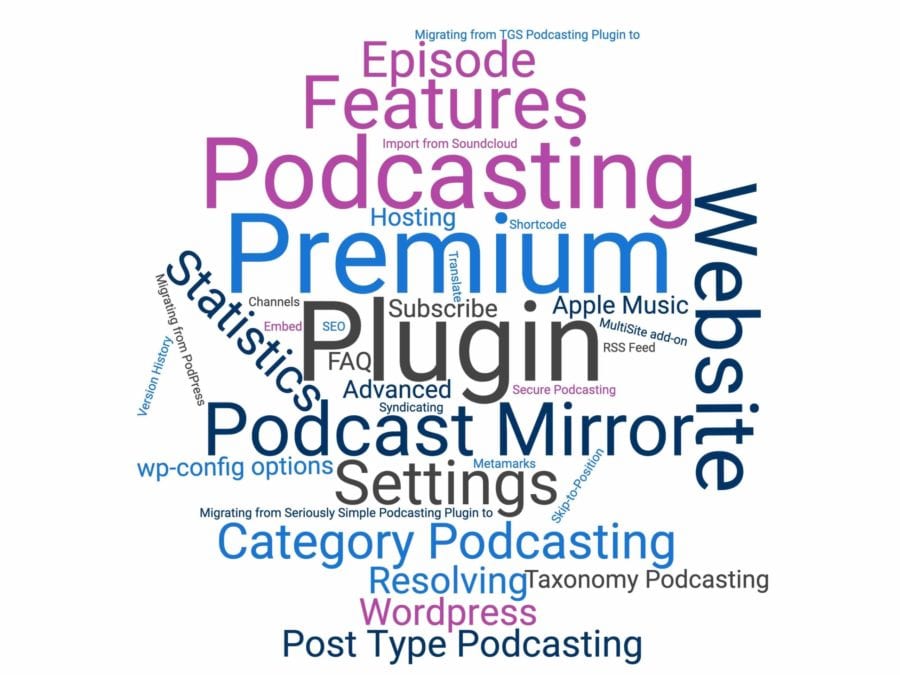
    Right now you are one click away from PowerPress’s Full Documentation. Feel free to read the entire document, but below is a WordCloud image made from the text on that page (with the terms Blubrry and PowerPress removed). The image shows the words that are most frequently used. You can see that the words “Premium” and “Plugin” are emphasized and the WordCloud is chock-full of individual features. Using intentionalism, you can deduce that Blubrry values premium technical services that are feature rich.

    There is much that can be learned from the release history of PowerPress (make sure to click through and read the companion change log as well). You can see for yourself that PowerPress’ original version 0.2 was released in August 2008 and since then has had 130 updates. Some of those updates include a long list of new features, the smallest update simply included, “images that were missing in the Getting Started section.” What can we read as the intentions included in this long release history? Two words come to mind: Commitment and Professionalism. Twelve years of documented efforts prove Blubrry’s commitment to PowerPress and to podcasters. Also, such thorough documentation of Blubrry’s development history demonstrates the team’s technical professionalism.

    Lastly, if you look on PowerPress’ ‘sales’ page, you will find the service’s price in only two places. PowerPress is free. Without a doubt, podcasters would pay for PowerPress. Why not charge? Inversely, why not insanely promote that podcasters can use this premium service for free, Free, FREE? A strong argument could be made that since Blubrry is not charging for PowerPress and also not seeking recognition for offering PowerPress at no-cost, their intention is simply Service. Service to podcasters and the field of podcasting.

    This intentionalism exercise does not fully reflect ‘The Blubrry Way.’ With this exercise we have created a list of Blubrry’s values by looking at the recent PowerPress update, including:

    • Premium Technical Services
    • Rich Features
    • Professionalism
    • Commitment
    • Service

    When you get a chance, ask a Blubrry employee about any of these values. The conversation that follows will lead you to a fuller understanding of the intentionalistic values of “The Blubrry Way.”


  • Top Ten Things To Do After Releasing Your First Podcast Episode

    Top Ten Things To Do After Releasing Your First Podcast Episode

    There are times in our lives when offering short, clear directions have the best results. For example, “Don’t Walk”, “No Swimming”, and “Dry Clean Only”, saves lives and laundry. Starting a new podcast also might be one of these times.

    So, below are 10 clear directions that all new podcasters should hear after releasing their first episode.

    1. Tell all your friends about your show.
    2. Work on your website.
    3. Learn podcasting best practices.
    4. Listen to your own show.
    5. Plan for your next episode.
    6. Appear on other podcasts.
    7. Use social media.
    8. Engage with your listeners.
    9. Invest your time and your money in your podcast.
    10. Do not spend all your time watching your download stats.

    Are 10 things too much for you to remember? When you read something memorable you also notice compelling themes buried inside the great literature. Inside the list above you will find three themes that should inspire your behaviors after you have released your first podcast episode.

    Theme #3: Focus on the right things. Do what you can to make your next episode better. Invest your time and money toward making your next show the best so far. Learn more about your topic or about the craft of podcasting. Don’t obsess over individual show stats, spend that time assessing the strengths of your previous episodes and planning for your future.

    Theme #2: Your podcast is more than just your audio show. Use everything at your fingertips to make people aware of your new podcast and increase their engagement with you. Have a social media outlet so you can talk to your listeners and they can talk to each other. Have a website where listeners can learn more about you and the podcast. And whatever platform you create beyond your audio podcast, make sure to update it consistently so people will keep coming back.

    Theme #1: Promote yourself. Ask your in-person friends and online acquaintances to listen to your podcast. Ask them to share your show with their friends. Be bold and appear on other podcasts that you listen to or are similar to yours. Have a booth or table at meetings and conferences to discuss your topic and meet potential listeners face to face. The old adage is that you are your harshest critic, but you can also be your strongest champion.

    Are three themes too much for you to remember? Think back to your first job. Often where you worked had a motto or mission statement intended to inspire you to do great things. Here is a single motto that will help you grow beyond your first episode. It is simple. Produce content that you can be proud of and be proud of what you are doing. If that is your motivation, you can do no wrong. Go forth and do great things.

    Do you feel inspired? What has this advice inspired you to do? Join the ‘Blubrry Podcasting Group’ on Facebook and share your recent actions with like-minded, inspired podcasters such as yourself. You may inspire others.

  • Outlier Podcast Festival Virtual Summit – A Success

    Outlier Podcast Festival Virtual Summit – A Success

    Intimacy at virtual Outlier Podcast Festival

    Improv comedy is built upon ‘Yes, and…’ thinking. That is the kind of thinking that Ever Gonzalez and Arielle Nissenblatt must have employed when they decided not to hold an in-person Outlier Podcast Festival this month. That conversation might have gone something like this:
    “So, Let’s cancel it…”
    “Yes, and…”
    “We could offer an online only virtual summit?”
    “Yes, and…”
    “We could offer the same quality and diversity of speakers and presentations?”
    “Yes, and…”
    “We could offer a ‘pay-what-you-can’ registration fee?”
    “Yes, and…”
    “We could offer contests and prizes for people participating live?”
    “Yes, and…”
    “We could record the presentations and make them available afterward?”
    “Yes, and… and… and…”

    Of course, the Outlier Podcast Festival was fantastic. Each presenter “brought the fire” (a term used frequently throughout the event).

    Those participating live were privy to something that cannot be fully captured in those recordings. Even though this was a virtual summit, attendees shared a sense of connection and companionship that rivaled and potentially exceeded what they would have experienced at an in-person event. The co-organizers, Ever and Arielle, were a supportive presence in the background during the formal presentations and engaging hosts between sessions. The chat-box was a continual source of thoughtful questioning, constant encouragement and hilarity. Frequently, people chatted that the virtual format heightened the intimacy of what was happening for attendees. People often mentioned that it felt like they were having a one-on-one experience with every presenter – try replicating that at an in-person event!

    A great example of these value-added experiences began near the end of the first day. Adam Lewis Walker was set to present “How to Get a TEDx From Your Podcast to Increase Impact,” but had a last-minute internet issue. Before he was able to connect, Arielle’s banter kept attendees engaged. When Adam joined, the chatroom was full of encouragement. To accommodate for the late start, Adam made a streamlined presentation not even using his prepared slides. 

    The next morning, the first presenter was Blubrry’s Todd Cochrane. During Todd’s presentation he casually mentioned that he was considering speaking at a TEDx event because of Adam’s insightful presentation the night before. 

    (Note: Todd continued to share interesting tidbits. He mentioned that he, the CEO of Blubrry / RawVoice Inc., also offers individual consulting. You may consider his consulting and Blubrry’s Pro Production Services to learn podcasting the Blubrry way.)

    The level of continuity spanned across all the three days of the Outliers Podcast Festival Virtual Summit. The collegiality among the presenters, furthered by the intimacy factor of the event, offered a mind-blowing experience. You can see the full schedule and list of speakers at the Outlier website and can still pay what you can and buy the recordings. Further, you should consider attending the next Outlier Podcast Festival, whether in person or virtual.

  • Planning Your Next Podcast Episode

    Planning Your Next Podcast Episode

    If you are not happy with your podcast it could be because of the amount of preparation you’re putting into each episode. Some podcast producers love scripting their shows. They want to know every word they are going to say and do not stray from their prepared statements. Many of these shows unfortunately come across as antiseptic and too formal. Some podcast producers prefer no preparation and just hit record and start talking. Many impromptu-style shows unfortunately struggle to provide continuity between episodes and may offer listeners limited perceived value other than connecting to the podcaster personally. If you listen to all the podcasts selected as ‘Editor’s Pick’ in the Blubrry Podcast Directory, you will not find one that sounds either overly scripted or ill-prepared. 

    Some podcasters may be able to read a script and sound so sincere you would think they are on that special Mother’s Day call to their mom. Some might be able to improvise so well on every episode that you would not know they were recording while riding their Peloton bike with Steven Little. These podcasters are the exception to the rule. If you feel you overly script or do not script enough (or maybe just starting out in podcasting), the following is an exercise to help you plan your next episode and make your listeners happy. 

    The first step to find that happy medium, is to simply know what you are going to say on your show. Maybe not the actual words you will use, but at least a plan for the topic and theme you are going to cover. This small step will separate you from the worst podcasts out there and give your show some needed structure.

    For this exercise, rather than thinking about all the future episodes you are going to produce, think about just your next episode. At this point in your planning process, limit your planning to one main topic. To spur your creative thinking, below are some topics of shows listed in the Blubrry Podcast Directory this week:

    • Stories of the podcast host’s worst jobs
    • A podcast host’s personal activities during the past week
    • Cosmic influences on personal well-being
    • Genocides occurring in the world today
    • History of a podcast host’s friendship with their guest

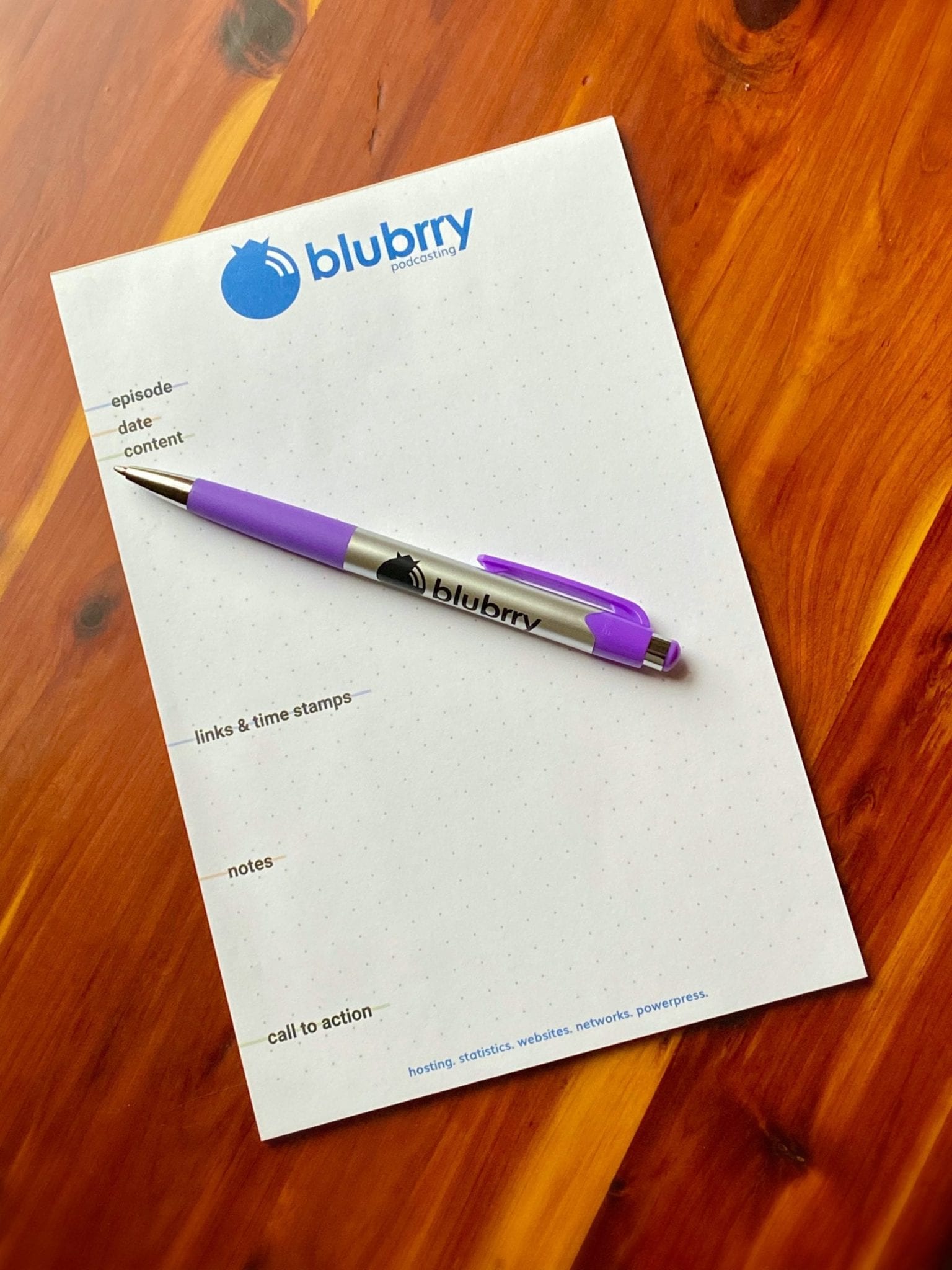
    What do you want to talk about on your next episode? Grab a paper and a pen and write down the specific topic you would like to cover on that episode. Write down a phrase or complete sentence that summarizes the main topic you want to cover on that one episode.

    With that complete… Congratulations! You are on your way to having a podcast episode that people are going to love.

    Now, let’s think about two more potential segments of your show that will flesh out your next episode. In addition to their main topic, some podcast episodes cover a secondary topic. This additional topic can either complement the main topic or be separate but not quite equal to the main topic. For example, if the main topic of your episode could be the history of your friendship with your guest. An additional topic could either be:

    • The charity where your friend works
    • The top friend getaways in your state
    • Your friend’s best weekday meal recipe
    • Your friend’s detailed knowledge about Tom Hanks
    • A detailed review of a movie you both recently watched

    Think again about the main topic you wrote down, consider an additional topic you could discuss on that episode. Write down an additional topic on your piece of paper along with your main topic. You now know two topics you are going to discuss on your next episode. Again, congratulations!

    One more thing, every podcast episode should make a request of the audience. These requests are commonly called a ‘call to action’. A call to action clearly presents what you want the listener to do to engage more fully with you. Surprisingly this is something your audience craves!

    A few examples of powerful calls to action are:

    • Go to Facebook and ‘Like’ us
    • Follow us on Instagram
    • Tell a friend about this episode
    • Go to the website
    • Subscribe to this podcast
    • Join us next week when our topic will be…
    • Buy our book
    • Donate
    • Email us

    Now, thinking of your next episode with the main topic and additional topic you selected, choose a call to action that is complementary to the topics you’ve selected for this episode and write down your chosen call to action. With that complete, congratulations again!

    With that exercise you now have three points to cover on your next episode. You do not have a specific script that ties you down to specific words, and you are not in front of your microphone with no idea what you are going to say. What you have is a balance between a scripted episode and one where you are just “winging it”. If this process works for you, feel free to use the same methodology and plan out all your future shows. 

    Our call to action for this blog? Listen to a few shows in our Editor’s Pick and hear how the best podcasters do it. And who knows, maybe you are few shows away from being featured as an ‘Editor’s Pick.’ 

    If you need help with your podcast production don’t forget we have the Blubrry Pro Production team to help you with your complete show production. If you are subscribed to our Podcast Insider Podcast you can hear the quality of our editing team.

  • Podcast Interviewer Tips From Non-Podcasters

    Podcast Interviewer Tips From Non-Podcasters

    Believe it or not, people conducted interviews long before podcasting was invented. While we often look to other podcasters for advice on how to conduct a podcast interview, there is so much researched-based information from accountants, criminal investigators and journalists that we can learn from. This is a quick summary of the protocols from those vocations that we can easily apply to our next podcast interview.

    Accountants conduct interviews when they perform audits. These audits are not the best of situations for anyone involved and to do their best, accountants have relied on their industry standards for reliable, professional results. Podcasters can directly learn from two of the recommendations from the AICPA and the Public Company Accounting Oversight Board. 

    1. Plan Ahead.

    Research the person you are to interview. Know their professional and personal history that is relevant to the topic you are going to talk about. Know the unique perspective or set of facts that your guest will bring to your show before you ask them.

    1. Follow Standards.

    While you may have known your podcast guest all of your life and you may know the interview topic like the back of your hand, flying by the seat of your pants rarely yields quality, consistent results. Following interviewing standards is the best way to produce repeatable high-caliber recordings.

    Criminal Investigators offer the most actionable standards for interviews in the protocol they call, ‘Forensic Interviewing’. While frequently used with children, these standards will most assuredly apply to your podcast guests. Below is the form the interview should take according to the US Department of Health and Human Services.

    1. Rapport-Building Phase

    Introduce your guest and explain why they are on your show from the beginning. Explain to your guest and your audience how you are conducting the interview and about how long it will be.Use this opportunity to engage your guest by seeking commonality and by expressing your appreciation for their participation.

    1. Substantive Phase

    Allow your guests to share their opinions or special knowledge during this phase of the interview. Offer minimal guidance to the guests by asking open ended questions. Use more open ended questions for follow up such as, “Tell me more about that”. Lastly, feel free to allow there to be long silences, guests usually speak to fill in the quiet. 

    1. Closure Phase

    This is the opportunity for you to intentionally conclude your interview. Have your guest recap their contributions or perspectives. Ask them to share contact information with your audience. And always thank your guest profusely for their time and expertise. 

    Journalists have been editing their work for Centuries. As we edit our work, we can learn from their experience. NPR has created a valuable resource with rules they use regarding editing. To review, they suggest:

    1. Clean-Up Edits are important.

    You should remove the Ums and Ahs so your interview sounds more professional production.

    1. Keep “true to the meaning of their words”

    Do not take your questions or your guest’s answer out of context.

    1. Consider every edit.

    As Peter Breslow put it, “The less you do to manipulate the audio, the better.”

    As you can see, we podcasters can learn from those that have gone on before us. Please visit the links shared above, you can glean an amazing amount of valuable information from those original sources. However, you may want a fast-track to the best podcasting technology and techniques. As always, consider Blubrry’s Pro Production Services to jumpstart your podcasting efforts.

  • Seize the Day!

    Seize the Day!

    Work from homeIf you are a podcaster and your life has been affected by the current COVID-19 crisis, you should set your alarm to go off at the top of every hour. This is a reminder to get up and stretch the ol’ legs and also quote former Chicago Mayor, Rahm Emanuel. After that leg stretch, recite to yourself, “You never let a serious crisis go to waste. And what I mean by that it’s an opportunity to do things you think you could not do before.”

    As a podcaster, you have access to resources that allow you to ramp up your podcasting efforts at a time when other people are looking for more content to consume. This is a unique opportunity for you to help the world with your podcast. Seize the day!

    Here is a quick list of resources you should consider exploiting in the coming weeks and months.

    1. There is current technology that allows for quality remote recording and editing. If you are isolated away from your usual recording equipment, you are in luck. There are apps native to your phone, web-based recording software, and so many cloud-based pre and post-production services that you can continue to create the content that only you can, regardless of location.

      Here are some examples of software and services (free and paid) that allow for remote recording and editing:

      1. Zoom.us (Service)
      2. Zencastr (Service)
      3. Voice Memo (App)
      4. Samsung Voice Recorder (App)
      5. iRecord (App)
      6. Auphonic (App and Service)
      7. Alitu (App and Service)
      8. Hindenburg Field Recorder and Hindenburg Journalist (App and Service)
    2. There is current technology that allows you to easily repurpose your existing content. Do not view your previously released episodes as just a ‘back catalog’. With minimal effort on your part a brand new audience could find audiograms, Gacha Life videos, and be enamored by watch parties that are all based on your old recordings.

      Here are some examples of software and services (free and paid) that allow for repurposing your content:

      1. AudioBurst (Service)
      2. iMovie (App)
      3. Windows Movie Maker (App)
      4. Headliner (App)
      5. VirtualDub
      6. Gacha Life (App and Service)
      7. TunesToTube (Service)
    3. Your current social isolation may now allow for more time to create content. Consider being podcast-productive with any extra time you have during work and travel restrictions. For example, if you commuted 20 minutes a day to the office and you now get to work from home, you now have almost an extra 45 minutes that you can dedicate to content creation. And if you are now working from home, your schedule may be more flexible which could allow for recording, remote interviews, or editing during your coffee breaks or the lunch hour.

    The COVID-19 crisis, while unfortunate, offers a unique opportunity for you to impact even more people with your podcast at a time when you have the resources to increase your podcast production. With that in mind, consider doubling your podcast episodes for the foreseeable future for twice the impact. In the current situation, you are able, as Mayor Emanuel said, to do things you thought you could not do before.

    NOTE: The above listing of resources is not an exhaustive list of all available products and services in the field. Their inclusion is intended to drive your own personal Google search. This is to demonstrate that there is no affiliate relationship with these companies and that their inclusion does not serve as an official endorsement of their products or services. You should explore all the options available and use what is best for you.

    You may also find podcasts on other valuable resources such as strengthening time management skills and community building practices beneficial during this time. You can find podcasts like this by searching the Blubrry podcast directory. And lastly, if you are interested in outsourcing most of your podcast tasks, consider Blubrry Pro services. Seize the day!

  • Tech Support: Know Your Dashboard: WordPress Hosting

    Tech Support: Know Your Dashboard: WordPress Hosting

    Know Your Dashboard: WordPress Hosting

    Know Your Dashboard is an ongoing series of in-depth looks at the features of your Blubrry Podcaster Dashboard.

    The WordPress Hosting section of the Blubrry dashboard is available to Blubrry Media Hosting customers only. This part of the dashboard is where you can set up and manage your Blubrry WordPress Website(s). Here’s a rundown of what you’ll find in this area of the dashboard:

    • Create PowerPress Site: Click the Create Basic PowerPress Site link to get started. On the next screen, enter your site title into the Website Title field (you can change the title later, if needed). A default admin-level WordPress username will be created for you in the WordPress Admin Username field. You can keep this username or change it to whatever you’d like. Click the Create Basic PowerPress Site button and Blubrry will generate your new PowerPress Site.
    • Blubrry WordPress Website: This box lists all of the Blubrry WordPress Websites you’ve created. Clicking a site link will take you to all of the settings for that site:
    • Website: The Visit Website link takes you to the homepage of your PowerPress Site. The Login to website link takes you to the login page of your PowerPress Site.
    • Backup and Restore: Blubrry automatically backs up the files and databases of your Blubrry WordPress Website. These backups are stored for 30 days. Clicking the corresponding links in this section will allow you to access these backups and make new ones.
    • Web Services: This box appears for Blubrry WordPress Website Advanced users only. Here, you can add a top-level domain to your site, configure DNS, and set up e-mail forwarding.

    WordPress Hosting by Blubrry in conjunction with Blubrry Media Hosting is the perfect platform for publishing your podcast. Contact us today if you’d like to learn more about these services.

  • The Inner Journey of the Enlightened Podcaster

    The Inner Journey of the Enlightened Podcaster

    Abraham Maslow’s Hierarchy of Needs has been mostly debunked (1). However, while current scholars disagree with the psychologist’s proposed path to self-actualization, the concept of being one’s ‘best self’ is still relevant.


    Dr. William Charles Compton’s thesis in the early 1980s also sheds light on self-actualization (2). Compton’s research found the length of time an individual practiced meditation was a significant component of self-actualization. His research and others suggest that a reliable path to being one’s best self is a journey focused inward.

    This is true when striving to reach the zenith in podcasting. Unfortunately, many podcasters fixate on matters that do not lead them to actualize their best self when producing their show. Like Maslow, they look to external factors for improvement, which serves as a distraction.

    Podcasters eagerly anticipate new gadgets, apps, and work-flow tools that assist the production of their show. There currently is a lot of speculation and discussion about a new audio editing app that will remove all mouth noises, umms and long pauses with one click. Sure, that’s an example of something that will make the production of a show easier, but it will not necessarily make for the best podcast possible.

    Podcasters spend a lot of time and money at networking events. Conference season is here and networking is important, but while having an ever-expanding sphere of influence in the podcasting space may make promoting your show easier, it will not necessarily make it better.

    Podcasters obsess about their download numbers and stats. Many pay extra money for details on when, where and how episodes are downloaded. While this information can guide a particular call to action or help tailor content for a specific location, it will not necessarily make for the best podcast possible.

    Where should we focus?

    Much like how someone who is practiced in meditation is likely to be self-actualized, a podcaster focused on their internal processes will produce their best show possible. There are prompts that can guide an individual to an inner journey. Rather than asking, ‘What is the sound of one hand clapping?’ podcasters should ask themselves:

    • What do my listeners want from me?
    • What can I uniquely provide?
    • What is the best way to deliver my work?

    These questions could be used to begin a podcaster’s inner journey, but should also be used consistently when selecting episode topics, writing scripts or show notes and booking guests.
    The journey inward using these questions as prompts can help the podcaster discover how to make their best work. When using this method, the content creator addresses the motivation for their actions to achieve their goals rather than being distracted by the newest app or mingling at the next meet-up or even waiting for a hosting server to update. Implement this process now and the good news is it becomes easier over time. This intentional method of podcasting is a guaranteed path to a self-actualized — and higher quality — show.

    Reference
    ‘(1) Self-Actualization Myths: What Did Maslow Really Say?’ William Charles Compton
    ‘(2) A Relationship between Self Actualization and the Practice of Zen Meditation,’ William Charles Compton

  • The Role of Podcasts in Education

    The Role of Podcasts in Education

    People listen to podcasts for many reasons, one of which is for their education. The role of podcasts in education has become more prominent in the past few years as well, with schools adding it to their curriculum and sharing lectures out as podcasts, etc. Angela Betancourt joined MacKenzie to discuss her new show Five Things You Didn’t Know, and her experiences with podcasts in school and outside of the classroom.

    They start out by discussing the benefits of adding podcasts to the education system, Angela is particularly familiar with this as she’s recently finished her Masters. She very recently launched her podcast that focuses on highlighting things that people might not have known before concerning influencers and industry leaders in all different industries. They ended the show discussing an upcoming conference, Sound Education, and the capabilities podcasts has for educating listeners in topics not considered typical subjects. MacKenzie will be attending Sound Education early November and can’t wait to learn from others and share her podcasting expertise. Both agree that education podcasts will continue to help the podcasting community grow, and are crucial to inclusivity.

    Thanks for listening and please subscribe via your favorite podcast app. If you’d like to be a guest on the show reach out to MacKenzie. She’s always looking for fun, new podcasters that use Blubrry services, specifically PowerPress.

    Fan of PowerPress? Leave us a review here!

    Show notes:

    Podcasting in Education, What are the Benefits?: From Colin Gray and his team at The Podcast Host
    Is Podcasting the Future of Education: We’ll find out as time goes on.
    Sound Education: 1st time conference in Cambridge, MA early November.
    Email MacKenzie: Contact her with your questions, comments, guest requests, etc.

  • The Next Track and Apple’s RSS Feed Tags

    The Next Track and Apple’s RSS Feed Tags

    Big thanks to Kirk McElhearn and Angelo Mandato for being on this episode of the PowerPress Podcast. Before the discussion about new rss feed tags, they start the episode talking about some of Apple’s announcements from WWDC earlier this month as well as the show that Kirk co-hosts, The Next Track. His podcast dissects how people listen to music and has featured many well-known authors, artists and music lovers. They have lots to say on the topic of preparing for your podcast, so if you’re looking for advice and what to do before you start your show, make sure to listen.

    Angelo was kind enough to explain the technicalities of Apple’s new RSS feed tags that will be in PowerPress very shortly, and work well with the new iOS Podcast App release in the fall. Be on the lookout for a release of PowerPress very shortly. Thanks for listening and be sure to subscribe to the podcast!

    Fan of PowerPress? Leave us a review, here!

    Show notes:

    Apple Podcast Statistics Info
    Will Apple Fix the Podcast Statistics Issue?
    The Next Track
    Preparing for and Launching Your Show
    Eight Rules for Effective Podcasting