September has been a time of both reflection and celebration for the Blubrry Podcasting family. On Sept. 8, we said goodbye to our beloved founder and CEO, Todd Cochrane — a pioneer, visionary, and friend to countless podcasters. Todd’s impact on the podcasting industry is immeasurable, and his spirit will forever inspire those who create, share, and amplify their voices.
Todd was not only the driving force behind Blubrry but also an icon in the podcasting world. As an inaugural inductee into the Podcast Hall of Fame, he helped shape the medium into what it is today. His mission was clear and unwavering: podcasting should be accessible, sustainable, and rewarding for creators everywhere.
Honoring Todd Through Celebration
Today, Sept. 27, Blubrry celebrates its 20th anniversary. This milestone was one that Todd deeply looked forward to, and it is only fitting that we honor him as we celebrate two decades of empowering podcasters. We invite you to join us for our Office Hours at 4:30 p.m. ET on International Podcast Day, Tuesday, Sept. 30, to share your stories and anecdotes about Todd and Blubrry.
We also encourage you to check out our Facebook page to share your photos with Todd and tell us your Tales with Todd in celebration of his life!
For 20 years, Blubrry has been a home for podcasters of every background and style. Our platform has been built on the values Todd instilled — innovation, reliability, and above all, community. Through his leadership, Blubrry became not just a hosting service but a partner in every podcaster’s journey. We are proud to carry forward his legacy and ensure that his voice continues to echo through every story told.
Looking Ahead
As we celebrate this milestone, we remain focused on the next 20 years. Todd’s vision will continue to guide every decision we make, from innovation in hosting and monetization to expanding the ways podcasters can connect with their audiences.
We are grateful to each and every podcaster who has been part of this journey. Whether you’ve been with us since the beginning or just started, you are the heart of Blubrry. Todd’s legacy lives on through you and through the stories you tell.
On behalf of the Blubrry team, thank you for celebrating 20 years with us. Together, let’s honor Todd’s memory and carry forward his passion for podcasting into the future.
Stroll with us through the misty veils of blackened back alleys and beware of bullets and bandits as we explore the guts and ‘gory’ of cinematic shoestring thrillers. Our guide, Christopher Lombardo, is eager to lead us on a tour of the best of the worst in big-screen, low-budget entertainment in the Really Awful Movies podcast.
Our February Podcaster of the Month, Lombardo launched the weekly podcast in 2015. It offers movie buffs killer insights into low-budget horror and action flicks, along with other genres of cinema, such as musicals, monster movies and sci-fi gems – films Lombardo says “get no love or have been relegated to the far reaches of YouTube, Tubi or Netflix.”
Creep with Lombardo down the dimly lit corridors of the oft-abandoned non-blockbusters:
How would you describe your audience? When you’ve received feedback, what are some fan favorites?
For whatever reason, our audience is vastly and disproportionately British and American, and not so much Canadian where I’m based. But then again, podcasting is a truly global medium and people don’t need to be parochial in their listening habits. And it’s not for lack of trying! I routinely talk about low-budget Canadian horror cinema like Pin, Rabid, Rituals and My Bloody Valentine and wax poetic/philosophic about their individual merits.
We have a select group of diehards and engage with them on a regular basis through Insta. I’ve sent out copies of the two nonfiction books I’ve co-authored to SoCal, London, and Calgary. And it’s been crazy getting cult film recommendations (and even physical movies) sent to us from around the world. In one notable instance, a longtime fan in the Pacific Northwest suggested that we cover a terrible movie from the 80s, Longshot, with a plot based around, of all things, foosball!
Have you ever used or explored the inclusion of clips, audio, etc. in your episodes that would fall into fair use as you’re reviewing the content?
I have a busy day job: I’m a business journalist. So even finding time to podcast and edit can be trying. In the rare instance, I have a free afternoon to do more thorough editing, I’ll definitely add a small portion of a film trailer into the podcast intro, especially if it’s something with irredeemably cheesy dialogue.
You have interviewed producers, writers, etc. of the shows in these genres. Have you ever heard back from anyone associated with the films after publishing your review? And/or have you ever partnered with anyone to promote a show?
Christopher Lombardo
For better or for worse, my podcast show name sounds click-baity and I’ll bet it’s disappointed people googling and looking to see a film trashed that I’ve given plaudits. This was not my intention. It was a phrase my mom used when she asked a teenaged me, why I watched those “Really Awful Movies.”
Occasionally, I will have indie filmmakers post my reviews on their social pages, with the inevitable comment from someone who’s not read (or heard) my positive review, saying “What are they talking about, it’s not really awful!” In a way, Really Awful Movies is a good pod and blog handle, as you can weed out people with low attention spans who have not actually engaged with what I’ve said, and just assume it’s an excoriation.
I don’t do nearly as many partnerships as I could/should, and last did one mid-pandemic with Killer B Movies. If I do anymore, I am going to do video casts, with the added benefit now of being able to freely get a haircut in preparation.
As a longtime Blubrry customer, what made you decide on Blubrry? What advances are you looking forward to or hoping for moving ahead?
There were two well-regarded choices, Blubrry and Libsyn. I’ve used both and find the user interface far better for Blubrry. In fact, Libsyn was a real pain in the ass as they were in between regular and I think beta-tested versions. It just wasn’t intuitive and had a dated backend look. For the future, I’d like more design options for the site, and perhaps integration with a standard blog or other URLs.
You’re using programmatic advertising. Awesome! Have you found this an effective way to monetize? Are there others you’re using, have tried or would like to try?
The jury’s out on whether it’ll be effective. It’s simply too new! And besides, my numbers tend to take a dip around Christmas, when people (shocking, I know) have better things to do than listen to movies about ninjas, zombies, masked psychopaths, and South Asian drug cartels. I am a bit reticent about Patreon, as I’ve often held the view that to support the show, listeners should just buy my cinema books instead of donating. But I could lean into that eventually.
What are your next steps as you ascend the stairs of screams or explore the emerging annals of action?
I would like to get to newer horrors, faster. But I have a young child at home, and it’s not nearly as easy to rush out and catch the latest offerings in cinema. Also, the ‘90s represent a bit of unexplored territory for me on the podcast, for both horror and action, but for different reasons. While the ’90s can boast some of the craziest, ridiculous, and entertaining action films of all time, it is my contention that the same cannot be said about the ’90s for horror. It was a bit of a weak decade, Candyman excepted. Thus, I’d like to put that thesis to the test and see if it holds up.
The winter holidays are a special time for friends and family. So it’s fitting that our January Podcaster of the Month is a celebrated friend and family member of Blubrry: Dave Clements. A highly valued and forward-thinking member of the Blubrry team for four-plus years, Dave does massively more than assist customers within the support team. He is always thinking about the future of Blubrry and the podcast industry. Most recently, he is the father of Concierge Onboarding, Blubrry’s revolutionary new service that helps those wanting to start a podcast bypass the burdensome technicalities – and jump straight into recording and publishing.
Dave’s collaborative nature within the team is the natural progression of who he is – a podcaster for more than a decade affiliated with myriad ‘geeky’ podcasts along with other like-minded podcasters.
One of Dave’s stand-out collaborations is Playing Games with Strangers, launched in April 2020. The ensemble comprises eight distinct talents, and recently wrapped up its first campaign. Although not really based on anything in particular, the first campaign drew heavily from the Dungeons & Dragons fifth edition, he said.
“For our next campaign, we’ll be using a similar system, but we occasionally have one-shot episodes where we’ll use other tabletop role-playing systems like Monster of the Week or Kids on Bikes, among others,” Dave said.
Playing Games with Strangers is a cast-led show, Dave explains. There’s not truly a host outside of whoever is the game master of the campaign or one-shot. “Playing Games is completely improvised and we use D&D as a structure for various things that we want to do during a session.”
Admittedly, the podcast players are no longer strangers. Cast members dot the U.S, from states such as.:
Indiana – Dave and his sister-in-law, Amanda
Washington (state) – John, primary game master
Illinois – Katherine, who the audience knows as “Squid”
Kansas – Josiah
Louisiana – Celeste
“We also had a couple of other cast members who have moved on to other things at different times during our first campaign. (Hi JS, Steve and Eric!),” Dave said.
Dave Clements
In addition to PGWS, Geek This! is a review show Dave cohosts with one of his best friends, David Hunt, where they primarily review movies and television shows. “The show is laid back and meant to be just two friends enjoying (or not enjoying) pop culture,” he said. Dave is also involved with other shows in some form or another, including Supersonic PodComics, Casual Gamer Society with John from Playing Games with Strangers, and he’s part of the Geek Devotions Network, The Bottom Shelf, Boomstick Video Club, and his daughter’s first podcast, Lorewoven.
Learn more about Dave and his colleagues:
Dave, what drew you to podcasting all those years ago and how did you start? (first part answer here, leading into . . . )
I’ve been podcasting since December 2012, so just over 11 years. That’s when I released the first episode of Geek This! all by my lonesome. Just myself, Audacity, and a cheap $5 stick microphone.
What systems or routines do you have in place to ensure consistency?
We record one session every other week and turn it into two one-hour episodes. Other shows like ours will do episodes that are sometimes up to four hours, which we don’t feel is easily digestible. One thing we’re working on for Campaign Two is to change to an every-other-week release schedule. It gives us more time to edit and achieve the quality we’re striving for.
Among the PGWS ensemble, it seems all of you are connected through another vocation – can you tell us what that vocation is, some of the external gigs everyone has undertaken, and what some favorite roles? We actually met through Supersonic PodComics – none of us are professional voice actors. We all heard about Supersonic through other podcasts that we listened to and decided to audition.
When Supersonic was on a hiatus during the COVID-19 pandemic, JS Earls, who was a writer for the show asked if any of the Supersonic cast was interested in playing D&D and recording it for filler material.
John took up the game master role and Steve, Josiah, Squid, and JS took character roles. It was only supposed to be a handful of episodes, but it was so much fun that the cast grew, with Celeste and Dave being added a few months later. Amanda wasn’t involved with Supersonic, but was actually one of our most dedicated Patrons, so we extended a cast chair at the virtual table when Eric had to leave in order to pursue a small business venture. Now here we are with a show that has released over 130 episodes in the last three-ish years.
How does podcasting support the cast’s other roles in voice acting; and how have their careers in voice acting impacted Playing Games with Strangers? We don’t really have careers in voice acting outside of PGwS or Supersonic, but we’d never turn down the opportunity if one came up! Some of us have done some audiobooks and other roles in podcasts. We did, however, get to play D&D with Katie Leigh, who voiced Sheila The Thief in the 1980’s Dungeons & Dragons cartoon, which was a fun, wild ride that we’ll never forget.
I would love to know some cast members’ ‘why’ when it comes to podcasting! Such as, what is your biggest takeaway from Playing Games with Strangers? What are your greatest hopes? (From Katherine “Squid” Czerwinski)
Katherine “Squid” Czerwinski
For me, podcasting has always been about stories. It’s what drew me to tabletop games initially, and what got me into podcasting. I believe that stories are innately human and that we all seek them out one way or another. It’s easy to get swept away in the fast-paced environment of the world now and not pause to seek out stories; be it through podcasting, reading, or just talking to people you don’t know. This podcast, and others, have provided me with an avenue to really engage with that concept. It has not only given me a way to share and create stories with others so that the audience can hear and connect with them, but it’s let me connect more deeply with the cast members who started out, quite literally, as strangers! My hope in podcasting, no matter how popular we become, is always that we put out a story that someone will be able to hear and then see themselves represented in. I hope that we give voice to stories that not everyone has the freedom or the platform to share, or those who may not yet know what words they need to use to share them. For the few hours that we sit down and make jokes and tell stories and play games and maybe even cry, I hope that we put out a podcast that doesn’t just feel like a ‘product’ (although I hope we have a good and entertaining product too), but something that taps into that shared human experience. I hope it shows whoever listens that there are others out there who like the same things they do, that we experience the same good and bad things as them, and that we’re hoping we can one day listen to the stories they want to share as well.
What Blubrry features has the cast found most helpful as your podcast(s) continue(s) to grow? We’ve utilized the Audience Survey, which has helped us get a better understanding of who is listening. We’re taking that information into consideration with merchandise designs, pricing, and our Patreon tiers so we can make the extras feasible for anyone. We also love the Retention and Episode Comparison information in Listener Statistics. It was part of what prompted us to move to 1-hour episodes versus the 4-hour releases that some other, more popular shows are doing; we want our episodes to be consumable. In the near future, we’ll be taking advantage of the Live Item Tag functionality in PowerPress, as well as Chapters. There’s so much at our disposal as Blubrry PowerPress users that it’s hard to find time to incorporate it all.
For the uninitiated, “fancasts” are podcasts created by fans that are dedicated to a film, TV show, book, sports team, celebrity, or anything under the general umbrella of entertainment. These podcasts often expand on the world of a show, imagining expanded storylines within that world or its characters, analyzing the inner workings of these worlds, or theorizing where they think the show’s material (or season) might be going.
Fans create their own content because not only do they not want to wait for new material from the original creators to be released, but they are often looking for a place where fans can connect with acommunity of like-minded (sometimes lightly obsessed) people.
One of the most popular fancasts dedicated to all things The Lord of The Rings, isTalking Tolkien: An Unexpected Podcast. Hosts and long-time friendsEzra and Lane say they started the podcast out of love for the LOTR universe, but more specifically, “The genesis, or the Ainulindalë to be more topical, came from Ez and I rekindling our friendship.”
Sure, the television shows or stories are why people initially listen to a fancast, but Ezra and Lane really pinpoint why listeners come back for more – these shows create a unique bonding experience for the hosts and the listeners.
“We’ve had SO many interactions with listeners and received so much positive feedback. Hard to even keep track of honestly. We have the most generous listeners. So many of them have gone on to become actual friends – it’s wild. Probably the most surprising ones are when we hear from someone that we were able to keep him/her company during a really dark time in someone’s life… That’s been the most humbling thing to hear,” Lane says.
Dave Humphreys started the podcastWhat Does Star Wars Mean To You? and he had an incredible (dream-worthy, really) experience, “One of my listeners, a TV showrunner, reached out to me via one of my guests just to be on the show! I couldn’t believe it.”
A quick peek at some of this week’s top fancasts includes a show about superheroes, a show dedicated to the TV show Big Brother, and one about FC Chelsea football (soccer for us un-posh Americans). These shows may seem niche and hyper-specific to the casual observer, but a show dedicated to the band Rush, “Something For Nothing,” has over 544,000 downloads. That’s impressive for any genre of podcast!
Humphreys summarized what is so beautifully unique about fancasts, “Taking the question of, ‘What do you like about Star Wars?’ and twisting it to the more personal, ‘What does it mean to you?’ takes the hate out of the debate and refocuses the conversation on why we all fell in love with it in the first place. And when people talk openly and passionately about what they love, it’s hard not to see it from their perspective.”
It doesn’t matter if the topic is dragons, murder, or beingdisappointed in the Dodgers for the last time, the root of all fancasts is the universal desire to share our passions. Get out there, grab the mic, and don’t be afraid to let your fan-flag fly!
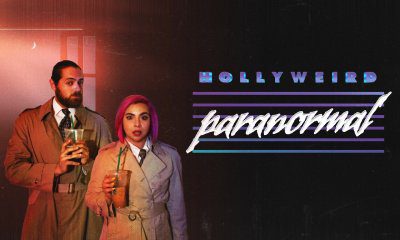
The bright lights of Hollywood cast celebrities as larger-than-life, untouchable, flawless – everything we wish we could be. But behind the glitter and glam lie dark shadows, a seedy underbelly that reaches far beyond the borders of Hollywood. Our October Podcasters of the Month, sleuths and podcast hosts Tammie Merheb-Chavez and Brice Mitchell Williams, recognized that the ghosts of crime in the Golden State remain long after its famous occupants have died.
Merheb-Chavez and Williams teamed up in 2017 to explore the twisted world of “Hollyweird Paranormal.” The podcast features true crime and paranormal activity from Hollywood through Los Angeles, California, and beyond. They tell titillating tales of true crime and its paranormal aftermath – from saving one of L.A.’s historical and haunted restaurants, to preserving Marilyn Monroe’s 1929 Spanish colonial home, to the ghosts of Mae West and Montgomery Clift.
A transplant from New Orleans, Merheb-Chavez moved to Los Angeles in 2009. In addition to being a part-time paranormal investigator, she’s a full-time costume designer for film, TV and theater. Williams lived in various states in the Midwest in conservative, Christian communities. As such, he never really believed in any kind of paranormal activity, yet life experiences have taught him otherwise.
It’s only fitting in the fright-filled, mythical month of Halloween that we delve into the fascinating and wicked world of true crime and paranormal. Merheb-Chavez and Williams share their insights on growing and sustaining your show, no matter what genre.
You have a wide scope of approaches within Hollyweird, from dead celebrities to paranormal incidents to crime, to listener tales to studying haunted locations across the U.S. How did you decide on this format and how has it benefited your show’s success?
As silly or cliche as it may sound, I think our style has mostly been an experiment in trial and error. Our journey to making the podcast what it sounds like today was born mostly out of two friends just chit-chatting during breaks at work and one day realizing, “We might have something here?!” When we first started, we didn’t know what we were doing, where this would take us, and if anyone would even listen! In the beginning, we just knew that the more we interacted with the people around us, the more we discovered that everyone had some type of paranormal story to tell. It truly is a great unifier! And we knew that many people shared our affinity for everything that surrounded this weird entertainment town we are so lucky to live in! So our initial episodes were really just a love letter to the marriage of those two worlds. We really didn’t have any idea what it would begin to morph into!
As we went on, we started branching out and meeting the amazing people who partake in this sphere and we got to know our amazing listeners. The more we progressed, the more stories we were able to spotlight and, in many ways, following that passion for collecting stories and the people who share them has been the greatest success we didn’t even know to hope for!
As we continue to move forward, I hope to continue adapting. The world of Hollywood and the world of paranormal investigations are both deeply kinetic and alive. We are watching in real-time via the strikes how drastically and quickly the entertainment industry is changing. Our future and passion will be to move forward with the changes in these fields and continue to tell the stories and experiences that bring these worlds and people together!
Each of you has had distinct experiences that piqued your interest in the paranormal. I know it’s hard to summarize, but can you each tell us what prompted you to investigate paranormal activities and start this podcast?
Brice:I would say I have always been a skeptic of what is typically considered, “paranormal.” Growing up very religiously, we really only believed in a very narrow understanding of what happens to us when we die. Unfortunately, that worldview wasn’t able to encompass the experiences I was having with my own eyes and ears and gut instinct. As with anything, when you are confronted with evidence that contradicts your worldview, you can either double-down on your beliefs or adapt to the new information being presented to you.
I have always believed in logic and in my own instincts; so I just try and trust those to guide me when I can’t fully understand the world around me. I think that mindset helps in this world of paranormal investigation because it keeps me grounded in the ability to be open to what is possible and skeptical in a way that is rooted in facts. I am the first to admit that there is so much we truly don’t understand, but I also like a little proof in my pudding! Starting this podcast with Tammie has truly just been the natural extension of both our friendship and our experiences with the paranormal! We have been extremely lucky to see some truly incredible places and investigate and meet some amazing people! The podcast is just one way that we are lucky enough to share those experiences with a wider audience!
Tammie:I’m originally from New Orleans, which is a very spooky and haunted city, so I’ve always been intrigued and curious when it came to dealing with the paranormal. I’ve had quite a few unexplainable experiences growing up and it seems that I was on this paranormal journey that has evolved and manifested into this unique paranormal podcast with Brice, who has been this amazing balance on my views.
The paranormal investigations grew after our first season when I had this urge to find the answers to the questions that have resided in my mind from the beginning, “what happens to us after we die?” “Are ghosts real?” “What are ghosts ?” and “Is there a consciousness that persists after we expire?” That’s when I realized that I wanted Hollyweird to be more than lip service, I wanted to do the fieldwork and bring our listeners along for the ride with Brice, who braved certain locations with me. I learned more from his experiences than from my own because they were shared experiences, which are the most important.
Hollyweird has been active since 2017, Well done! What are some tips for your fellow podcasters on how to sustain a successful podcast? And, importantly, how do you approach co-hosting to maintain that success?
You must always put yourself and your mental health first! We’ve seen many of our fellow podcasters go through burn-out and depart from their podcast because they’ve overworked themselves, which affected their content, clarity and drive. It’s okay AND important to take a break or a little hiatus from the microphones because life and work get in the way. We’ve always taken time off from our podcast because we have our day jobs, trips we want to take and ourselves to tend to. But, we notice something amazing happens! We notice that our listeners send us messages expressing their excitement for future episodes, we gain more inspiration with the time we allot ourselves, and it gives us time to meet new people and places that end up making their way onto our podcast.
What has helped us in this approach is that we’ve been good friends for years, which helps everything else evolve naturally and organically on our podcast journey. For podcasts with more than one host, communication and maintaining a healthy friendship with one another is very important. We’ve always made sure to be understanding of each other’s time and outside projects while being flexible with our recording schedule.
In what ways do you think podcasting can be a powerful tool for exploring the supernatural and creating a sense of mystery, and how do you approach this in your own show?
I think that podcasting is one of the mediums best suited to the exploration of the supernatural! We all, of course, love to go to a scary movie or a scary amusement park because we crave the pressure release valve of “terror!” But, much like Hitchcock movies, what is unseen is often scarier than even the best, most expensive CGI. Podcasts leave so much up to each listener’s imagination and they will be able to concoct something far spookier and personal than any more-visual medium could. Ultimately, at its core, podcasting is just very technological story-telling. I think this has always been our approach with Hollyweird. We are storytellers and story collectors. The stories will always unify and entertain, and yes, sometimes even scare! We have been so lucky that so many people have been generous with their stories and that we have gotten to witness so many incredible stories through this podcast. In many ways, we get to stand at the crossroads of history and entertainment and are able to use paranormal investigation alongside more traditional historical methods to delve into worlds that might otherwise remain mysteries. And then, through the connectivity of podcasts, we are lucky enough to share those experiences! We may be a bit biased because it is the method we have chosen for ourselves, but we can’t imagine a more intimate, more readily available tool to explore this world and then disseminate that experience than through podcasting!
How do you vet the trustworthiness of the individuals you talk to and reports you receive on paranormal activity? Can you give advice on maintaining credibility in podcasting to your fellow content creators?
We’ve created and maintained a very safe space for our listeners, especially for those who submit their personal paranormal stories for our segment of “Listeners’ Tales.” With that said, a lot of the stories submitted are pretty genuine, and each one is astonishing yet very personal. What makes them more genuine is when some of these stories open with, “I was never a believer of ghosts until…”
But, we always approach everything submitted with an open mind and logical approach. If we are sent videos and pictures, then that is when we bring in our contacts in the paranormal field who specialize in studying and analyzing these types of evidential recordings. We always vet those who uphold a great amount of ethics and education while at the same time having a fresh pair of eyes to catch onto something we missed.
The biggest advice that we can give to content creators is to have a great amount of ethics, respect and positive creativity with what you produce. The impact of your work and storytelling is pretty palpable when you’re growing your audience and creating a space for others to share.
Congratulations! You’ve just recorded your 100th episode. That’s quite a milestone and it’s appropriate to take some time to stroll down memory lane and check out some of your older shows. What? The first 30 shows were on a hard drive that crashed? That’s OK, you can restore your old shows from a back up… right? I hope so…
Unfortunately hard drives aren’t as reliable as we would like them to be and every so often they crash. If the data isn’t backed up somewhere, it will take a lot of luck, plenty of money and a hard drive recovery service to possibly restore some of it. The last thing you want is lose all your podcasts, photos, financial data and whatever else you stored on that thing.
There are several ways to back up your important data. Your operating system (OS) has a built-in application and that’s a great start. You can set that up to back up to a completely different hard drive. There also are applications such as Synctoy that allow you to run backups and mirror data in two locations such as a second drive. Generally, a solution like this has both drives in the same location. This works out well if your primary hard drive decides to call it a day, but if you find yourself in an unfortunate situation where your house gets trampled upon by a stampede of laser-wielding unicorns, both the drives could be kaput.
I have a friend who on a regular basis backs up a third drive and stores it in a safe deposit box at his local bank. This is a great idea, but quite frankly that’s a lot of extra time that most of us don’t have. Fortunately for us, in the past few years several online “cloudâ€-based services have appeared, making digital archival quick, easy and inexpensive. Most of them are straightforward and function fairly similarly. You pay the service a few bucks a month, download and install its application and let it do the rest. The application locates all the important data such as profiles, media, photos, documents, etc. (You can control this if you desire.) It uploads and stores the data in the cloud on the secure redundant servers. On a predetermined, regular basis, the application will scan your computer for new or changed data and back them up. You can now rest assured.
Mozy, Live Sky Drive and Carbonite are only a few of the online backup options out there. Take a look at those and research some others to decide what is best for you. Personally, I use a combination of backing up to another hard drive as well as an online service. I’ve been very happy with it and feel a lot more comfortable knowing that when my house gets attacked by a pack of rabid gnomes, my digital data is safe.
There is no ‘I’ in ‘team’ but there is ‘we’ in ‘RawVoice’ and collectively we have posted a 31 percent ad revenue increase for the second quarter! This gargantuan increase is further proof that we’re kickin’ butt and reflects new advertising buys on 27 percent more shows hosted on Blubrry, Tech Podcasts Network and other RawVoice subsidiaries. Simply put, this translates into more advertising opportunities and more money in podcasters’ pockets.
CEO Todd Cochrane says lots of things are coming together quite nicely to contribute to this increase: “Advertisers are confident in us delivering a healthy return on investment. Advertising with RawVoice enables them to expose their brand to audiences that are consuming media on a variety of devices in the home and on the go.”
Audience growth has been and will continue to be fueled by the increased quality and quantity of podcasts available at Blubrry and the RawVoice community as a whole. At Blubrry alone we have more than 5,500 shows available for advertising!
AND (note that’s a big ‘and’) our expanded media accessibility on multiple platforms such as Roku, Apple iOS and Google Android-based smart phones is also catapulting our growth.
“Our strategy of multi-platform distribution is exposing new audiences to our content creators on venues that accommodate their lifestyle needs,” says Cochrane. “We are the only advertising medium that can guarantee they are reaching their target audiences.”
Our ever-increasing viewers and listeners have the benefit of accessing our top-quality shows and get to check out great products and services that they want and need. The end result is that hosts are able to sustain and grow their shows “ultimately resulting in more ad deals for our content creators,” Cochrane says.
As Quarter 3 gets under way, we’re all confident the advertising and audience growth will continue to benefit media creators. “We are continuing to focus on multi-platform distribution for the shows that are part of the network,” Cochrane says. “The show producers are reaching millions of people monthly we want to continue to take the lead in finding ways to help content creators maintain sustainable incomes for their shows.”
We heard from you – a lot – and so we checked it out ourselves: PodBean.com has had service problems for the past couple of days. We understand that those of you hosting your podcasts through PodBean want to get back online, like, now if not sooner, so Blubrry is giving you 30 free days hosting to sort out the situation. Reach us at support@rawvoice.com. Warning, though, once you get a taste of Blubrry, you might not want to go back – and that’s fine with us, too! 😉
The Blubrry Team had an incredible, educational and inspirational long weekend, Oct. 14-18, at the Blogworld and New Media Expo. And not just the kind of inspiration you see in the photo below, rather we gave and received valuable insights about the Blubrry PowerPress, podcasting progress and the people in our communities.  We were able to meet some great people, catch up with friends and spread the word to bloggers and podcasters that blogging louder through RawVoice and Blubrry is more than just an option, it’s the option.
True, socially our highlight of the weekend was the Blubrry Vegas After Party at the famous Peppermill Fireside Lounge Friday night, Oct. 16. The strolling magician, DJ’s tunes, showgirls and of course Little Elvis set the tone and pushed the kitsch over the top at the Peppermill. Yeah, we can honestly say this was our best party yet — because you told us so.
Thanks to everyone who attended and made the event such a success! A special thanks to our organizers, Aileen Kenny and Mat Luschek. We hope they’re not busy next year. Even more importantly, we look forward to seeing you there next year!
WordCamp Denver is a conference created for enthusiasts, users, developers, designers, and fans of WordPress in the Denver/Boulder area. As the popularity of Powerpress, our podcasting plugin for WordPress, increases. We thought Wordcamp would be a great place to embrace the community.  Join team member, Brian, this Saturday 2/28 at the Denver Art Museum and please say hello. (Tickets are still available for the Afternoon sessions) For more information goto: http://denver.wordcamp.org/

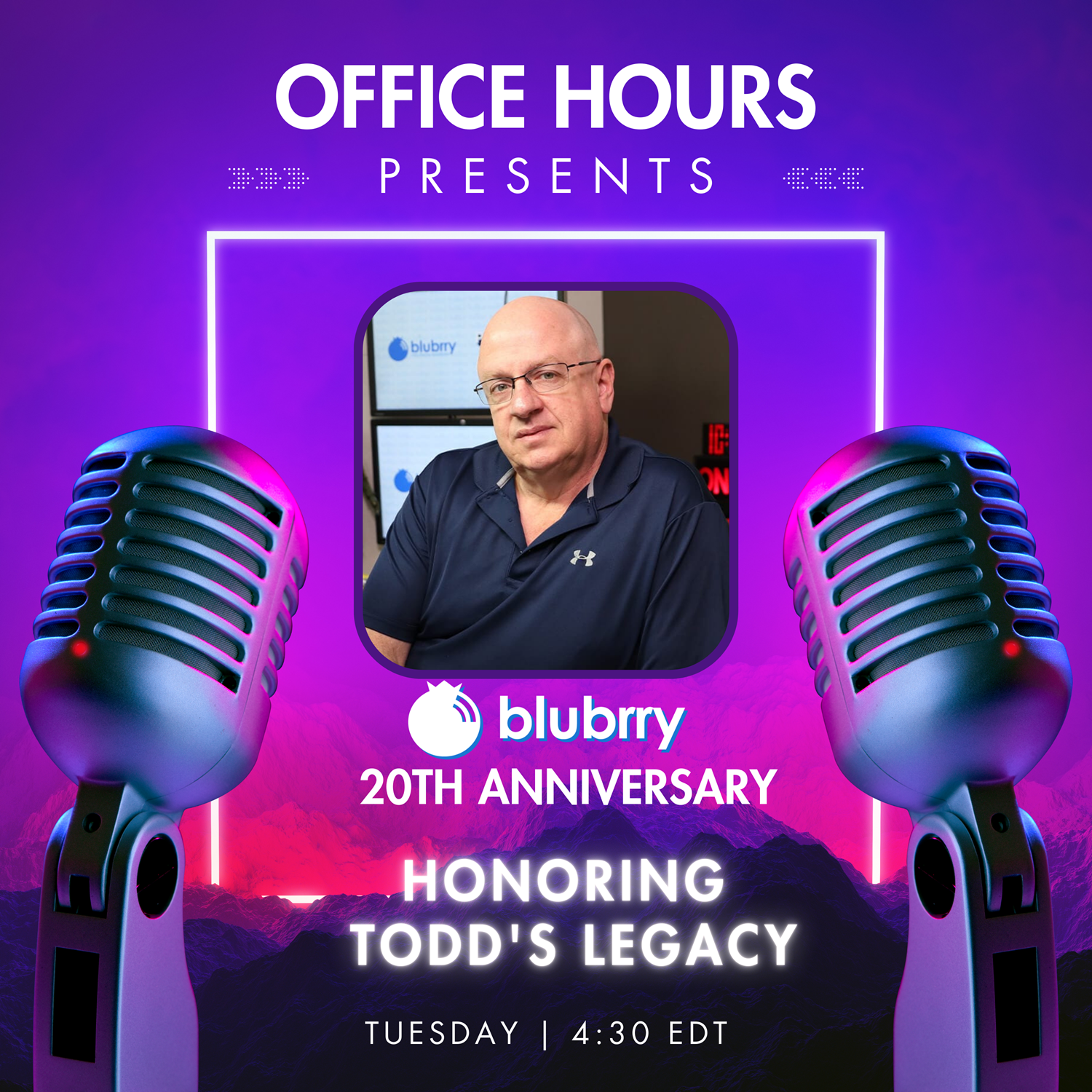 September has been a time of both reflection and celebration for the Blubrry Podcasting family. On Sept. 8, we said goodbye to our beloved founder and CEO, Todd Cochrane — a pioneer, visionary, and friend to countless podcasters. Todd’s impact on the podcasting industry is immeasurable, and his spirit will forever inspire those who create, share, and amplify their voices.
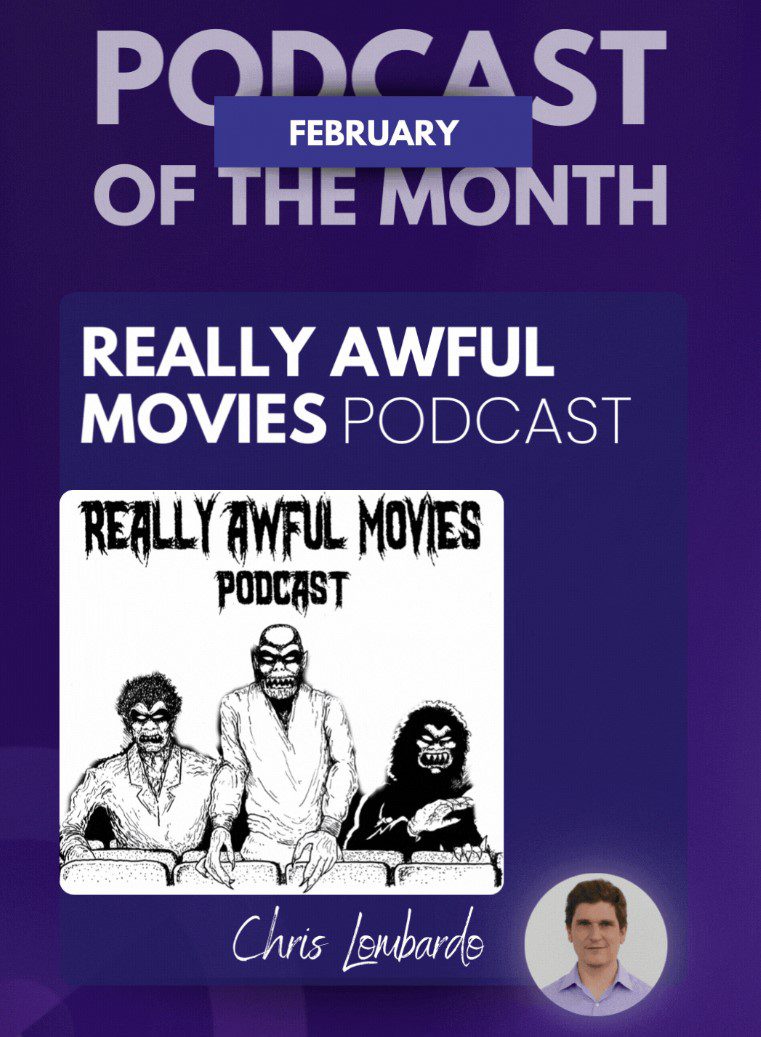
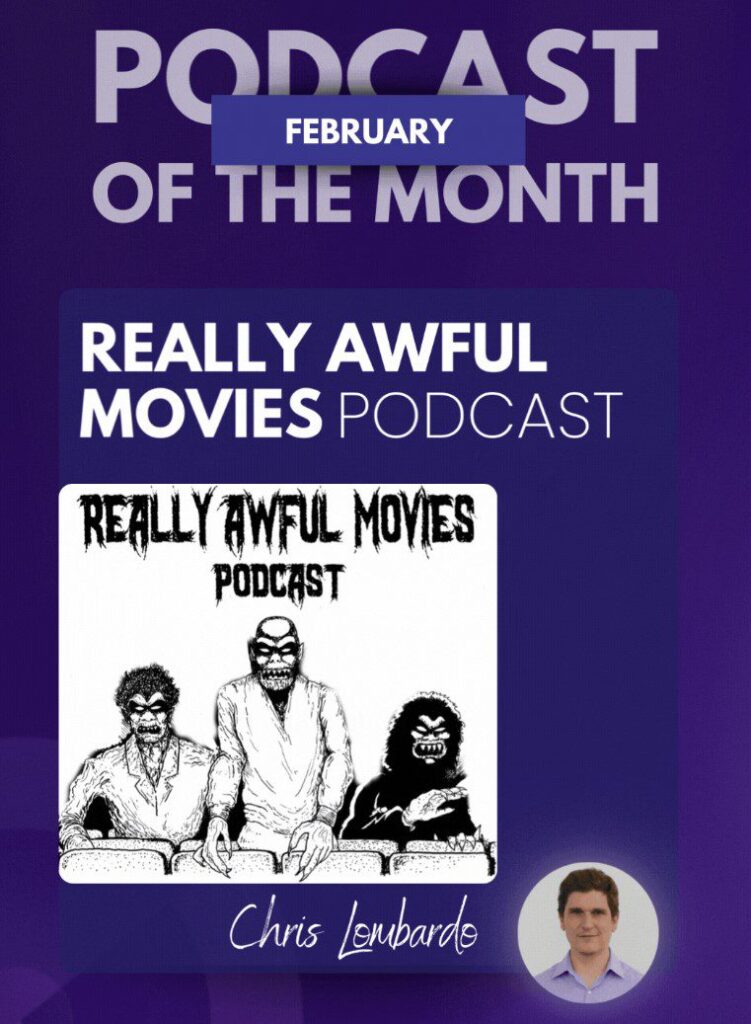 Stroll with us through the misty veils of blackened back alleys and beware of bullets and bandits as we explore the guts and ‘gory’ of cinematic shoestring thrillers. Our guide,



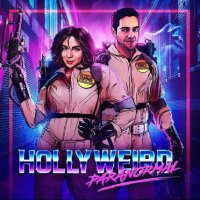
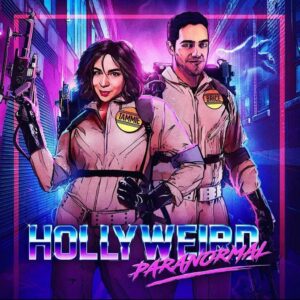 The bright lights of Hollywood cast celebrities as larger-than-life, untouchable, flawless – everything we wish we could be. But behind the glitter and glam lie dark shadows, a seedy underbelly that reaches far beyond the borders of Hollywood. Our October Podcasters of the Month, sleuths and podcast hosts Tammie Merheb-Chavez and Brice Mitchell Williams, recognized that the ghosts of crime in the Golden State remain long after its famous occupants have died.
 In the beginning, we just knew that the more we interacted with the people around us, the more we discovered that everyone had some type of paranormal story to tell. It truly is a great unifier! And we knew that many people shared our affinity for everything that surrounded this weird entertainment town we are so lucky to live in! So our initial episodes were really just a love letter to the marriage of those two worlds. We really didn’t have any idea what it would begin to morph into!