Category: Blubrry

  • Blubrry Stats Is Now Tracking Over A Dozen New Apps (Including Google Play Music Podcasts)

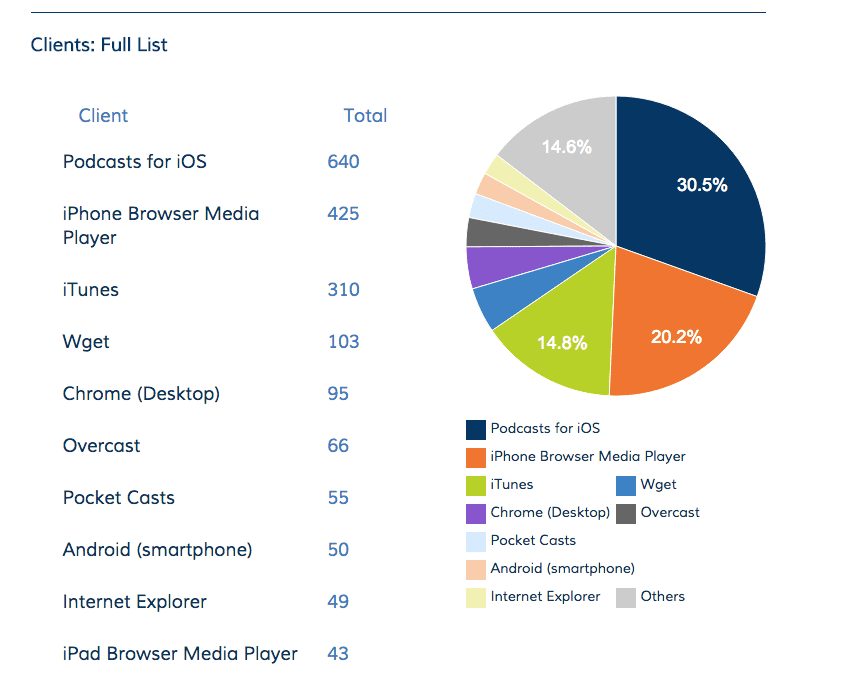
    If you have Blubrry stats, you may have noticed we now list several new clients in your statistics dashboard. We’re pleased to report as of April 19 over a dozen new apps have been added to our ever-growing list of podcast clients. We now track nearly 200 unique podcast applications, devices, and platforms.

    client stats

    Here’s a list of some of the apps we’re now tracking individually in your stats menu:

    • Google Play Music Podcasts – This much-awaited app is tracked by Blubrry, but it’s important to note that as of now, Google Play Music Podcasts is not making individual download numbers available to outside services. Instead, each episode that Google Play Music Podcasts makes available to its users will only show as one download, no matter how many people listen in the app. For now, you’ll need to log in to Google Play Music Podcasts to see your total download number.
    • Player FM for Android
    • AntennaPod for Android
    • Kodi – open source home theater software
    • Clementine – music player and library organizer for MAC and Windows

    To see how many downloads each app is delivering your podcast, click “clients” in the statistics section of the Blubrry dashboard.
    client screen shot

    Curious how to list your podcast with Google Play Music Podcasts? Check out our latest episode of the PowerPress Podcast!  


  • Google Play Music Podcasts is finally here!

    PPPiTunesAlbumArt-385In all the podcast hype this week, MacKenzie did not have a guest on the show, instead she talked about some podcasting news. Google Play Music Podcasts, MTV, NAB and more were brought up on the 17th episode of the PowerPress Podcast this week. And in case you were wondering, she brought up her podcast chronicle this episode as well, so if you’ve been wondering how MacKenzie is doing, take a listen. Please, leave us a review on iTunes and subscribe on your device of choice!
    Headed to Podcast Movement in July? Save $40 when you use the code Blubrry during checkout for your ticket. Ready for another event a month later? The Elite Man Conference is happening August 5-7 and we’re got a code for you to save 10%. Learn more here and use code Blubrry10 to save!

    Show notes:

    MTV Podcast Network

    Google Play Music Podcasts info

    Email MacKenzie

    Review PowerPress Podcast

    Learn about Podcast Awards!

    Save the Podcast Awards – Donate now!

  • Blubrry and PowerPress Player

    PPPiTunesAlbumArt-385On this episode of the PowerPress Podcast MacKenzie and Angelo Mandato talk about the new Blubrry and PowerPress player. They also discuss, 6 reasons why podcasts are the future of storytelling. The new player is available exclusively to Blubrry hosting customers, and will be available in PowerPress next week. Listen to find out where to get the embed in Blubrry and PowerPress. Thanks for listening, and please leave a review on iTunes! And if you haven’t yet, subscribe using iTunes, Android, Email – however you want in the player below.

    Thinking about attending Podcast Movement? Use promo code ‘Blubrry‘ for $40 off your ticket!

    From the Blubrry Podcaster Dashboard.
    Manage Episodes
    Find the embed option in ‘Manage Episodes’ in the podcast dashboard.
    Use the link to post the embed anywhere.
    Use the link to post the embed anywhere.


    Show notes:

    6 Reasons Why Podcasting is the Future of Storytelling

    New York Times Podcast Network Starting

    Blubrry Player information

  • 5 Things Podcasters Need To Know About Taxes

    April 15 is almost upon us, and if you’re like many podcasters and other content creators, you might be procrastinating on getting those taxes filed. Even if you aren’t making a lot of money yet, confusing tax laws and, let’s face it, less-than-stellar bookkeeping often makes something that should be pretty simple seem complicated. But don’t procrastinate too long! If you earn income – any income – from your podcast, it needs to be reported correctly.

    Here are some tips for getting your tax return done right:

    IRS

    1. Decide whether you’re filing as a business or a hobby. If you aren’t making much or any money yet, this can be tricky to figure out. “The difference is in the podcaster’s motive – does he or she wish to make a profit or not,” explains Carol Topp, CPA and host of the Dollars and Sense Show. The IRS does offer nine factors they use to differentiate between businesses and hobbies, but they can be a bit vague – for example, “whether you carry on the activity in a businesslike manner.” One thing to keep in mind, warn tax professionals, is that filing as a hobby isn’t necessarily going to be the cheaper route. There’s a risk that you could trigger an audit if you file a valid business as a hobby, and if you declare your podcast a hobby, you are also limited to deducting expenses up to the amount of income it’s produced – you can’t take a loss on a hobby.
    2. Start as soon as you have expenses. “That’s sooner than most podcasters think about taxes!” says Topp. You should start tracking and reporting your podcast as soon as you have expenses instead of waiting until you have income.
    3. Know what counts as income and deductible expense. Equipment (your mic and software, for example,) fees associated with services like podcast hosting and statistics, travel and entry fees to industry conferences and events, business-related meals, classes or podcast consulting services, studio/recording space or a home office, and graphic design and website setup fees are just some of the things you may be able to write off as an expense related to your podcast. Income can include free products, exchanges from bartering, and of course, any monetary payment you receive whether it’s via check, direct deposit, Paypal, cash, or some other format. If you aren’t sure if something counts as a taxable income or deductible expense, consult a tax professional.
    4. Keep household and podcasting finances separate. If you haven’t been keeping track of your finances – or keeping your podcasting expenses and income separate from your household finances – you’re probably realizing right about now how big a mess that can create. “Separating business income from your personal income makes tax preparation easier, but it also allows the podcaster to have a better idea if the business is profitable,” advises Topp. “If business and personal are all mixed into one checking account, it requires more bookkeeping to see how the business is doing.”
    5. Record everything. As for assuming you’ll remember how much you spent on that trip to Podcast Movement? Nuh-uh. “Using a spreadsheet or accounting software is best – track of all your income and all your expenses. Also, track your meals and mileage. Do not rely on memory!”

    Great advice, but nobody’s perfect. If you are getting organized a little late this year, you aren’t alone! Just commit to making life easier for yourself when it comes to filing  taxes by getting informed, separating out the podcast and household finances out, and keeping good records…starting now. Topp offers a free downloadable business income/expense spreadsheet you can use to keep track of your podcast finances. While Topp’s site is aimed at writers, there are many parallels between podcasters and writers when it comes to taxes, so visit TaxesForWriters.com for more great tips and resources while you prepare your taxes.

    A note: we at Blubrry are experts in podcasting, but not necessarily tax preparation! To make sure you’re protecting yourself and your podcast, be sure to consult IRS resources and/or speak to a tax professional if you have any questions.

  • 4 Ways To Turn Your Blog Readers Into Podcast Listeners

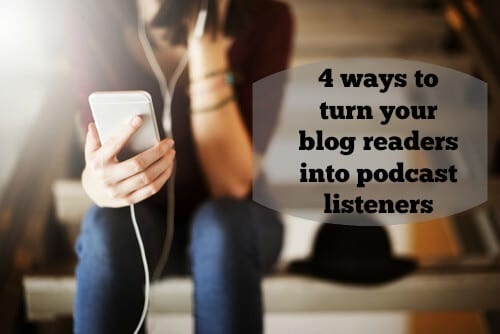
    So you’ve worked hard to build a blog audience, and it’s paid off. Your audience is loyal, engaged, and growing. But now you’re itching to start a podcast – or invest more time in the podcast you’re currently producing – and you aren’t sure how to get those readers to become listeners.

    blog readers podcast listeners

    Maybe your readers love your writing style and don’t love the idea that you might be writing less. Or maybe they just don’t really understand podcasts or the technology behind them. Should you give up on your podcasting dreams, and just stick with the sure thing?

    No way! Yes, it can take some work to convert your readers into listeners, and some of your blog fans may never listen to your podcast. But if you follow these steps, you can get a lot of your blog readers to give your podcast a chance – and maybe become subscribers and regular listeners.

    Produce A Quality Show. 

    It should go without saying, but if you want to convince podcast skeptics to convert, you’re going to have to deliver quality the first time or two they listen. While a die-hard podcast listener might be checking her app every day and continually looking for new episodes, someone who’s new to podcasts might listen to yours just once in her browser…and give up if it’s boring or sounds terrible. Keep in mind that a newbie podcast listener is accustomed to radio-quality audio, so you want to make sure your sound quality is good and that you have gotten comfortable recording before you tell your readers about your show.

    That doesn’t mean you have to be perfect right off the bat! Just make sure you are producing consistently good shows before you tell the whole world. You can always introduce your readers to your podcast after it’s been publishing for a while, and if those first few shows were a little rough, be honest and focus on how much you’ve progressed! Your superfans will love to watch you tackle something new and get better along the way.

    Looking for help choosing podcasting technology that can produce great sound on any budget? Blubrry has several tested and approved podcasting tech packages to choose from.

    Involve Your Readers. 

    Your readers will be much more likely to turn into listeners if you engage them in the process. Ask them to submit questions to spur future topics, and make sure you mention your podcast on your blog regularly! Detailed show notes are a great way to increase investment in a podcast – write some tantalizing text or share a few of the most intriguing quotes to encourage your readers to go ahead and click that “play” button while they’re reading.

    Use your most popular blog posts and topics as a jumping-off point for future podcast episodes – if people loved reading about something on your blog, chances are good they’ll be hungry to learn more in another format. Giveaways, on-air shout-outs to listeners who review your show, and reading emails from listeners during the show are other great ways to involve your readers and hopefully, turn them into listeners.

    Educate Your Readers. 

    Some readers may just not understand how podcasts work or how to listen to them. Embedding the podcast on your blog allows readers to more easily find and listen. You can also include direct links to your show in iTunes or other podcast platforms in your sidebar or at the bottom of each post to make it easy for your readers. You may want to write a tutorial post like this that explains in detail how to find, subscribe to, and listen to podcasts on a smart phone.

    Lastly, don’t forget to remind your readers often that you have a podcast and how they can listen to it! Go where they are: if your community is active on Facebook or Instagram, use those platforms to continually remind your fans that you’re podcasting, and make it easy for them to find your show. The Blubrry PowerPress plugin for WordPress is a great free tool that allows you to publish, syndicate, and embed new episodes in your blog in one easy step.

    Use Accessible Language. 

    While almost everyone has heard of a podcast by now, many still perceive them to be “for techy people” and may not understand that podcasts are for everyone and cover a wide range of topics! While you’re introducing the idea of podcasting to your audience, occasionally use accessible language that everyone can understand: words like “show” and “conversation” feel a little less geeky than “podcast” and may help your readers understand that a podcast is basically on-demand radio that lives in your phone or computer.

    With a little planning and effort you can turn even your most loyal readers into listeners! Remember that ultimately, what your readers love is you – so make the most of this new medium, and your audience will follow along.

    -This post was written by Meagan Francis, blogger-turned-podcaster and creator of the Life, Listened podcast network. 

  • 2 Fierce Female Podcasters You Should Be Following

    2 Fierce Female Podcasters You Should Be Following

    Forget the image of podcasting as an old boy’s club: the visibility of women in the community seems to be on the rise – and many of us have been here from the beginning. Here are two female podcasters – who just happen to be Blubrry customers! – you’ll want to keep an eye on:

    Kitzie_studio_blog

    Podcaster: Kitzie Stern, Host, New World Kirtan

    About The Podcast: A show that explores Kirtan, a spiritual practice focused on singing meditation. The show is both personal and practical, featuring music to accompany Kirtan practices as well as relatable glimpses into Stern’s life.
    Why You Should Listen: “Kirtan is just a really easy, accessible way to get your mind to quiet down during a time when we desperately need ways to quiet our minds.

    kirtan banner

    A New Way To Reach An Audience

    Like many podcasters, Kitzie Stern initially turned to podcasting as a way to serve an existing audience. An experienced voiceover artist, Stern also had a deep personal interest in Kirtan chanting, a form of singing meditation that originated in India thousands of years ago. “I got this idea that I could do a podcast of songs and it would be like a setlist for my local Kirtan group to use for their chanting practice,” Stern explains. Because of its auditory nature, a podcast was a natural extension of a guided in-person Kirtan experience, but Stern also saw an opportunity to use podcasting to demonstrate her voiceover abilities.

    Though it was originally targeted at a specific audience, as often happens Stern’s podcast took on on a life of its own – though Stern didn’t realize until about a year after the show launched. “On New Year’s Eve, just for kicks my husband and I thought we’d check download numbers, and found that it had been downloaded thousands of times. all over the world. I didn’t think I was talking to anyone besides people in Corvalis!”

    Unexpected Opportunities

    Stern considers her podcast a service to the Kirtan community, and while monetizing New World Kirtan directly isn’t a goal of hers, she can’t deny the benefits she’s received via the podcast, on both the personal and business sides of the table. In addition to the connection she’s been able to make with listeners across the globe, Stern has been invited to attend Kirtan and other spiritual festivals and events as a direct result of her podcast, and it’s also helped her create a thriving specialty in her voiceover career. “Voiceover is really a specialized kind of field, so I branded my voiceover site to take this side of myself into consideration…and now, I’m getting more of the kind of work that I really want to do,” she explains.

    Advice To Newbies

    After publishing hundreds of episodes, Stern enthusiastically encourages would-be podcasters to jump in with both feet. “I’m 63, and worked in radio for a long time. To be able to do your own show without having the constraints of being on a radio station – I can’t tell you how wonderful it is,” she says. “It’s an unprecedented time for podcasters, and people are really catching on to what a great medium this is.”


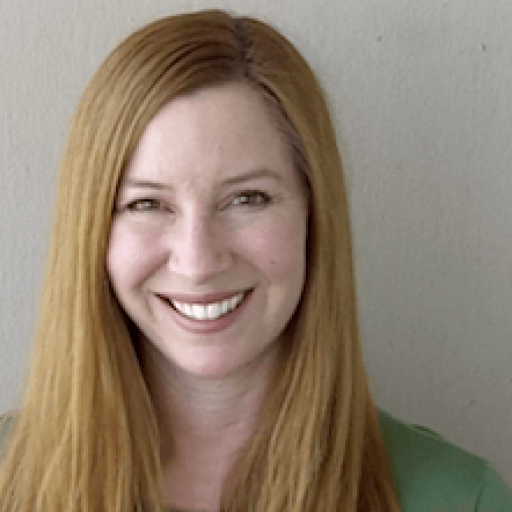
    fogarty mignonPodcaster: Mignon Fogarty, Grammar Girl Quick and Dirty Tips for Better Writing
    About the Podcast: The show started as a five-minute quick writing tip, but has evolved into a longer show – about 12 minutes long – for both language lovers and language learners.
    Why You Should Listen: “If you find language as fascinating as I do, you’ll love it.”

    grammar girl

    Podcasting As A Platform

    Mignon Fogarty, the author and online personality also known as “Grammar Girl,” has become a household name – but not everyone realizes she’s also been podcasting for a decade and is also the founder of the high-profile podcasting network Quick and Dirty Tips. “I started podcasting in 2006 because I love technology and it was the neat new thing, and I was hooked by the immediate listener feedback,” she explains. “I started a science podcast first, because I was a science and technology writer, and started Grammar Girl about eight months later.”

    Though she was already a successful writer and had extensive startup experience before starting Grammar Girl, “the success of the podcast gave me a platform to take both those interests to a much higher level, and now I’m a New York Times bestselling author and a professor of journalism and entrepreneurship. Also because of the podcast, I’ve been able to build an online social media platform that gives me the ability to try all kinds of new and interesting things like making digital games (Grammar Pop) and card games (Peeve Wars),” she explains. “I owe so much to podcasting.”

    Women in the Podcasting Community

    When asked whether she thinks there are more women entering the podcasting space, Fogarty says she hasn’t really noticed – however, “my perception may be skewed because I founded Quick and Dirty Tips, where all our full-time employees are women, the executive in charge of the enterprise is a woman, and 11 of our 17 podcasts are hosted by women. When I look at podcasting, I see women everywhere! To me, there have always been women in podcasting, but there does seem to be a weird perception in the media that we don’t exist.”

    What Are You Waiting For?

    Though Fogarty always considered herself a writer first and never imagined herself becoming a radio personality, she does remember playing alone in her backyard as an only child, instructing imaginary friends and audiences on how to swing on a swing or build a sand castle. The takeaway? Even if you never thought of yourself as a “radio type,” that doesn’t mean you won’t find a great fit in podcasting – it can be used for entertaining, instructing, or simply connecting more deeply with an audience.  “There’s no reason to be nervous,” Fogarty  “Just jump.” She recommends the She Podcasts community as a supportive community to answer your questions and help get you on the right path.
  • Podcast Numbers, and Podcast Movement with Brian Dunning

    PPPiTunesAlbumArt300MacKenzie had the pleasure of speaking with Brian Dunning on the podcast this episode. He’s been a podcaster for over ten years now and they discuss just what makes his podcast, Skeptoid, stand out from the rest. Have you heard the latest podcast listener numbers? Before this podcast was recorded we got some great news that monthly podcast listening has increased from 17% to 21%. We’ve included a link for more detailed information about this below, but for a preview — weekly listening has increased from 10% to 13% and 36% of Americans people have listened to a podcast.

    Thinking about attending Podcast Movement? Use our affiliate code Blubrry to get $40 off your ticket! Thanks for listening!

    Show notes:
    Infinite Dial Podcast Research
    Brian Dunning, Skeptoid
    Podcast Movement Ticket
    Fan of PowerPress? Leave us a review!

  • Keep It Simple: Why Multiple RSS Feeds Are A Bad Prospect For Most Podcasters

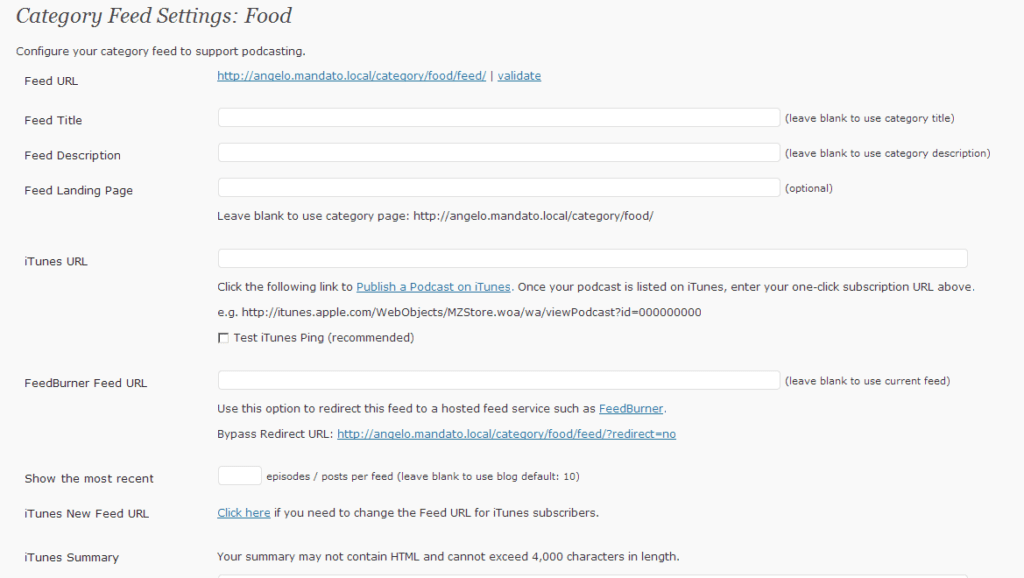
    RSS feeds – what they are, how they work, why they are so crucial – can confuse even experienced podcasters. At Blubrry, we’re passionate about encouraging podcasters to keep ownership of their RSS feeds, rather than turn that control over to service providers.

    But why is it so important that a podcaster control his or her own feed and specifically, that most podcasts only need ONE feed? Today, Blubrry/RawVoice CEO Todd Cochrane explains the reasoning behind our dedication to podcaster-owned feeds, and why serving multiple feeds to different services can be a dangerous proposition:
    feed image

    PPP: Blubrry has made RSS feed ownership a priority since day 1. Why? 

    TC: We built PowerPress on the philosophy that we could go out of business tomorrow podcasters would not be left without a feed, as has happened so many times when companies have gone out of business or had a priority change.

    Tweet: We built #PowerPress so that if we go out of business, #podcasters will not be left without a feed. – Todd @Blubrry http://bit.ly/1RQuz5y

    There is always some risk on the financial viability of the companies podcasters host with, and specifically, have their feeds with. We have been proactive in providing podcasters a security blanket that, so long as they use PowerPress, their feeds are protected.

    This pro-podcaster philosophy is not the business model of much of our competition, whose sales models are often filled with fear tactics and misinformation that scare podcasters out of using their own IPs by talking them out of using their own feed.

    Not only are you at risk of losing control of your feed – or losing it entirely! – if it’s hosted with someone else, but your SEO can take a big hit if you host your feed on a service that is not using your website as the original source.

    PPP: But why are so many podcasters so willing to give up control of their feeds in the first place?

    TC: Sometimes they don’t even realize that’s what they’re doing. And in other cases, the service provider actually tries to sell podcasters on the idea that their show feed needs to be hosted somewhere else, using scare tactics – for example, they might try to convince you that WordPress is unstable and an update can “break” your feed. In our experience with nearly 60,000 podcasters using PowerPress, this is rarely an issue. All service providers have occasional problems, but WordPress is powering massive numbers of podcasts, and I would suggest the propaganda being spread is more about gaining and controlling podcaster’s feeds.

    PPP: Got it. On top of that I’ve heard of a service providers forcing podcasters to have separate feeds for each site their show is syndicated to. What’s up with that?

    TC: While PowerPress gives someone the flexibility to create separate feeds if they want, only a very small subset of shows – maybe 2-3% – would have a legitimate need to do this for advertising or business reasons. Meanwhile a large number of podcasters unnecessarily have a mess, with multiple feeds of the same show all over the place.

    Tweet: Only a very small # of shows EVER need multiple feeds. Find out why. http://bit.ly/1RQuz5y

    Sadly a service provider has employed a tactic by default that makes it more challenging for podcasters to seek out alternative hosting solutions. They create a unique feed for every podcast destination, so instead of having one feed that feeds all services, they deploy a unique feed for each destination. As a result, you now have some podcasters that have multiple originating feeds and do not even know it.

    First, lets keep things straight. None of the services we’re talking about – iTunes, Google play, Stitcher, etc. – even suggest you should create separate feeds. They all ask for your “podcast feed”, just like search engines want your “website address.” No one is asking you to create separate websites for Bing and Google- that’s just crazy.

    It’s basically the equivalent to telling webmasters they should have a separate website for each web browser or search engine. Ridiculous!

    Here’s an example of why this can be so problematic. In the case of the company doing these targeted feeds, in Google Play those separate feeds were adding the Google Play tags in place of iTunes tags. This is not what Google had in mind. In their documentation, Google explains how to add google play tags to your existing iTunes feed. They even go into depth to explain the hierarchy. Nowhere in the documentation for any of the services does it say “please create a separate feed.”

    A podcaster’s feed URL is used to determine your podcast listing uniqueness. If you have 6+ versions of the same podcast feed, it is possible for someone to subscribe to your Google Play podcast feed on iTunes or visa versa. Now you have multiple listings of your podcast getting indexed all over the web. We became aware of this when we were attempting to migrate a major client that had no idea they had separate feeds which were being sent to multiple services. Their reaction was not fit for publication.

    And that brings us to one of the biggest issues with not retaining control of your feed: if you want to change services and you’ve got multiple feeds all over the place, good luck cleaning that up. Often podcasters have so much difficulty moving or consolidating their feeds, they just don’t bother switching in the end. The tactic is an effective way to lock podcasters in to one service provider. 

    Tweet: If you want to change #podcasting services & you’ve got feeds all over the place, good luck cleaning that up. http://bit.ly/1RQuz5y

    PPP: So, what can a podcaster do to keep this from happening to them? 

    If you’re already using a service like Blubrry/PowerPress that allows you to retain control of your feed, you’re in good shape. If you’re using another service, the best thing to do is be aware that this is an issue and take it into consideration before you add on more services with that company or get further entrenched. 

  • 3 Copyright Myths That Will Sink Your Podcast

    3 Copyright Myths That Will Sink Your Podcast

    Have you ever wanted to use a segment of your favorite song as bumper music for your podcast? Maybe a clip or two from Meat Loaf’s “Bat Out Of Hell.” Perhaps you are on show number thirty-five and you have consistently used short clips from popular songs for your bumper music. After all, the music clips are all less than ten seconds long, and you were told that you can use any music in your show as long as the music doesn’t exceed the ten second limit. In addition, you know you are doing the right thing when you play the music because you are giving credit to the band right after the clip is played.

    copyright issues podcasters

    Your audience is increasing and you are beginning to think the work you are investing in your podcast is paying off. Your payoff is simply the satisfaction you receive because you are providing good information to your audience.  Your show is truly a non-profit endeavor because you are not looking to make money.  

    Then one day you receive an email that is truly a bat out of hell. The email is from an attorney representing a large music organization and she is demanding that you remove all the music clips from your podcasts because you are violating the artists’ copyrights. The next day you receive a registered letter making the same demand to remove the music – and insisting that you now owe a huge sum of money for each clip of music used in each of your shows.  

    How could this have happened? You were told by other podcasters that you can use copyrighted material under the Fair Use Doctrine if your podcast is a non-profit, or if you give credit to the artist, or if you use a clip that is less than ten seconds in length. You thought you had your bases covered on all three of the exceptions to the copyright laws.

    Unfortunately, you were wrong…and now you’re in legal and financial hot water. 

    Here are three persistent copyright myths that can sink your podcast: 

    • Myth number one – it’s okay to use copyrighted music if the portion of music used is less than ten seconds long. You cannot use another person’s music for your bumper music unless you have express permission, or you’ve purchased a license to use the music. That includes clips that are less than ten seconds, five seconds or even three seconds long.
    • Myth number two – you can use copyrighted material if your show is a non-profit endeavor. Sorry. It doesn’t matter whether you are making ten thousand dollars a month or your show is extolling the virtues of Mother Theresa in the most non-profit manner possible. There is no non-profit exception to the copyright laws.
    • Myth number three – You can use copyrighted material if you give attribution to the producer of the material. Nope. Sorry again. There are no attribution exceptions anywhere in the copyright laws. In fact, there are no attribution requirements anywhere in the copyright laws. Attribution is simply common courtesy and a handy way to avoid accusations of plagiarism.

    If you believe these three myths and put them into practice when producing your podcast, you can get into a lot of trouble. I’ve used simple explanations in debunking the three myths hoping this simplicity will quickly get you on the right track, or keep you on the right track, when producing your podcast.  Copyright laws in general and the Fair Use Doctrine in particular are complex, and there are a lot of grey areas within that complexity. I will dig a little deeper into the Fair Use Doctrine in future posts. Of course, you should consult an attorney if you have questions about the specific material you are using in your podcast.

    barry kantz-Attorney Barry Kantz is General Counsel and CFO of RawVoice and Blubrry. He can be found on Twitter @kantzb.


  • Meet Mike Dell, Blubrry’s Lead Support Tech

    Meet Mike Dell, Blubrry’s Lead Support Tech

    From the hardworking customer support techs who are the front lines when you’ve got a question or concern to the behind-the-scenes people making our services and products among the best in the business, Blubrry boasts a staff of dedicated men and women who, above all, are passionate about podcasting and want to help all podcasters create the best shows they possibly can.  This is the first post in a new series featuring our awesome team members here at Blubrry! We hope you’ll enjoy getting a sneak peek at the awesome people who power our company.

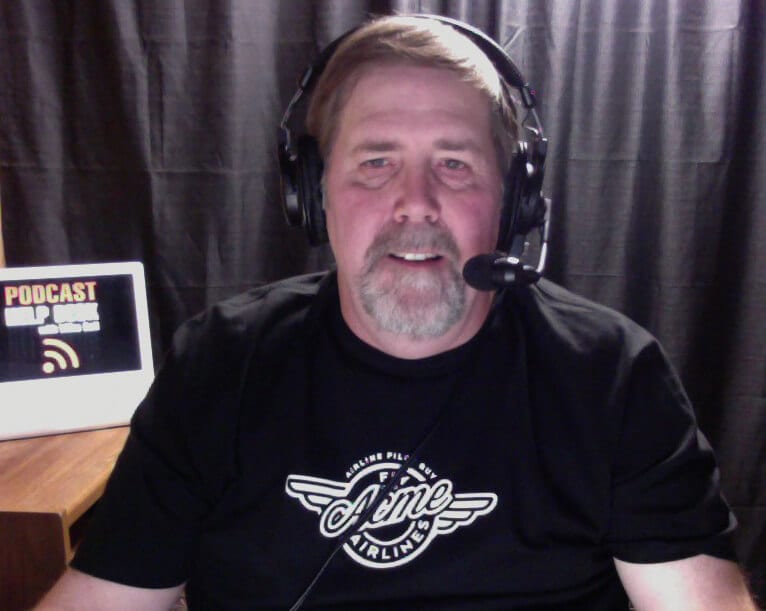
    mike podcasting

    Name and Position: Mike Dell, Lead Support Tech

    Worked at Blubrry Since: 2009

    Tell us about a typical day at Blubrry. 

    I spend most of my time answering support tickets for people who are having issues with our services or need help with podcasting in general. For example, maybe they can’t get a feature to work so I walk them through it, or they need help setting up PowerPress for podcasting. Sometimes I do one-on-one consulting, where I’ll do a screen share with the customer and help them get their website looking the way they want it, show them how to set up their RSS feeds, and that kind of thing.

    What’s the thing that causes newer podcasters the most confusion? 

    People don’t always understand that the RSS feed is the center of a podcast. They say “I want to put my podcast on iTunes,” but podcasts don’t work that way. You have to have an RSS feed, and everyone centers around that. That can be a hard concept for people to understand. I always describe it like this: your RSS feed is like the transmitter from a radio station. Whatever radio you’re listening to a show on, the show itself is coming from the same transmitter.

    You’ve been at Blubrry since 2009. How have things changed in the industry since then? 

    I started podcasting in 2005, so I’ve been at it for 11 years now. It’s completely changed. When I first started you had to be a geek to even listen to podcasts because the technology wasn’t user-friendly. With podcast apps in pretty much all smart phones and some newer cars, it’s a whole lot easier for the listeners.

    On the other hand, the technical side for producers hasn’t changed a whole lot – but our tools make it a lot easier. The basics are still there: you still have to have an RSS feed and host your files on a server, but once you get set up it’s easy.

    What makes working for Blubrry special? 

    All of the founders of Blubrry were podcasters first. We’re grassroots.

    I knew most of the people involved with RawVoice and Blubrry prior to coming to work there. We’re laid back when we need to be and we get right down to business when we need to. I also love that our whole business model is based on doing what’s best for the community and podcasters first. We don’t do anything as a company that’s not good for the entire industry. We aren’t the cheapest service in town, but I feel we are the best. It’s great to work for a company where you believe in the product, and everybody at Blubrry is passionate about the product.

    Speaking of…tell us about your podcasts!

    I have a podcast called Podcast Help Desk to help people learn more about podcasting. I also do one called Geek of the North, where I take something that’s not normally thought of as technology and explain it as technology – for example, I recently did the technology of garbage trucks. I talk about snow removal, nascar tracks, all kinds of stuff. And sometimes I guest host the PowerPress podcast, and that’s a lot of fun.

    mikebanjoSI08

    Tell us about your hobbies and life.

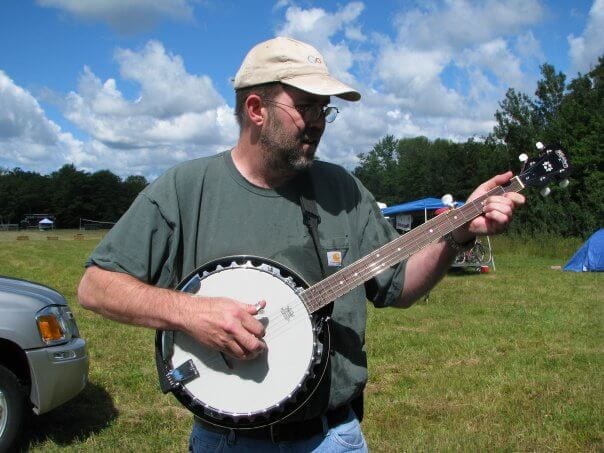
    I live in Traverse City, MI with my wife, dog and cat, in a 1940s log cabin about 600 yards from Grand Traverse Bay. I call myself an attempted banjo player and like going to music festivals in northern Michigan.

    What’s the best part of your job? 

    Yesterday a customer emailed me and said, “When was the last time I told you your support was awesome?”

    That kind of thing happens a lot, and it always makes my day.