Author: Blubrry

  • Submit Your Podcast to Amazon Music and Podcast Index

    Submit Your Podcast to Amazon Music and Podcast Index

    They’re here! Blubrry users can now submit their podcast directly to the Amazon Music podcast directory and Podcast Index directory. The team at Amazon Music has been providing original podcast content for years now, but this is their first step into the directory arena. While new, we highly suggest that podcasters submit their show so they don’t miss out on an important podcast directory for new listeners. The Podcast Index team is working hard to preserve podcasting as a free speech platform.

    How do I submit?

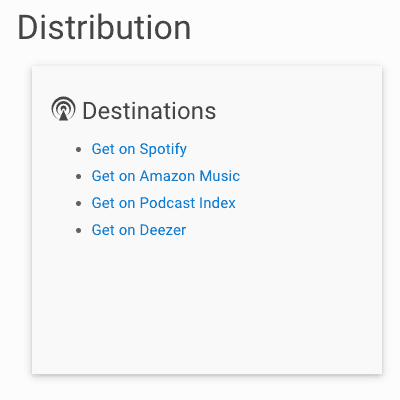
    Well, you’ve got to have a Blubrry account, (no you do not have to be using any of our paid services). When you’re logged into we-moved-the-blog-to-this-site-when-we-made-a-new-website.blubrry.com/ (make sure you’ve claimed your show first), head to the Podcaster Dashboard. From there head to the Destinations box and you’ll find Amazon Music and Podcast Index, along with a few other options. Follow a few simple steps and you’ll be on your way.

    A few tips

    • If you’ve already submitted your podcast to Amazon Music, don’t submit a second time.
    • You will receive notifications directly from Amazon about your submission. Amazon Music doesn’t send us anything on acceptance/rejection.
    • Amazon submission will most likely be accepted or rejected within 24 hours.
    • When submitting to Podcast Index, add your RSS feed and you’ll be on your way.
    • If you’re unsure if you’ve already been submitted, no harm done in a second submission.

    If you’d like to know more about our Destinations section, you can read an article we wrote about it here. Head to Destinations and get started now, it takes only a minute!

  • How Do I Know People Are Listening to My Podcast?

    How Do I Know People Are Listening to My Podcast?

    Blubrry’s statistics are IAB Certified. That means that the largest organization that offers a meaningful definition of a podcast download has examined how Blubrry counts your podcast statistics and certified that Blubrry is doing it the right way. IAB’s Podcast Measurement Technical Guidelines ensure that your podcast statistics (“download numbers”) reflect the number of times that your podcast is downloaded for actual human consumption. Knowing that number is more valuable to you, the podcaster, than knowing the total number of times that people, and internet bots and spiders, and social media posts and ads access your MP3. Blubrry’s statistics have value.

    Oct. 20 is World Statistics Day and the theme this year is “Connecting the world with data we can trust”. Statistics (podcast and otherwise) have been recently given a bad name. One of the best examples of the zeitgeist’s opinion of statistics is a quote from the book number9dream by British author, David Mitchell. He wrote, “Over 85% of statistics are made up on the spot.” World Statistics Day elevates the importance of accurate and reliable statistics and the value that data science and statistics offer in our daily lives. 

    Many podcast experts say the measure of a podcast’s success is if it achieves the podcast producer’s vision for the show. Arguably, this does not capture a full measure of success since it does not have a measurable outcome. One’s vision for their podcast could be as undefinable as self-expression, or to connect with other like-minded people, or to share a message of hope and encouragement. How can you know you are expressing yourself to others, or connecting, or sharing without reliable podcast statistics that accurately reflect how often your work is being received by other real human beings? Buried in each podcaster’s vision for their show is the desire to share their show with others. Reliable, accurate podcast statistics are the best measure of this. You can trust Blubrry’s statistics for that task.

  • Podcaster of the Month: Arts – Michael Harren

    Podcaster of the Month: Arts – Michael Harren

    If you’re looking for a podcast with a long back catalog and you enjoy learning from activists of all types of communities and industries, you’ve come to the right place. This month, we’re focused on Arts, and Michael Harren handles this on a grand scale.

    MikeyPod – Michael Harren

    Tell us about yourself!

    I’m a Brooklyn, N.Y.-based composer/performer/storyteller/podcaster/activist, among other things! I just celebrated the 15th anniversary of my podcast, MikeyPod, which features conversations with fellow activist artists about how they use their art to change the world. 

    What inspired you to do your own podcast?

    Back in 2005 my LiveJournal (remember that anyone??) friend Madge Weinstein introduced me to podcasting through her show, Yeast Radio. As a big fan of music and independent art, I was really excited by the possibility to reach people with a homemade radio show that I could distribute myself. I was nervous about not having anything to say, or not being able to do a good job, but after some encouragement from Madge I finally went for it and I am so glad I did.

    MikeyPod has changed quite a bit over the years, I even spent some time living at Koinonia Farm, an intentional community in Georgia that is steeped in civil rights history. I documented my experience and told the history of the place with interviews on my podcast. I toured the West Coast a couple summers ago performing and volunteering at animal sanctuaries — all documented on my podcast as well. In many ways, having the podcast inspired me to take changes in my life that I might not have before. It’s a big part of the influence that inspired me to move to NYC from Texas!

    How do you prepare for an episode?

    Now that I do interviews every week, preparation happens in a couple of phases. I’ve been lucky enough to come across guests fairly easily through my own creative work, but before each interview I spend some time diving into the person’s creative work and coming up with questions and conversation points. Then there’s the conversation itself which typically happens over Skype. If there is music I want to feature on the show, I spend time getting permission from the artist. Other than that, I usually do a pretty sparse edit to tighten things up and then publish.

    What advice do you have for someone just starting out?

    I would say to just turn on the mic and get to work! I am really happy to have done that. My first episodes were pretty rough, but I just feel nostalgia for those early days of podcasting when I listen back. Instead of worrying about becoming the next  super-polished podcasting mega-hit, tap into your own creativity and sense of adventure. Whether you have 10 listeners or 10 thousand, your unique voice matters.

    The other thing I would suggest is staking your claim on your own place on the internet from the get-go. I am so glad I started out with my own URL and website back in the day, and I think it’s a signal to yourself and the world that you are committed to doing this thing. I would be remiss if I didn’t also mention the magic of the PowerPress Plugin (which I have been using since its release) and hosting with Blubrry! I feel a unique sense of community with Blubrry, and consider them real champions for independent podcasters like me.

    Connect with Michael here…

    Michael has been a fantastic addition to the Blubrry Podcast community all these years, we’re happy to include here. Check in next month for a new topic and podcaster. If you’d like to suggest or be a guest, send em our way!

  • Focus on Features: Blubrry Free Stats

    Focus on Features: Blubrry Free Stats

    Focus on Features is an ongoing series that explores the catalog of tools/services offered by Blubrry.

    Every podcast needs good stats. But not all podcast-publishing solutions provide stats. Blubrry can help bridge that gap. Blubrry offers two tiers of stats; Free Stats and Standard Stats. We’ll be looking at Free Stats this week.

    What it is: Blubrry Free Stats is a free service that can be used by anyone, as long as their publishing platform supports third-party stats. Blubrry Media Hosting is not required in order to use Free Stats.

    How it works: Sign up for a free Blubrry account and log in to your Podcaster Dashboard. Click the Sign Up for Free Basic Statistics link inside the Podcast Statics box and complete the Stats signup process. Click the Getting Started link to find your show’s unique Blubrry statistics prefix URL. Prepend your show’s media file links with your Blubrry stats prefix URL and Blubrry will begin tracking your downloads.

    What it isn’t: Blubrry provides media-download statistics only. Blubrry Stats aren’t for “feed hits” or “subscriber counts.” Also, Blubrry values listener privacy and doesn’t employ user tracking or attribution technology.

    Not sure how your podcast is performing? Blubrry Free Stats are a comprehensive, industry-leading solution for both brand new and longtime podcast producers. Sign up today and start counting those downloads!

  • Tips on Podcast Show Notes and SEO

    Tips on Podcast Show Notes and SEO

    The easy way to write your podcast show notes for SEO.

    There is a simple way to incorporate search engine optimization (SEO) into your podcast’s show notes. We’ll share three easy-to-implement techniques that will help, but first let’s discuss why this is important.

    One crucial element of podcasting ‘The Blubrry Way’ is to have your own website that serves as your podcast’s home on the internet. And, of course, you want people to visit your website. Appearing at the top of the list of search results will get more traffic. SEO matters, even to podcasters.

    As a podcaster with your own website, you already have one built-in SEO advantage — you update your website every time you release an episode.

    By regularly updating your website with your latest podcast episode and show notes, you are making your website rank higher in search results (search engines like webpages that are regularly updated). But the show notes you write can move you even closer to that coveted No.1 spot in search results.

    Here are some techniques for writing your show notes with SEO in mind:

    • Write your show notes like a newspaper article. This includes:

      • Make your most important points first.
      • Write in complete sentences.
      • Use straightforward language (search engines hate snark).
    • Make sure your show notes include between 300 – 500 words.
    • Use links and the formatting tools in your Rich Text Editor, as appropriate.

    Writing your podcast show notes with these three easy-to-implement SEO techniques will positively affect your rankings in search results. 

    One last thing: Be aware that there are millions of resources about SEO. You can conduct your own research and become an expert in SEO over time, and an expert in SEO would use additional techniques such as finding search trends, drafting multiple versions of text for specific niches and formatting their show notes so that each post is filled to the brim with every recommended advantage. While these practices hold value, moderation is the key: They may affect readability for the human that visits your website, alienating your listener.

    More importantly, a podcaster often does not have the time needed to expertly write their show notes for SEO after they create their content, handle all the post production tasks to make sure they sound amazing, and then promote their podcast. Following these easy tips to incorporate SEO into your podcast’s show notes allows you reserve adequate time for all the other aspects of producing your podcast, and maybe even allows you time for interests outside of your podcasting efforts.

    If you would like to know more about writing great show notes, read this Podcast Insider Article from 2018.

    If you would like to outsource the technical aspects of your podcast (including post-production editing and writing expert show notes), consider Blubrry’s Professional Podcast Production Services.

  • The Importance of Listener Engagement

    The Importance of Listener Engagement

    It’s true, size doesn’t matter — engagement does.
    Most podcasters should spend more time cultivating engagement with their current audience than trying to increase their audience size. We’re not suggesting downloads don’t matter, but we are encouraging podcasters to prioritize their efforts.

    If a new podcaster obsesses over downloads to the exclusion of listener engagement, they’ll soon find this is a very short-term strategy. We learned in our Marketing 101 class that it’s easier to keep a customer than to gain a new one. Soon this new podcaster may run out of new listeners and wish they had done more to keep the ones they had.

    By focusing on engaging your audience, marketing takes care of itself as your engaged listeners tell their friends. You focus on engagement, your listeners spread the word, and your downloads naturally grow.

    Here are three benefits and several easy-to-use tools to boost listener engagement.

    Benefits of Listener Engagement

    1. Engaged listeners respond to your calls to action. If you ask an engaged listener to rate and review, check out your merch store, or submit a comment, they will. This increases your opportunities for monetization (if you are into that).
    2. Engaged listeners readily contribute to the show. This supports your future content creation and ensures it is of interest to your listeners.
    3. Engaged listeners consume your content regularly and reliably and talk about it with others. Paradoxically, focusing on listener engagement may be the most effective, predictable way to grow your audience.

    With those benefits clearly presented, now we can turn to how to boost listener engagement.

    10 Tips To Boost Listener Engagement

    1. Increase opportunities for audience engagement. Create simple polls and quizzes on your website and on social media related to specific episodes so your listeners can further engage with your show’s topics or ideas.
    2. Allow your listeners to engage individually with you. Every so often create an ‘Ask Me Anything’ episode and have listeners submit questions. Also, consider live-streaming bonus content such as you discussing an in-depth topic or attending an event that would interest your listeners.
    3. Consistently ask for feedback. Consider pre recording a ‘spot’ requesting feedback and play it in every episode, the repetition will drive results.
    4. Offer unique opportunities or swag for those that provide feedback. Offer to leave birthday greetings, or other messages for listeners or offer to send stickers or coasters to those that reach out to you as extra incentive.
    5. Make it easy for listeners to comment or provide feedback. Ensure your podcast at least has an easy-to-remember email address, social media handle and website URL where they can provide feedback. Also consider options that allow your audience to leave audio feedback for your show.
    6. Feature listeners that reach out to you. Spend time on your podcast to recount email conversations, or share their remarks word for word. Even just thanking someone by name on your show will endear those listeners to you in immeasurable ways.
    7. Always reply to emails and messages from your listeners. In addition to hearing their name mentioned on your show, your listener will greatly appreciate a personal response. Also, always end your response with a question back to them to continue the conversation.
    8. Include listeners on your podcast. Interview members of your audience as a recurring segment of your show.
    9. Offer to promote the work of your listeners. Plug a listener’s podcast, their Etsy shop, or site and thus create a culture of reciprocity with listeners.
    10. Let listeners engage with each other. Your listeners probably have more in common with each other than just your show. Let them become more engaged with each other. There are many stories of listeners connecting through a podcast and starting businesses together and even getting married (talk about an ‘engaged’ audience).

    You may learn best from reading articles such as this one or you may learn best from other podcasters’ examples. In addition to reading this article, feel free to explore Blubrry’s podcast directory to find successful podcasters for real-life examples of these listener engagement skills and learn from them.

  • International Podcast Day 2020

    International Podcast Day 2020

    Wednesday is International Podcast Day, giving our community an opportunity to raise awareness of podcasting across the globe. One of the best parts of the day is how the internet is blanketed with podcasters sharing their projects and elevating their podcasting journey.

    In this spirit we would like to share one podcaster’s journey. Clinton Alvord, a native New Englander, has been podcasting since June of 2005. His comedy4cast podcast (hosted on Blubrry) has won several podcasting awards and has been a finalist in both the People’s Choice Podcast Awards and the Parsec Awards. We asked him a few questions…

    Tell us about yourself.

    “If, after 15 years of podcasting, I haven’t told you enough about me already, I must have failed! But, okay, let’s do this. I’m just a kid with a dream. Well, not so much a kid, but it seems I’ve always had the dream of ‘putting on a show.’ I was always involved in school plays and performances of one kind or another. When I moved on to college, I helped set up the campus radio station. During my four years at the station I created dozens of commercials and short audio plays – which is very much the format of ‘comedy4cast.’

    That love of writing and performing also led me to author several plays that were presented at our local ‘Star Trek’ conventions. I owe that fandom a lot, especially since I met my wife through a local Star Trek club. The next stop on my journey involved the 9-to-5 world of advertising. I became a copywriter. That was a lot of fun. It gave me a chance to once again work on radio commercials. Only this time, I recorded in a professional studio in Boston, with an engineer taking care of the tech side of things. With each step along this journey I seemed to be reaching a wider and wider audience. Little did I know that in 2005 podcasting would give me a chance to reach virtually the entire world.”

    What inspired you to do your own podcast?

    “As far as ‘comedy4cast’ goes, it was definitely inspired by those commercials and short plays I did back in college. I liked the short, dense nature of doing sketch comedy. Also, there really were no rules for those things. I mostly did what I wanted and sent it out over the airwaves. Writing for a corporation pays the bills, but sometimes there are a lot of ‘suits’ between an author and the audience. With podcasting, I saw the chance to go back to the days of just writing something that pleases me and sharing it right out to the world. Yup. As soon as I figured out how easy it was to do a podcast, I was all in.”

    How do you prepare for an episode?

    “Episode prep for me is all over the board. For instance, with ‘comedy4cast,’ it can be as simple as having a spur-of-the-moment idea, writing up a quick script and firing up the microphone. Or it can be as complex as literally spending more than 6 months developing the story, outline and scripts for my annual month-long April Podcast-a-Day Spectacular. Virtually everything you hear on ‘comedy4cast’ is written down in a script, so writing and refining are key. I am still working on the concept that ‘the enemy of good is great’ when it comes to deciding a script is ready to go.

    Editing can take a while, too. I mean, sometimes I voice eight or nine characters in a single episode. On the other hand, for my other podcast, ‘The Topic is Trek,’ I come up with very detailed show notes, writing story snippets for myself and my co-hosts Chuck Tomasi and Kreg Steppe and researching topics for the show. But mostly the show is off-the-cuff. It’s just us sharing our love for Star Trek.”

    What advice do you have for someone just starting out?

    “Three things. First off, good on ya for deciding to join us! And second, don’t panic. No one is going to know you are doing a show until you tell them. Heck, if you’re like most podcasters, even your own family and friends won’t listen. So, if you feel like releasing the first few episodes under the radar, do it. It’s your show. Which brings me to my second point — stay true to what you feel like doing. Yes, listen to all the advice and feedback, but, ultimately, you are the one who has to do the work. You should be happy doing it and proud of the results. And third, reach out to the podcasting community if you have problems. I don’t think I’ve ever had a question that someone wasn’t willing to tackle.”

    What are your thoughts on International Podcast Day?

    “I think it’s a great idea. Shining a light on how much podcasting has grown since 2004 shows how this medium has helped change the world. It’s kind of mind blowing to think podcasting has only been around 16 years, isn’t it?”

    So we ask you: What are your thoughts on International Podcast Day? What will you do to highlight your podcasting efforts on Sept. 30? If you are committed to starting your podcast, consider using Blubrry as your media host. If you have any amazing International Podcast Day plans, please share them in the comments below.

    We’ll be speaking (and we’re the platinum sponsor!):

    • 11-12 PDT – Powerful Women in Podcast, hosted by MacKenzie Bennett
    • 5-6 PDT – History of Podcasting and Podcasting 2.0 with Adam Curry, hosted by Todd Cochrane and Mike Dell
    • Check out full schedule here
  • Podcast Platforms – PCI 210

    Podcast Platforms – PCI 210

    There are a variety of podcast platforms available for shows to be found on and podcasters to submit to, but not all are created equal. They are all have certain features and quirks, Todd and Mike get into some pros and cons of the major directories currently available and relevant.

    Don’t miss some virtual events coming up real soon, including International Podcast Day, we’re platinum sponsors!

    Live Facebook Recording.

    Thanks for joining us this episode of Podcast Insider. Looking to be a guest on the show? Let us know.

    Recorded live from two well-separated and socially distant podcast studios in northern and southern Michigan; here’s Podcast Insider.

    News:

    Best Practice:

    What podcast apps do you want your podcast listed in? 

    You can choose what apps you want your podcast to be distributed to. You don’t need to be listed in all the major players. Why would you NOT want to be in a particular app? 

    1. Most of your potential listeners do not use that app, for example, a linux podcast may not need to be in Apple Podcasts although it doesn’t hurt anything. Or a podcast specifically about Apple Products, likely wouldn’t do well on Google Podcasts.
    2. The directory/app does things you don’t agree with, for example, they put ads in or around your episodes.
    3. The app does not attribute the show to you and makes it seem like they own your show.
    4. Terms of service, for example, some apps say you can’t say something bad about their company. Or you can’t talk about xx topic.
    5. You get an exclusive deal with an app/company to be only on their platform.

    Blubrry News:

    • International Podcast Day is next week, September 30.  Schedule:
      • Session 1: 11am PDT – Powerful Women in Podcasting: Candy O’Terry and Laura Wiese will be joining MacKenzie.
      • Session 2: 5pm PDT – Todd and Mike will have Adam Curry on to talk about Podcast history and Podcasting 2.0 (podcastindex.org).
    • The Blubrry website has been updated. The homepage and our main service pages were released, look for more changes the rest of the year. Tell us what you think!
    • Our newsletter went out this week but it might have ended up in your spam folder. If it did, please mark it as safe!

    Interview:

    No interview this week.  

    Blubrry podcasters, let us interview you for the show! Tell your story of podcasting right here on Podcast Insider. Email Todd@blubrry.com, Mike@blubrry.com or MacKenzie@blubrry.com.

    Support: 

    • You can have an account at Blubrry without any services. Services are subscriptions.
      • Account: Your login email/password at we-moved-the-blog-to-this-site-when-we-made-a-new-website.blubrry.com/.
      • Show listing: A listing for a podcast within your account.
      • Subscription: Either Free Stats, Pro Stats or Hosting plans.
    • More tags for Blubrry Publisher users.
      • Subtitle (not used anywhere but populates the <itunes:subtitle> tag.
      • The main text box populates the <content:encoded> tag (which has live links and formatting).
      • In the Advanced Apple Podcasts Options, there is now a “RSS Description” box.  That populates the <description> tag for the episode. (Formatting gets stripped out in Apple podcasts).
      • This is useful to totally control what is shown in Apple Podcasts.
    • When contacting tech support,  please do not just send a ticket that says “call me”.  Please give us some information about what the issue is. That way we know who would be the best person to call you, or if it can be handled by email or some other way.

    Promo code INSIDER for a free month at we-moved-the-blog-to-this-site-when-we-made-a-new-website.blubrry.com/

    Coming at you this week from two very separate podcast studios in Michigan. Produced by the Blubrry Pro-Production team.

    • Schedule a one-on-one with Todd (hosting customers only) Email todd@blubrry.com
    • Schedule a tech checkup with Mike (hosting customers only) Email mike@blubrry.com
    • Send us your podcast sticker and a self-address stamped envelope (SASE) and we will send you a Blubrry care package.

    Our mailing address is:
    Blubrry – MacKenzie
    150 E. Campus View Blvd. #180
    Columbus, Ohio 43235

  • Focus on Features: Subscribe by Email

    Focus on Features: Subscribe by Email

    Welcome to a new series of articles from the Blubrry Support Team called Focus on Features. In this series, we’ll provide overviews of different tools and services provided by Blubrry. For the premier installment, we’re looking at Blubrry’s Subscribe by Email service.

    What it is: Subscribe by Email is a free service that can be used by anyone. The only requirement is that your podcast have a working, publicly available podcast RSS feed. Your audience can then opt in to receive notifications via email each time you publish a new episode.

    How it works: To begin using Subscribe by Email, copy and paste your show’s podcast RSS feed URL into the corresponding field on the Subscribe by Email homepage and click the Subscribe by Email button. You’ll then be taken to your show’s dedicated Subscribe by Email page. Use the tools at the bottom of this page to link to your show’s Subscribe by Email from your show notes and/or your podcast website. This is the place your listeners will be able to sign up for email notifications from your show.

    What it isn’t: Subscribe by Email is designed to give your audience the lowest barrier to entry for subscribing to your podcast. It is not meant to be used as an email address collection tool or newsletter signup service. In order to comply with privacy regulations, Blubrry does not share the addresses of those who choose to subscribe via Subscribe by Email with podcasters or anyone else. If you’d like to collect email addresses from your audience, you’ll need to use a different service that’s specifically dedicated to that.

    Podcasters are always looking for more ways to expand their audience. Converting new listeners into subscribers is crucial to that process. Blubrry’s Subscribe by Email provides one more option to all podcasters looking to do just that.

  • Make Your Headliner Content Evergreen

    Make Your Headliner Content Evergreen

    Podcast content that is evergreen is not time sensitive. You can expect that your podcast episodes with evergreen material will be downloaded more as time passes than podcast episodes that are time sensitive. That’s because your audience can glean value from your content even if your podcast episode is consumed weeks, months or years after it was created. Blubrry has been committed to helping you create evergreen content since 2015, when it released a hosting feature, Long Tail Podcasting.

    Blubrry recently partnered with Headliner to allow podcasters to easily integrate creating videos for their shows. That said, most podcasters are only using these videos to promote specific podcast episodes as they are released. While this use of Headliner content might briefly drive traffic to some of your episodes, you could be missing out on the benefits of making your Headliner Content evergreen as well. The good news is that just like repurposing your podcast material for a headliner video is easy, it is also easy to make your Headliner Content evergreen.

    Consider the following seven tips to make your Headliner Content Evergreen:

    1. Edit your Headliner Content to share a complete topic (such as an entire ‘How To’ segment of your podcast) rather than just a clip that teases an episode.
    2. Have the graphics and even the outro of your Headliner Content reference your website or podcast name, not a specific episode.
    3. To maximize the benefits, avoid using audio or creating text in your Headliner Content that references specific times, places or events.
    4. Design your Headliner Content to emphasize the static image and text rather than the wave form.
    5. Create a webpage or playlist as a repository for all your evergreen Headliner Content.
    6. Experiment with how to best share your Headliner Content (social media, email lists, news aggregators). You may find an audience for your Headliner Content beyond your podcast following.
    7. Continually create thematic Headliner templates and save your Headliner project components so that you can easily re-engineer your past Headliner Content as you update your branding, contact information, etc.

    Do you have any tips or tricks to get the most out of your Headliner Content? Please share in the comments below.